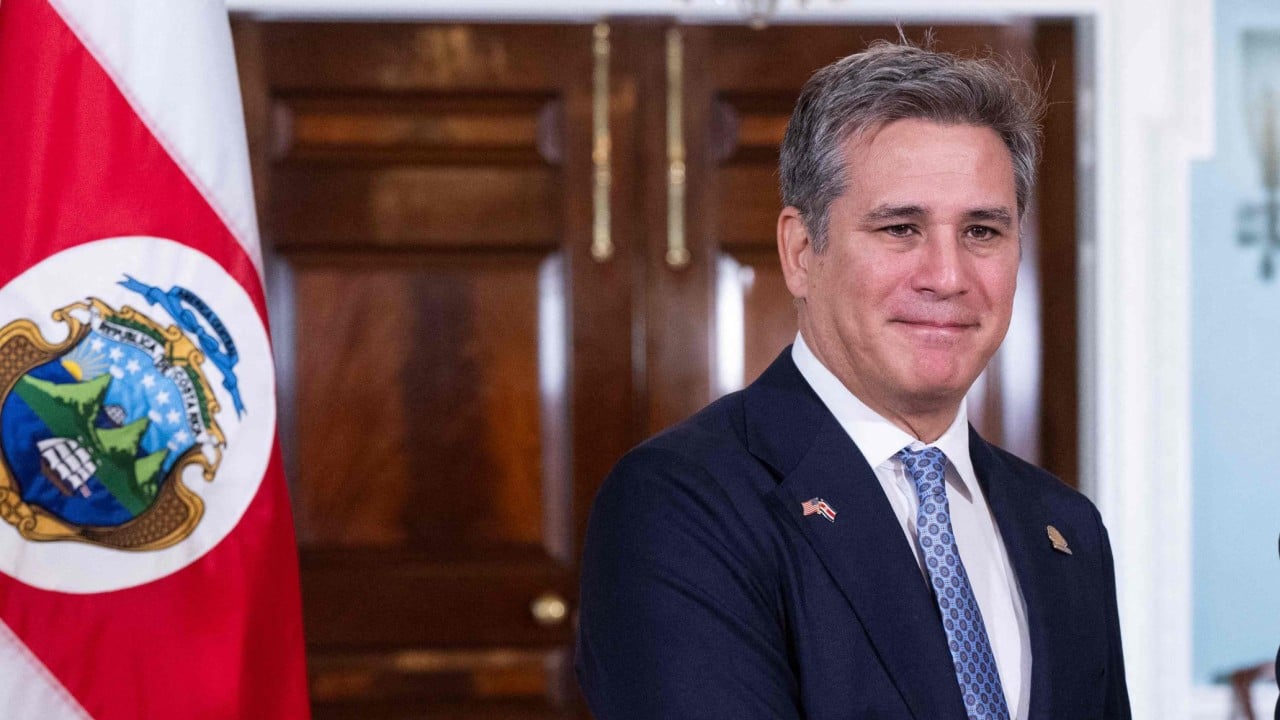
The dismissal of Costa Rican Foreign Minister Manuel Tovar by President Laura Fernández exposes a fundamental structural vulnerability in executive-legislative and cabinet-level foreign policy alignment. When a high-ranking minister attends a high-stakes geopolitical forum—specifically the United States-led "Shield of the Americas" security initiative chaired by U.S. President Donald Trump—without prior presidential clearance, it signals more than a simple protocol violation. It indicates a severe breakdown in internal information architecture and a misalignment of diplomatic signaling.
Understanding this event requires analyzing the operational dynamics of foreign policy execution under executive administrations. In modern statecraft, foreign ministers act as agents executing the principal’s strategic vision. When an agent bypasses the principal on matters carrying heavy regional and geopolitical consequences, the administration's bargaining credibility is compromised.
The Mechanics of Diplomatic Divergence
Foreign policy formation relies on centralized command and control. In Costa Rica's constitutional framework, the executive branch holds primary authority over international relations. The unilateral participation of Tovar in a multilateral security framework targeting transnational cartels—which committed members to asset freezes, visa restrictions, and criminal liabilities—created two distinct structural failures:
- Strategic Blindness: By failing to notify the executive office, the Foreign Ministry denied President Fernández the ability to calibrate Costa Rica's posture toward a major hemispheric security initiative in real time.
- Bargaining Asymmetry: International alliances require unified messaging. When a cabinet minister commits or appears to align with external security frameworks independently, foreign capitals receive mixed signals regarding national intent, reducing the administration's leverage in bilateral negotiations.
President Fernández characterized the omission as causing "great strategic damage" primarily because it preempted or precluded direct executive participation in a critical security architecture. In security economics, alignment with anti-cartel coalitions involves domestic resource commitments, legal adjustments, and geopolitical positioning that must be balanced against domestic priorities.
Institutional Risk Management and Cabinet Discipline
The swift dismissal of Tovar highlights the zero-tolerance threshold required for executive control in foreign affairs. Cabinets function effectively only when agency loss—the risk that subordinates pursue objectives divergent from the leadership—is minimized.
To prevent similar structural failures, administrations typically enforce strict operational protocols:
- Mandatory Clearance Thresholds: All engagements involving heads of state or binding multilateral security commitments require explicit, documented presidential sign-off.
- Channel Centralization: Diplomatic communications through secondary channels must mirror official executive doctrine to avoid fragmented state behavior.
- Contingency Alignment: Personnel occupying sensitive diplomatic posts must operate as direct extensions of the executive's political risk tolerance.
The appointment of Indiana Trejos, Minister of Foreign Trade, as acting foreign minister while navigating ongoing missions at the United Nations General Assembly illustrates an immediate pivot toward technocratic stabilization. Moving forward, the administration's primary objective will be re-establishing centralized oversight to ensure that Costa Rica's international security commitments match executive strategy without administrative friction.