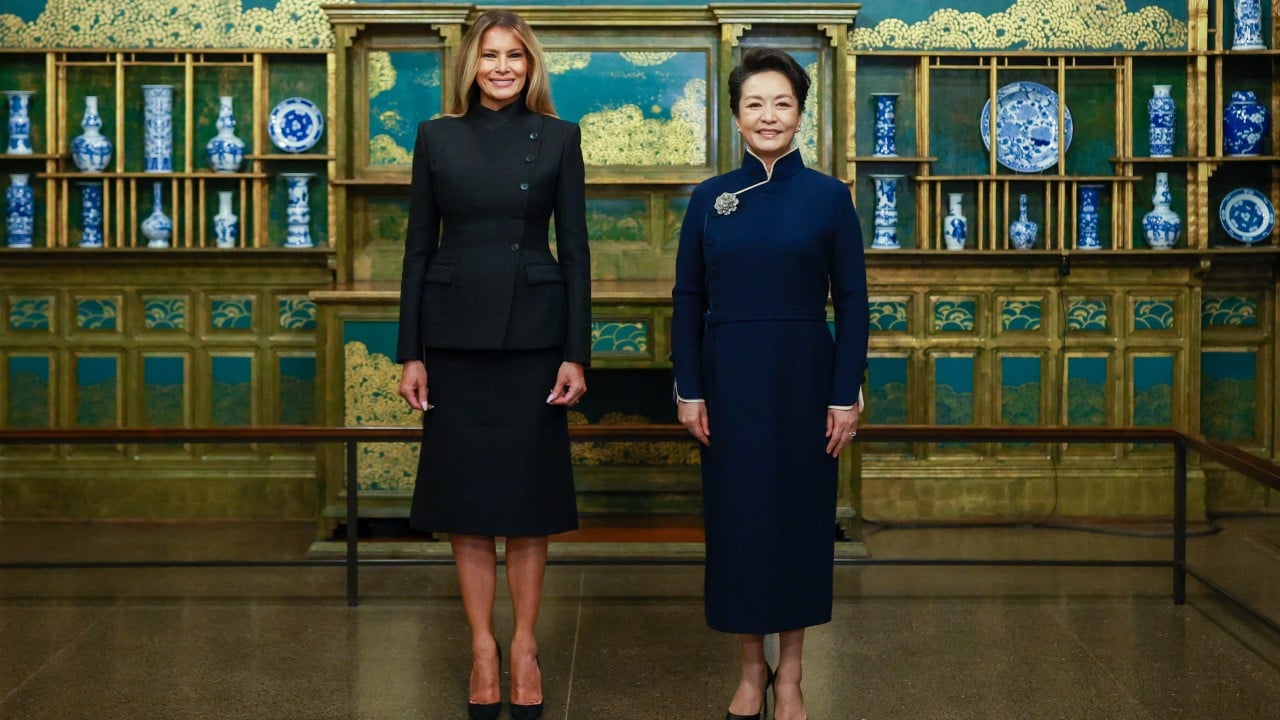
Every time a high-profile diplomatic visit hits the news cycle, the media treats it like a masterclass in global diplomacy. When Melania Trump and Peng Liyuan stepped into the Smithsonian to tour the Peacock Room, commentators rushed to publish breathless analyses about silent messages, sartorial choices, and cultural bridges. The lazy consensus insists that these curated exhibitions of historical art somehow soften geopolitical tensions or reset international relations between superpowers.
It is high-stakes cosplay disguised as cultural appreciation.
Let us dismantle the illusion. A curated tour of James McNeill Whistler’s opulent, blue-and-gold masterpiece in Washington does not move the needle on trade tariffs, intellectual property theft, or maritime sovereignty. Expecting an afternoon among porcelain plates and gilded walls to alter national security strategies is diplomatic illiteracy. Yet, the press corps acts as if every shared glance across a museum gallery represents a breakthrough in bilateral treaties.
The Myth of Cultural Diplomacy
Diplomacy happens in secure briefing rooms, across encrypted communication lines, and through the brutal calculus of economic leverage. It does not happen beneath the ornate rafters of a nineteenth-century dining room.
When political spouses pose for cameras in front of American or Chinese artifacts, they are performing a script written centuries ago. This is not bridge-building. It is optical management. The media falls for it every time because drama sells better than dry policy papers. We want to believe that art transcends politics, that a mutual appreciation for orientalist decor can dissolve decades of strategic competition.
That is not how statecraft works. Leaders do not abandon national interests because their delegates admired a room full of ceramic peacocks.
Consider the mechanics of the event. Every second of that visit was vetted, timed, and choreographed by communications directors who care infinitely more about domestic optics than international harmony. The audience is not the rival nation; the audience is the domestic electorate watching the evening news. It projects composure, civility, and control.
Why the Press Corps Misses the Point
The standard reporting on these events suffers from a profound lack of analytical rigor. Journalists take the bait, analyzing the silhouettes of coats and the subtle nods of heads as if they were deciphering the Dead Sea Scrolls.
This approach infantilizes the public. It reduces complex geopolitical rivalries to a high-society fashion show. When commentators argue that these visits lay the groundwork for future negotiations, they mistake symptom for cause. Good relations create the environment for pleasant museum visits; museum visits do not create good relations.
Imagine a scenario where trade negotiations are stalling, supply chains are fracturing, and military posturing is at an all-time high. Do you genuinely believe a curator guiding two dignitaries past a restored nineteenth-century interior alters the risk assessment of a defense minister? Of course not.
Yet, the articles keep coming, regurgitating the same tired narratives about soft power and mutual understanding.
The Real Currency of Influence
If you want to understand how nations actually influence one another, look at capital flows, technological dependencies, and energy markets. Look at semiconductor supply chains and sovereign debt holdings. That is where power resides.
Soft power is real, but it is cumulative, structural, and slow. It comes from cultural dominance in entertainment, scientific breakthroughs in research universities, and the reliability of legal institutions. It is not manufactured during a forty-minuted photo-op at a museum.
When we pretend that a gallery walk is an act of diplomatic defiance or a stroke of genius, we distract ourselves from the actual friction points between nations. We trade hard analysis for aesthetic comfort.
Stop reading the tea leaves of diplomatic wardrobes. Look at the balance sheets. That is where the real story is written.