International summit analysis routinely suffers from superficial semiotics. Observers tend to reduce high-level statecraft to isolated behavioral tokens, treating handshakes, posture adjustments, and facial expressions as spontaneous emotional outbursts rather than calculated inputs in an ongoing game of strategic signaling. When state leaders meet under conditions of intense structural competition, nonverbal communication functions not as an index of personal sentiment, but as a calibrated transmission channel designed for domestic audiences, allied capitals, and adversary intelligence apparatuses. Deconstructing summit interactions requires replacing narrative speculation with analytical frameworks that map power asymmetries, domestic political constraints, and negotiation leverage.
The Asymmetric Signaling Matrix
Diplomatic body language between dominant executive actors operates within a strict incentive-compatibility constraint. Every physical gesture must be evaluated against two competing vectors: signaling strength to domestic constituencies and avoiding the escalation thresholds that trigger defensive retaliation from foreign counterparts.
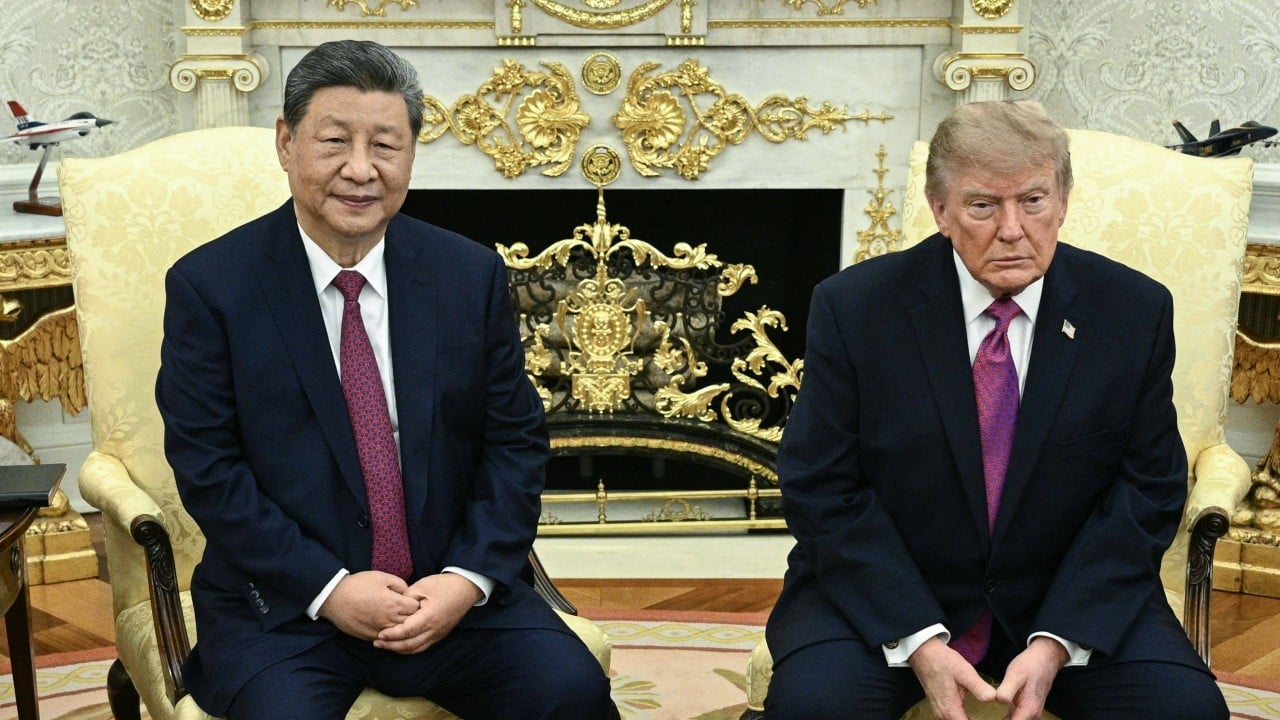
When analyzing interactions between executive figures like Donald Trump and Xi Jinping, standard commentary frequently focuses on personal dominance heuristics, such as grip strength or spatial command. This perspective overlooks the institutional realities of contemporary great-power competition. Structural pressure dictates that neither party can afford to project unmitigated subordination, nor can they sustain prolonged, overt hostility without incurring severe economic and geopolitical costs.
The signaling environment is therefore characterized by a duality of posture. Public ceremonies require theatrical compliance, where military pageantry, state dinners, and reciprocal pleasantries satisfy the baseline requirement of diplomatic engagement. Simultaneously, closed-door negotiations expose the underlying cost-benefit calculations governing market access, technological restrictions, and geopolitical spheres of influence. Nonverbal cues observed in public settings are constrained oscillations around a pre-computed strategic baseline.
Information Asymmetry and Tactical Posturing
A critical failure mode in conventional summit reporting is the misattribution of tactical compliance to strategic capitulation. In complex bilateral negotiations involving structural friction—such as advanced technology controls or strategic trade balances—the party facing higher domestic economic vulnerability must project resilience while quietly managing concessions.
Facial expression tracking and micro-gesture analysis often reveal baseline variance driven by cognitive load rather than emotional submission. When leaders engage in high-stakes bargaining, the physical manifestation of fatigue, constraint, or intense calculation is frequently mistaken for deference. For instance, the deliberate choice of a neutral or restrained facial expression during discussions concerning state-directed industrial policy serves to signal an unwillingness to compromise on core national security paradigms.
Furthermore, auxiliary incidents during high-level visits, such as momentary glances at negotiating documentation or unscripted environmental curiosities, highlight the continuous friction of information gathering. In a high-information-density environment, even accidental exposures are weaponized by domestic media ecosystems. Observers must separate the signal of the performance from the noise of the media apparatus. The performance is optimized for domestic legitimacy; the negotiation outcome is dictated by structural leverage.
The Mechanics of Strategic Equilibrium
To model the trajectory of bilateral relations following a major summit, analysts must discard speculative psychological profiling and focus on verifiable material constraints. The stability of any diplomatic interaction is a function of three variables:
- The Cost of Non-Agreement: The immediate economic and political penalty each leader faces if talks break down entirely.
- Domestic Audience Cost: The penalty inflicted by hardline domestic factions if perceived as yielding too much ground on sovereign interests.
- Enforcement Credibility: The capacity of each administration to unilaterally implement and sustain agreed-upon frameworks without legislative or bureaucratic obstruction.
When these variables are misaligned, body language inevitably reflects tension, regardless of public platitudes. A rigid posture or an absence of reciprocal warmth during photo opportunities typically signals an impasse on core structural disputes—such as market barriers or technological decoupling—even as joint communiqués emphasize ongoing dialogue.
Future strategic alignment will not be determined by the optics of state visits or the theatricality of executive handshakes. It will be governed by the structural limits of interdependent supply chains, military deterrence postures, and the domestic economic tolerance for prolonged friction. Observers who focus solely on the surface semiotics of a summit miss the fundamental mechanics driving the international order.
This video provides an analytical breakdown of nonverbal communication and power dynamics between political leaders during high-stakes international summits.