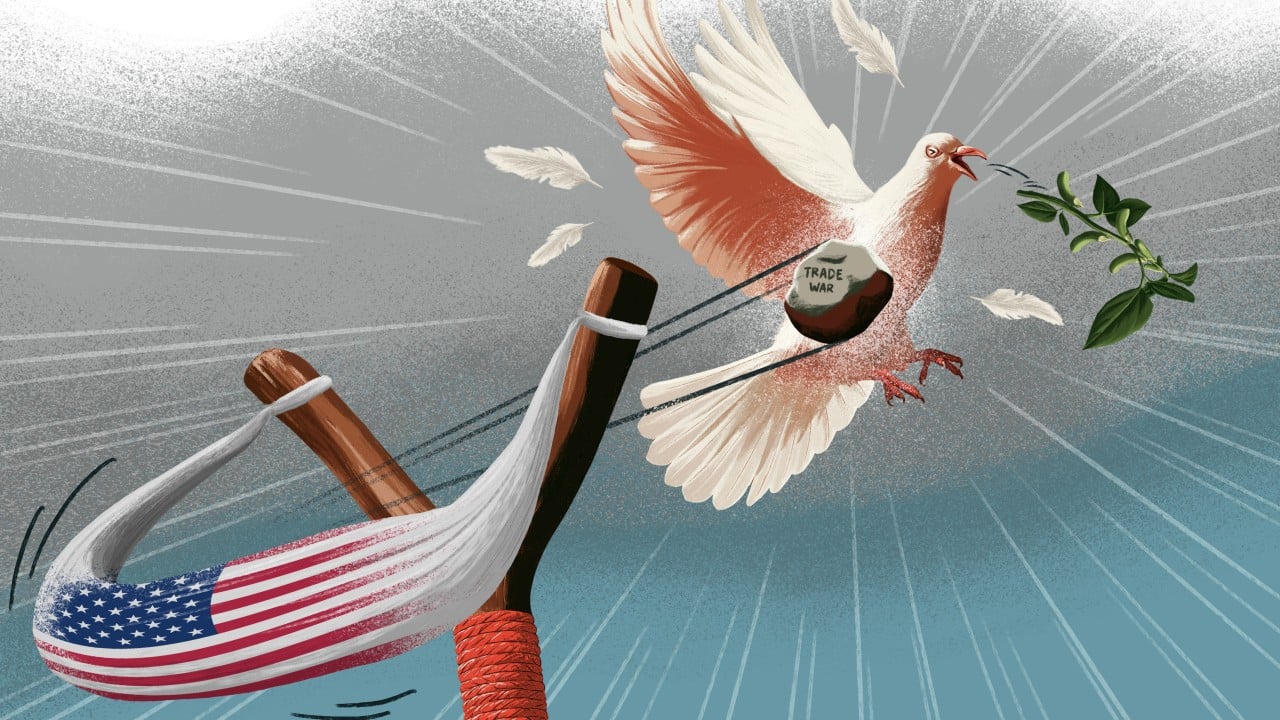
Geopolitics often feels like a cold game played by elites in mirrored high-rises. Every diplomatic cable sounds written by a risk-averse committee. Yet, every so often, an artifact breaks through the sterile noise.
Think about Xi Jinping writing back to his old grassroots contacts in Muscatine, Iowa. It is easy to dismiss this as mere theater. Critics call it standard public relations. But looking past the cynical Washington spin reveals something much more telling about how Beijing approaches long-term strategy compared to a fractured America.
The story goes back to 1985. A young Chinese agricultural official named Xi visited Muscatine to study Midwestern farming techniques. He stayed with local families and ate American cereal. Decades later, that local connection became a recurring motif in international relations. While trade wars rage and congressional committees posture, that specific thread remains intact.
What does this exchange actually mean against the backdrop of a struggling and altered America? It highlights a profound contrast in political patience.
The Power of Long Memory in Modern Diplomacy
American politics runs on short cycles. Administrations change every four years. Policies shift on a whim, driven by the immediate demands of the next election cycle. Today’s priority becomes tomorrow’s forgotten memo.
Beijing operates differently. Officials there view relationships in terms of decades. When leaders cultivate bonds before coming to power, they remember who was kind when they were nobodies.
Most people miss this structural advantage. While American politicians treat foreign policy as a tool for domestic point-scoring, leaders in Beijing treat diplomacy as an enduring human network. Cultivating relationships with small-town farmers in Iowa or high school students in Washington state costs very little. Yet, it yields immense symbolic dividends.
When official channels freeze up, these grassroots ties serve as an emergency safety valve. They provide a narrative of shared history that can be deployed whenever relations hit rock bottom.
Economic Realities Beneath the Sentiment
We shouldn't romanticize a holiday card. Behind the folksy diplomacy lie hard economic interests. Iowa is agricultural heartland country. It produces massive amounts of soybeans and corn.
For rural American communities struggling with inflation, shifting supply chains, and rising operational costs, access to foreign buyers matters immensely. State economies feel the sting of geopolitical friction immediately. When tariffs fly, farmers pay the price.
So when an Iowa local signs a greeting card to Beijing, it is partly about fond memories. It is also about economic survival. Rural America wants open markets. Washington often pushes for decoupling, creating a strange disconnect between national security rhetoric and local economic realities.
Local leaders know that geopolitical hostility threatens their livelihoods. They have different incentives than federal lawmakers whose careers thrive on constant confrontation.
Why Domestic Fatigue Changes the Calculus
America looks very different today than it did in 1985, or even in 2012 when Xi returned to Iowa as Vice President. Domestic polarization is at an all-time high. Infrastructure is aging. Trust in public institutions has cratered.
When citizens watch their own government stumble from crisis to crisis, external gestures carry a strange weight. A personalized letter from a foreign head of state acknowledging a small-town American kitchen table stands in stark contrast to the cold indifference citizens often feel from their own representatives.
This creates an opening for soft power that doesn't rely on Hollywood or Silicon Valley. It relies on personal touch. While Washington tries to build walls, subtle communications cross them effortlessly.
Recognizing this dynamic doesn't require loving foreign authoritarian systems. It simply requires acknowledging effective strategy when you see it.
Looking Past the Noise
The obsession with daily diplomatic tit-for-tat obscures the deeper currents of global power. Headlines scream about sanctions, tech bans, and military posturing. Those things matter. They set the boundaries of the modern conflict.
At the same time, the human element persists. Leaders who understand the value of patience will always outmaneuver those trapped in a twenty-four-hour news cycle.
If Washington wants to compete effectively on the global stage, it needs to look past the next election. Rebuilding credibility requires more than just military deterrence or protectionist tariffs. It requires understanding that long-term influence is built one genuine connection at a time, long before the cameras start rolling.