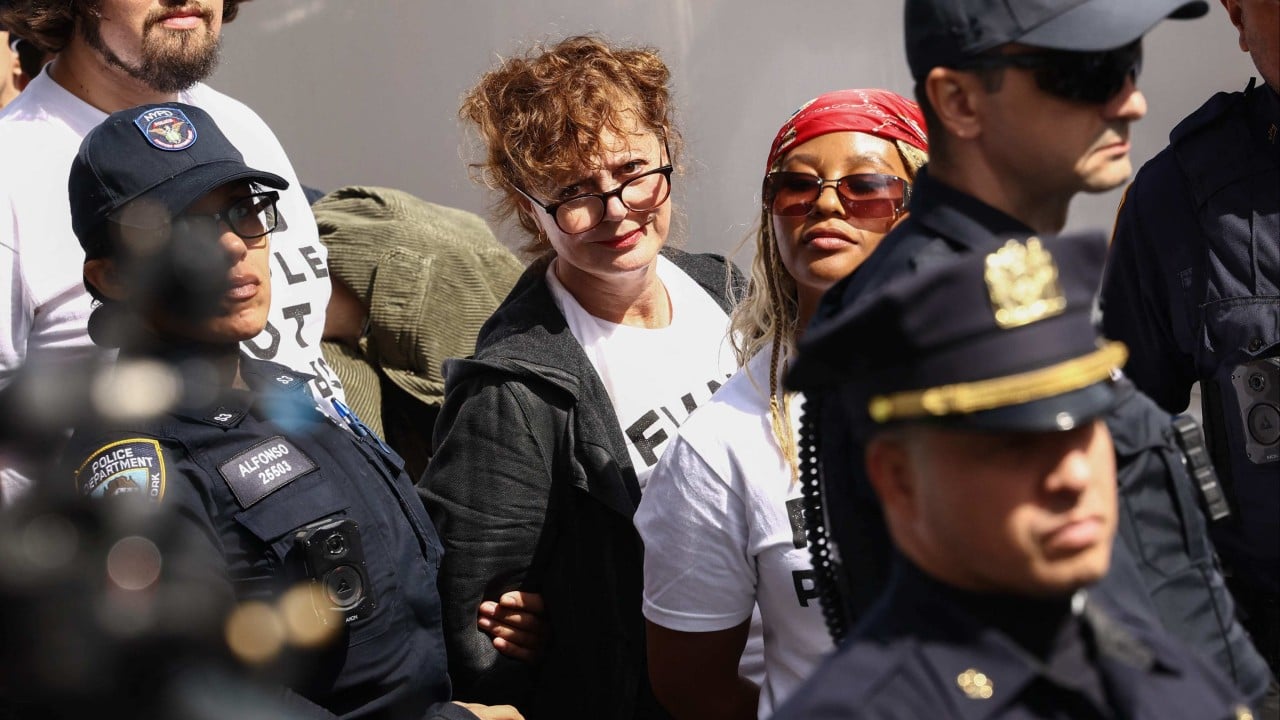
High-profile civil disobedience operates through a predictable operational matrix where media visibility serves as the primary currency for advocacy groups, while institutional law enforcement relies on codified protocols of spatial control and public order maintenance. The detention of public figures such as actress Susan Sarandon and comedian Hannah Einbinder alongside roughly one hundred demonstrators outside the United Nations headquarters in New York highlights the intersection of high-visibility activism, municipal policing strategies, and international diplomacy. Deconstructing this event requires an analysis of the tactical mechanics governing protest logistics, police response thresholds, and the socio-political cost functions associated with public arrests.
The Spatial Economics of Urban Protest
Activist organizations staging demonstrations in high-density metropolitan areas like Manhattan deploy predictable geographic strategies to maximize leverage. By selecting choke points such as intersections adjacent to the United Nations General Assembly during high-level international summits, organizers exploit institutional congestion. The objective is structural disruption rather than mere assembly.
When demonstrators deliberately block intersections, they impose a direct operational friction on municipal transit and security corridors. This tactic forces a response from the New York Police Department Community Affairs Bureau and tactical units. The interaction follows a distinct protocol sequence:
- Establishment of Perimeter: Police monitor the gathering and assess whether the assembly exceeds permitted parameters or violates municipal ordinances regarding obstruction of traffic.
- Issuance of Warnings: Law enforcement issues verbal dispersal orders, providing a legally mandated window for voluntary compliance.
- Threshold Crossing: When demonstrators refuse to disperse and maintain physical blockage of roadways, the operational status shifts from protected speech to non-compliant obstruction, triggering targeted detentions.
The Amplification Multiplier of High-Profile Participants
The inclusion of recognizable cultural figures fundamentally alters the information economy of a protest. Traditional grassroots demonstrations often face structural barriers in securing mainstream media coverage. However, the presence of celebrity actors introduces an amplification multiplier that shifts the cost-benefit calculus for both organizers and law enforcement.
From the perspective of activist groups like Jewish Voice for Peace, celebrity participation guarantees algorithmic prioritization across digital platforms and ensures traditional news wire presence. The visual of a well-known personality being placed in zip ties or escorted by police provides an iconic asset that maximizes organizational messaging reach.
Conversely, law enforcement agencies face a heightened scrutiny threshold when high-profile individuals are involved. Procedures must be executed with procedural strictness to minimize allegations of bias or excessive force, while simultaneously maintaining public order. The arrest serves as a symmetric exchange: the demonstrator accepts temporary detention to secure media airspace, while the state enforces municipal code to restore transit flow.
The Diplomatic Backdrop and Policy Friction
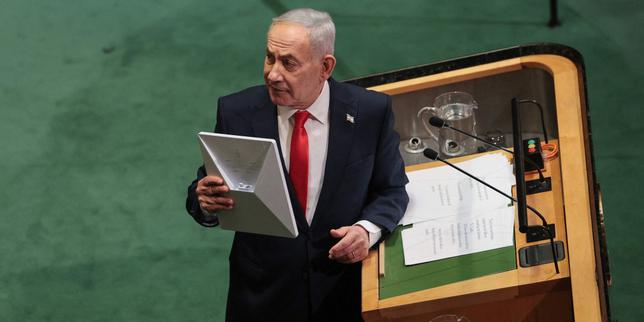
Civil disobedience operations do not occur in a vacuum; they are tethered to broader geopolitical tensions. The demonstrations surrounding the United Nations General Assembly coincided with high-stakes international debates regarding ongoing military engagements in Gaza and controversial foreign policy measures, such as proposed international arms sales.
Public figures operating within this sphere accept specific career and social externalities. Engaging in high-visibility arrests can lead to commercial isolation within corporate entertainment ecosystems, as evidenced by prior industry friction reported by participating artists. Yet, the calculus for these individuals prioritizes narrative disruption over career preservation, treating professional fallout as a necessary overhead cost for ideological alignment.
Strategic Outlook on Urban Demonstration Management
As municipal authorities face increasing frequencies of high-impact geopolitical demonstrations, the operational interplay between civil disobedience and police response will remain standardized. Organizers will continue to leverage iconic personalities to pierce media noise, while law enforcement will rely on rapid containment and systematic processing to clear critical infrastructure. Future iterations of these demonstrations will depend on how effectively municipal agencies can streamline processing times for mass arrests without diminishing the deterrent effect of enforcement actions.
Susan Sarandon and Hannah Einbinder arrested at anti-Netanyahu protest in New York
This video provides on-the-ground footage of the police intervention and subsequent detentions outside United Nations headquarters during the high-profile demonstration.