When a high-volume reproductive medicine facility experiences a clinical specimen mix-up, the operational response typically follows a predictable crisis management script: immediate suspension of services, external regulatory audits, internal root cause investigations, and a carefully choreographed public relations rollout clearing the institution to resume operations once corrective actions are implemented.
However, treating these events as isolated human errors obscures the underlying systemic fragilities of modern assisted reproductive technology operations. Clinics handling gametes and embryos operate under complex, high-stakes conditions where biological variability, human cognitive limitations, and manual handling converge. Examining the administrative and operational clearance of a fertility center following a specimen handling error requires a rigorous deconstruction of institutional oversight, process design, and failure modes in laboratory workflows. For another perspective, check out: this related article.
The Operational Anatomy of Embryo Handling
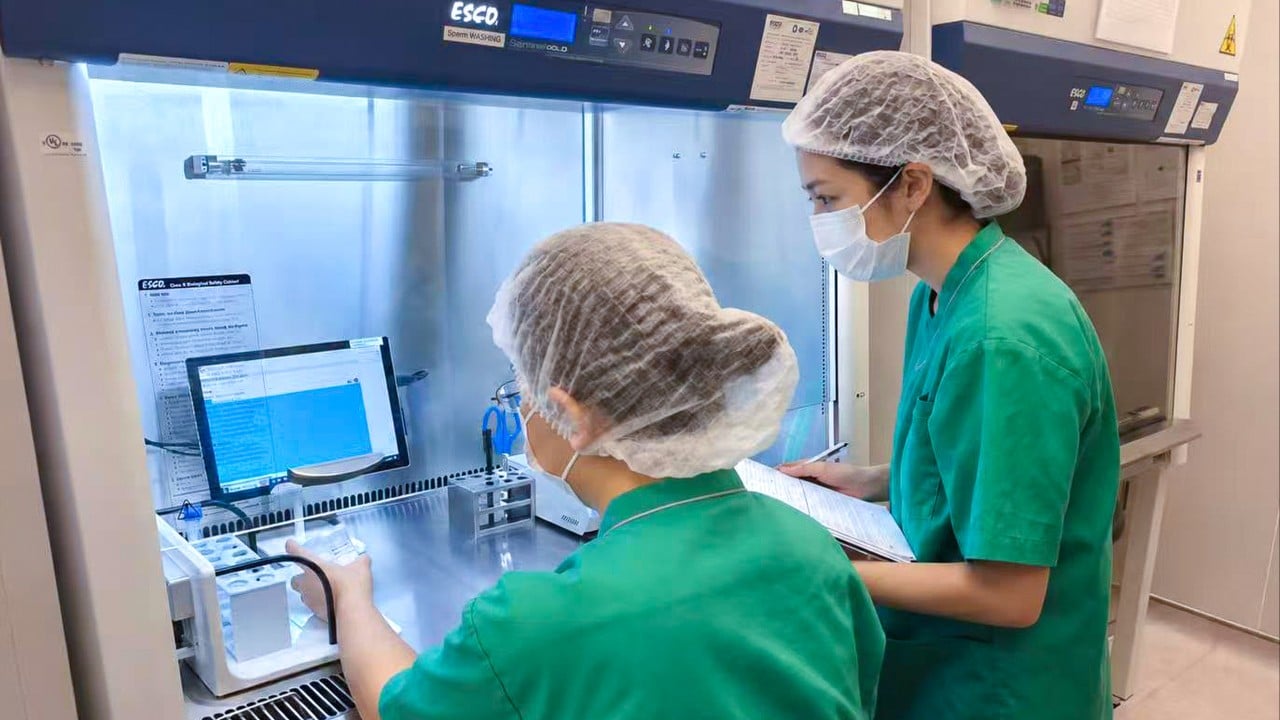
Assisted reproductive technology clinics function as specialized biological manufacturing environments. Unlike traditional clinical laboratories where diagnostic samples are processed and discarded, fertility clinics manage living human assets with irreversible implications for patients. The lifecycle of an embryo within a laboratory setting involves multiple transfer points, identification verifications, and environmental controls.
The core vulnerability in this environment stems from the tension between manual dexterity and industrial standardization. While automation has transformed hematology and clinical chemistry, embryology remains heavily reliant on manual handling. Micromanipulation, cryopreservation sealing, and witness verification depend heavily on human vigilance. Similar analysis on this matter has been provided by Everyday Health.
[Patient Intake] -> [Gamete Retrieval] -> [Laboratory Fertilization] -> [Cryopreservation / Storage] -> [Transfer]
                                             ^
                                             |--- (High-Risk Manual Verification Points)
In any system where tasks are repetitive yet demand absolute perfection, relying solely on human attention is an architectural flaw. Cognitive fatigue, cognitive tunnel vision, and environmental distractions create an inevitable baseline error rate. When safety protocols rely on procedural memory rather than hard-wired physical constraints, catastrophic failures become a statistical certainty over a long enough time horizon.
The Cost Function of Quality Control
Institutions often evaluate quality assurance through the lens of compliance cost versus risk mitigation. In reproductive medicine, this calculation is skewed by the catastrophic asymmetry of potential failures. While the financial cost of implementing redundant digital tracking systems, biometric verification checkpoints, and continuous environmental monitoring is high, the cost of a single specimen mix-up is professionally, legally, and ethically terminal.
Traditional quality control mechanisms in embryology rely heavily on dual-witness systems, where two independent staff members verify patient identifiers before executing a high-risk step. While dual witnessing reduces the likelihood of an error, it suffers from several systemic limitations:
- Diffusion of Responsibility: When two individuals perform a verification check together, each may subconsciously assume the other has exercised heightened scrutiny.
- Confirmation Bias: Operators working under severe time pressure tend to see what they expect to see, converting a verification step into a ritualistic rubber stamp.
- Interruptibility: Laboratory environments are frequently disrupted by incoming urgent clinical demands, pulling the focus of technicians away from verification protocols.
To outclass traditional human-dependent verification, advanced facilities must transition toward closed-loop traceability architectures. This involves radio-frequency identification tagging, barcode-locked storage cryovials, and computer vision systems that track specimen containers from retrieval to transfer without manual data entry.
Regulatory Clearance and Institutional Recovery
When regulatory bodies audit a clinic following an adverse event, their mandate focuses on verifying that the institution has eliminated the immediate causal factors that precipitated the failure. This process typically involves evaluating staff retraining programs, updating standard operating procedures, and introducing secondary or tertiary oversight layers.
However, regulatory clearance measures the implementation of controls, not their long-term efficacy. A newly established protocol degrades over time unless continuously reinforced by operational design. When a clinic is cleared to resume services, the institutional risk profile does not immediately return to baseline; instead, the facility enters a heightened vulnerability phase characterized by public scrutiny, staff morale challenges, and potential operational overcompensation.
The structural challenge lies in balancing operational velocity with safety margins. Reproductive clinics operate under intense market pressures and patient time-sensitivity. Delaying cycles or reducing throughput to accommodate rigorous safety checks imposes a direct financial penalty. Consequently, clinic leadership must reframe safety protocols not as bureaucratic friction, but as the foundational infrastructure that sustains long-term enterprise viability.
Risk Mitigation Architecture for Reproductive Laboratories
Elevating the operational standards of an embryology laboratory requires moving past punitive personnel measures and focusing on structural error-proofing, known as poka-yoke in industrial engineering. When a mix-up occurs, attributing blame to an individual technician fails to address why the system allowed a single point of failure to propagate.
+-----------------------------------+-----------------------------------+
| Traditional Control Paradigm      | Structural Resilience Paradigm    |
+-----------------------------------+-----------------------------------+
| Relies on human vigilance and     | Relies on hardware/software       |
| memory.                           | interlocks and physical barriers. |
+-----------------------------------+-----------------------------------+
| Punitive response to individual   | Systemic root-cause analysis and  |
| error.                            | workflow redesign.                |
+-----------------------------------+-----------------------------------+
| Retrospective audits and reactive | Real-time sensor monitoring and   |
| policy updates.                   | closed-loop tracking.             |
+-----------------------------------+-----------------------------------+
To eliminate catastrophic specimen handling errors, laboratories must integrate three structural interventions:
First, eliminate manual data transcription wherever possible. Handwritten labels, manual logbooks, and verbal identifier confirmations must be replaced with optical character recognition and barcode scanning that physically prevents the system from proceeding if identifiers do not match at the molecular level.
Second, decouple timing from verification. High-stress workflows that force embryologists to make rapid sorting decisions under time constraints should be restructured to incorporate mandatory pause states. These are automated delays during which a process cannot proceed until an independent system check clears.
Third, establish continuous stochastic auditing. Rather than waiting for an annual regulatory inspection, facilities should deploy unannounced internal audits of random specimen chains of custody, treating data integrity as a continuously monitored variable rather than a static compliance checkbox.
The resumption of clinical services following an embryo mix-up is merely the beginning of an extended rehabilitation cycle. True operational recovery requires acknowledging that clinical safety in reproductive medicine is an engineering problem, not a moral one. Until laboratories abandon the illusion that human perfection can be sustained through policy alone, the industry will remain vulnerable to systemic failures that compromise its fundamental therapeutic mission.