Epidemiological containment models rely on a foundational assumption: that transmission velocity can be outpaced by systematic contact tracing. When an outbreak breaches a threshold where eighty percent of new infections occur outside known chains of transmission, that operational assumption collapses.
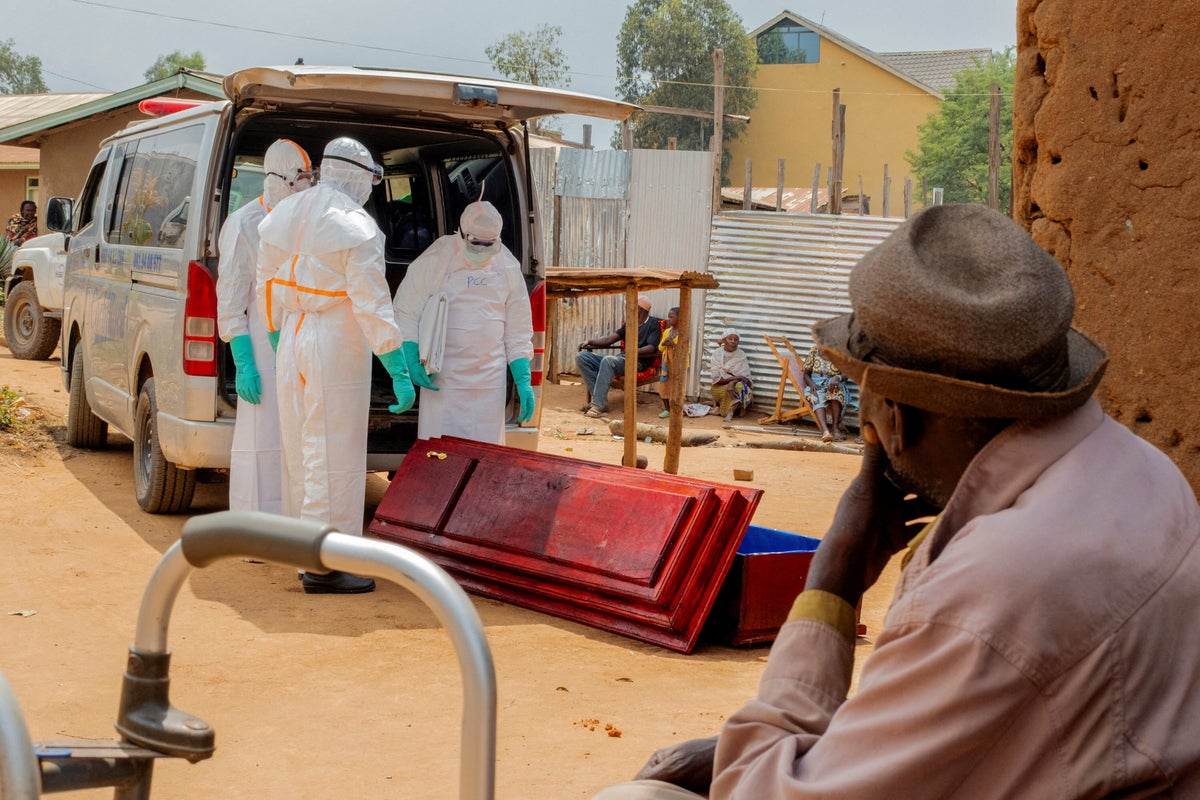
The ongoing epidemic in eastern the Democratic Republic of the Congo, centered primarily in Ituri province, represents a structural failure of standard public health response mechanisms. Recording over 3,800 cases and surpassing 1,700 fatalities, the crisis moves faster than any recorded predecessor, including the 2014-2016 West African epidemic. Deconstructing this trajectory requires analyzing the vector mechanics, the operational friction points, and the macroeconomic constraints that dictate viral expansion.
The Vector Profile and Pathogen Constraints
This epidemic is driven by the Bundibugyo ebolavirus species. Unlike the Zaire ebolavirus species that dominated previous large-scale Central and West African crises—and for which optimized monoclonal antibody treatments and licensed vaccines exist—the Bundibugyo strain operates within a therapeutic vacuum. There are no universally approved therapeutics or fully licensed preventative vaccines specifically scaled for this strain at the point of care, forcing clinicians into experimental protocols and clinical trials mid-surge.
The absence of an index case compounds this biological challenge. Without identifying patient zero, epidemiologists cannot construct an accurate transmission tree. The virus seeded undetected for months across remote mining communities in Mongbwalu before official declaration on May 15. By the time surveillance infrastructure mobilized, spatial dispersion had already outpaced geographical containment lines.
The Friction Matrix of Operational Response
Traditional outbreak management functions as an algebraic equation of inputs: diagnostic kits, isolation beds, safe burial teams, and contact tracers. In eastern Congo, every variable in this equation encounters heavy friction.
Surveillance Breakdown and Community Spread
The World Health Organization monitors over 17,000 active contacts daily, yet nearly eighty percent of incident cases emerge from unlisted vectors. This indicates a profound network failure. Traditional contact tracing assumes stable households and cooperative populations. In a zone defined by high rates of informal labor, artisanal gold mining, and forced displacement, individuals maintain fluid, untraceable social footprints.
Security and Institutional Resistance
Public health intervention relies on state legitimacy and physical security. The operating environment in Ituri and North Kivu features active insurgencies and armed militia groups. Health centers face direct physical attacks, while infrastructure destruction restricts logistical supply chains.
Compounding this kinetic violence is acute psychological resistance. Decades of structural neglect, combined with the sudden imposition of foreign-backed medical protocols, have calcified community mistrust. When local populations view the medical apparatus with suspicion, reporting symptoms becomes an evolutionary disadvantage from the perspective of the individual, driving cases underground into traditional treatment settings where secondary amplification occurs rapidly.
Human Capital Fatigue
The frontline workforce operates under extreme duress. Healthcare professionals across Bunia and Mongbwalu have repeatedly initiated strikes and issued operational ultimatums over chronically unpaid wages and absent protective equipment. With more than 100 healthcare workers infected since the onset, the system suffers from both attrition and demoralization. When institutional agents are forced to choose between personal survival without compensation and abandoning their posts, the epidemiological firewall crumbles entirely.
The Macro-Economic and Funding Deficit
Epidemiological velocity is inversely proportional to capital deployment speed. The response suffers from a persistent funding gap that restricts the immediate procurement of decentralized testing units, cold-chain storage for experimental therapeutics, and hazard compensation for local staff. While neighboring Uganda successfully achieved zero status by mid-June through aggressive, well-funded border surveillance and rapid isolation protocols, the decentralized nature of eastern Congo's administrative zones prevents unified fiscal execution.
Strategic Resource Reallocation Protocol
To alter the reproduction number of the virus below the critical threshold of 1, response architectures must transition from centralized hospital models to decentralized community-led containment. Capital must bypass bureaucratic bottlenecks to guarantee direct, unmediated hazard pay for frontline workers within a twenty-four-hour payroll cycle, eliminating strike-induced surveillance blackouts. Simultaneously, localized therapeutic access must be expanded through active clinical trial enrollment sites directly inside high-density transmission zones rather than regional hubs, aligning patient recruitment with immediate clinical benefit.