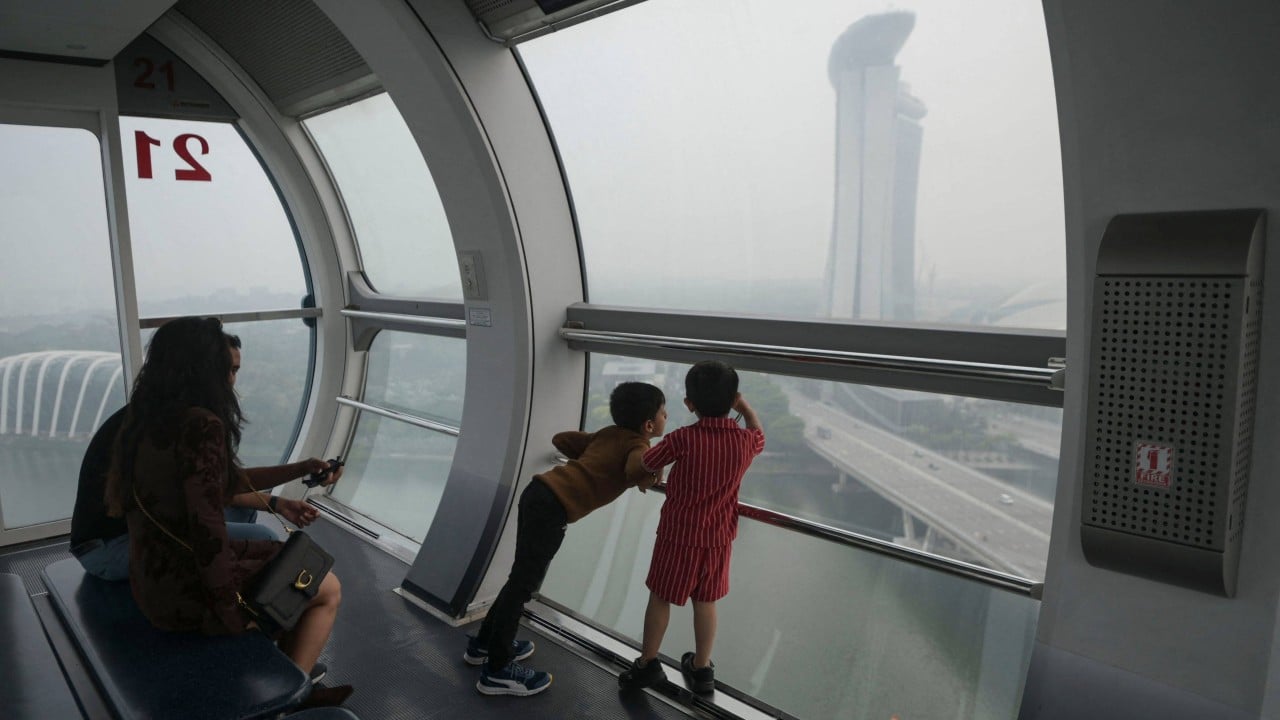
Open windows and ceiling fans are great on a breezy morning. They are terrible when smoke hangs over the island and thirty kids are breathing the same stale air.
When haze rolls into Singapore, parents start asking a very practical question: why don't regular classrooms have air conditioning like Hong Kong schools or even local preschools? Under Singapore's Ministry of Education (MOE) haze protocols, schools rely on keeping students in enclosed spaces with air purifiers, scaling down activities as PSI and PM2.5 climb, and only considering full school closures if the next day's 24-hour PSI forecast crosses the Hazardous mark above 300. Meanwhile, preschools regulated by ECDA already operate with air purifiers and have rules around keeping kids in enclosed rooms with air conditioning or fans running when air quality deteriorates.
That gap between a six-year-old in preschool and a seven-year-old in Primary 1 is where a lot of parent frustration starts. Literally one school year changes the building setup, even though young lungs are still developing.
What Parents Actually Push For When Haze Hits
Honestly, most parents aren't demanding freezing classrooms all year round. That's a straw man people love to throw at the idea.
What families and advocates—including Workers' Party MP Kenneth Tiong, who has raised classroom air conditioning in Parliament—keep pointing to is choice and climate control. If you close classroom windows and doors to keep smoky outdoor air out, a room packed with students and teachers heats up fast. A ceiling fan just pushes warm air around. Worse, if a window isn't sealed tightly or if someone cracks a louver for relief, outdoor fine particulates sneak right back in.
When parents look toward Hong Kong, they see schools where air conditioning is standard across many classrooms, paired with formal indoor air quality (IAQ) guidance from Hong Kong authorities on closing vents, shutting windows during poor outdoor air, and keeping filters clean. Yet looking closely at Hong Kong also reveals a catch nobody likes to admit: air conditioning alone doesn't magically solve indoor air quality.
Research on Hong Kong school classrooms has shown that indoor pollutants can still climb during high-pollution episodes if ventilation rates aren't managed well, if air intakes sit near traffic or pollution sources, or if AC filters get neglected. When windows stay shut all day for cooling and outdoor air exchange drops, carbon dioxide builds up too. High CO2 makes kids drowsy, headaches creep in, and concentration tanks right when they're trying to learn.
Why Singapore Built Classrooms Around Natural Ventilation
You have to understand how Singapore's school architecture got here before judging it. For decades, tropical school design prioritized passive cooling—high ceilings, cross-ventilation, shaded corridors, and ceiling fans—because it saves massive amounts of electricity and money across hundreds of campuses.
Running split or central air conditioning in every classroom across Singapore every single day would carry a huge energy bill and maintenance load. Compressors fail, condensate pans clog, mold grows in damp ducts if maintenance slips, and power grids feel the strain during hot afternoon peaks. Even in places with AC, poor filter maintenance turns a cooling unit into a dust and pollutant trap.
There's also a behavioral side-effect teachers notice whenever buildings get heavily air-conditioned. Kids get used to cool indoor temperatures, and stepping outside into humid 32°C or 34°C heat feels like walking into a wall. Transitions between indoor learning and outdoor movement get trickier.
Still, relying purely on natural ventilation assumes clean tropical air. Transboundary haze breaks that assumption. When smoke lingers for days or weeks—as seen during recurring regional haze episodes and spikes into the Unhealthy range—open-air classrooms stop feeling breezy and start feeling like a trap.
How MOE's Current Playbook Works in Practice
Right now, Singapore's school response isn't "do nothing." MOE ties its actions to official advisories: NEA's 24-hour PSI forecasts for next-day planning and 1-hour PM2.5 readings for immediate activities.
When air quality enters the Unhealthy range (PSI 101–200), schools cut back on prolonged or strenuous outdoor activities, exempt students with heart or lung issues from outdoor exercise, move students into enclosed indoor spaces with air purifiers, and keep an air-conditioned room with an air purifier ready for anyone who feels unwell. If levels push higher into Very Unhealthy (PSI 201–300) or Hazardous (above 300), restrictions tighten further—indoor physical activity gets curtailed, after-school programs pause, lessons scale down, and full school closures with home-based learning are weighed if the next day's 24-hour PSI forecast tops 300.
On paper, that tiered system is structured and clear. In real life, parents run into two practical headaches:
- Room capacity and heat: Putting a whole cohort inside enclosed rooms with purifiers works best when airflow, room size, and temperatures stay comfortable. Without cooling, stuffiness builds up quickly.
- Work vs. care juggling: When schools close or exams face possible rescheduling at higher PSI thresholds, working parents scramble for childcare or leave on short notice.
That's why some parents argue that haze-ready climate control in classrooms could reduce disruption. If a room can be sealed, cooled, and filtered cleanly, kids might stay safely inside without overheating or forcing sudden closures—provided the filtration actually handles fine particles and keeps CO2 in check.
What Actually Matters Most for Protecting Kids Indoors
If you're trying to figure out whether air conditioning is the silver bullet, here's the blunt truth: filtration and airflow matter more than cold air.
A room can be ice-cold and still full of fine particulate matter (PM2.5) if the air isn't being filtered or if leaky gaps let smoky air seep in. Conversely, a well-sealed room running a properly sized HEPA air purifier cleans particles out of the air even without air conditioning—though if it gets too hot, kids get uncomfortable fast.
The smartest setup combines three things:
- Tight envelopes during bad air: Closing windows and doors properly so smoky outdoor air isn't pouring through gaps.
- Real particle filtration: HEPA air purifiers sized for the actual room volume, with filters replaced on schedule rather than caked in gray dust.
- Temperature and ventilation balance: Keeping rooms cool enough that kids aren't sweating through lessons, while watching CO2 levels so stale air doesn't dull focus.
Notice how Hong Kong's own indoor air quality guidelines stress regular filter cleaning, checking equipment, and opening windows or vents when outdoor air is clean again. Air conditioning is a tool, not a magic shield.
Practical Steps You Can Take Right Now
Whether you're a parent in Singapore or following how tropical cities adapt to worsening air quality, you don't have to wait for a multi-year building retrofit to take sensible steps.
- Track 1-hour PM2.5 alongside the 24-hour PSI: A 24-hour average smooths out peaks and valleys, while hourly PM2.5 tells you what's happening right now during recess, dismissal, or CCA. Check official updates via NEA and MOE advisories rather than guessing from how hazy the sky looks.
- Pack smart for your child's bag: Keep prescribed inhalers or medications up to date and clearly labeled if your child has asthma or respiratory sensitivities, and make sure the school knows. Ask your child's school how enclosed classrooms, air purifiers, and sick/rest spaces are managed on haze days.
- Don't rely on thin surgical masks for heavy smoke: Standard surgical masks don't seal well enough to filter fine haze particles effectively. Follow health guidance on when properly fitted N95 respirators make sense for longer outdoor stretches—and remember that getting a good seal on kids' faces can be tough, so reducing outdoor exposure is usually your best bet.
- Fix your own home indoor air first: Seal obvious drafts around windows or doors when haze hits, run a true HEPA purifier in your child's bedroom or study area, and ventilate when outdoor readings drop back into safer ranges.
Clean, cool air in a classroom shouldn't require a health scare to become a priority, yet getting it right takes more than bolting an air conditioner onto a wall. It takes honest trade-offs on cost, maintenance, energy, and real indoor air quality—and kids breathing easier every single school day.