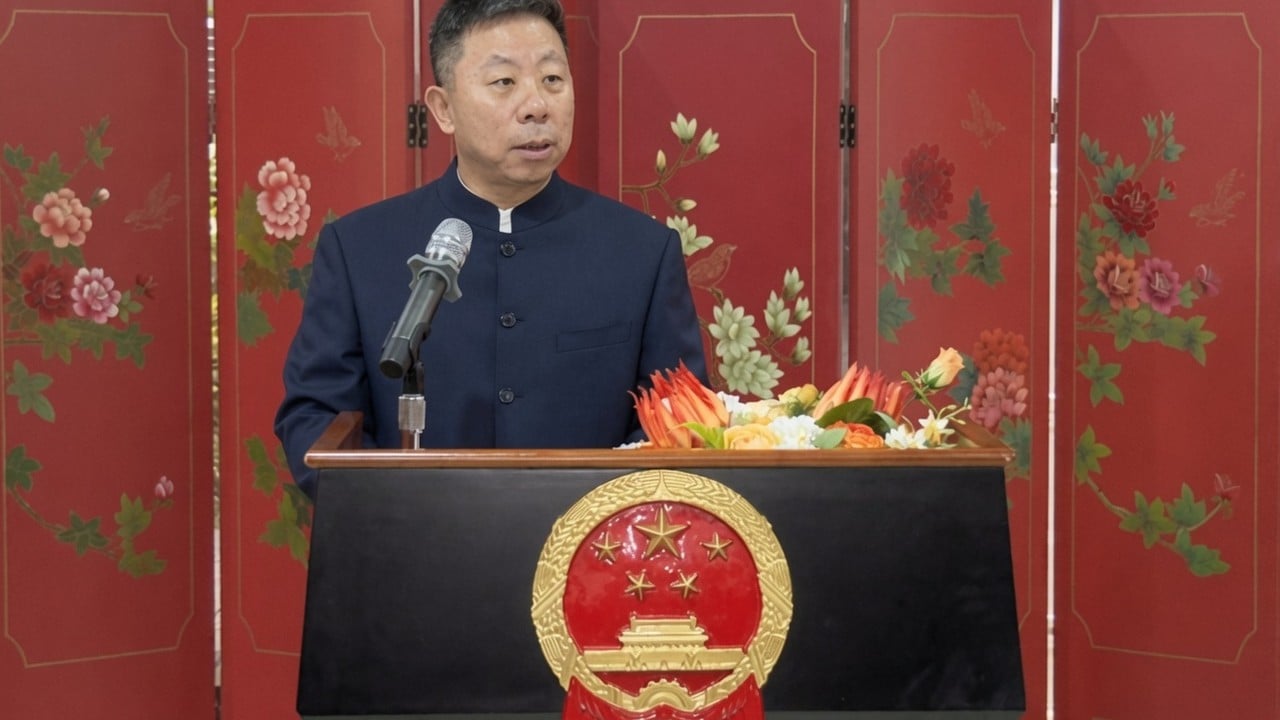
Saying "we may easily win" right before promising "we love peace" is a classic diplomatic move. It lets a speaker sound generous while reminding everyone in the room who holds the bigger stick. That's what happened in October 2026 when Chinese Ambassador to the Philippines Jing Quan addressed reporters at the second Diliman Dialogues in Quezon City, sparking a sharp diplomatic clash between Manila and Beijing over a thinly veiled threat.
Manila didn't buy the peace pitch. President Ferdinand Marcos Jr. said the comment sounded very much like a threat, and the Department of Foreign Affairs (DFA) formally flagged the ambassador's "poor choice of words" and summoned him days later. For anyone watching the West Philippine Sea, the exchange wasn't just another round of name-calling. It exposed how raw tensions have become between two neighbors locked in a high-stakes dispute over sovereignty, maritime patrols, and communication channels.
What Actually Happened at the Diliman Dialogues
Jing's remarks landed on October 15, 2026, during media interviews on the sidelines of an event hosted by the Philippines-China Studies Center at Diliman College. Asked about the prospect of conflict, the envoy said that if China wanted to use force, it "may easily win," while insisting Beijing had no intention of doing so because it values peace.
He didn't stop there. Jing pushed back hard against Philippine Defense Secretary Gilberto "Gibo" Teodoro Jr., who had rejected Vice President Sara Duterte's suggestion that the Philippines was acting like a "troublemaker of Southeast Asia" and countered that China alone was the troublemaker. Jing dismissed that label as "nonsense," accused Teodoro of spreading false narratives and hostility, and criticized Philippine officials and lawmakers—including Senator JV Ejercito and Philippine Coast Guard Rear Admiral Jay Tarriela—over public statements on maritime clashes.
Later that night, the DFA issued a statement calling Jing's phrasing a thinly veiled threat of force that made an already difficult bilateral relationship worse. The department urged diplomats stationed in the Philippines to exercise tact and restraint so room for dialogue wouldn't shrink even further. When the DFA summoned Jing on October 19, the envoy stood his ground, arguing his words were taken out of context and meant to highlight the value of peaceful talks rather than intimidate Manila.
Why a Thinly Veiled Threat Hits Harder in the West Philippine Sea
On paper, military balance isn't a secret. China fields one of the world's largest armies and its biggest naval force. Even past Philippine presidents with very different foreign policy instincts—including Benigno Aquino III and Rodrigo Duterte—have openly noted that a straight-up military fight between Manila and Beijing would be a lopsided mismatch.
So why did Jing's comment trigger such an immediate backlash? Because context matters. Remarks about easily winning a fight don't land in a vacuum when coast guard vessels and fishing boats are already clashing at sea. In September 2026, Manila rebuked Beijing after a Chinese Coast Guard ship rammed a Bureau of Fisheries and Aquatic Resources vessel off Palawan inside the Philippines' exclusive economic zone.
When an envoy pairs an acknowledgment of overwhelming force with friction on the water, officials in Manila hear coercion, not reassurance. There's also a deeper strategic worry here. Philippine national security officials have warned against what they call "strategic erosion"—repeated pressure and incidents below the threshold of outright war that gradually shift what counts as normal access and behavior in contested waters. Words like "easily win" feed that exact anxiety.
The Real Fight Is Over Channels, Narratives, and Law
One detail that got lost in some quick headlines was Jing's warning about broken military-to-military communication lines. Direct military channels between the two sides have been suspended for roughly three years. Jing argued that without those lines, Manila faces greater risks of miscalculation and confrontation, adding that if the Philippines didn't want to talk, it was the one that would lose out.
Defense Secretary Teodoro has a very different view of why those channels remain shut. He has maintained that security concerns, alongside Beijing's alleged abuse of communications and distortion of narratives, justify keeping the suspension in place. Compare that with the United States and China, which have kept military communication lines open despite sharp rivalries. In Manila, trust in how Beijing uses those channels is simply too low right now.
At the Manila Dialogue on the South China Sea held in mid-November 2026, Teodoro summed up Manila's counter-argument bluntly: deterrence shouldn't rest on brute force alone, or even law in the abstract, but on what he called the "force of law" under the United Nations Convention on the Law of the Sea (UNCLOS). National Security Adviser Eduardo Año—cited in coverage of the dialogue as Oban—similarly pressed for defending lawful maritime rights and critical infrastructure without surrendering sovereignty under the guise of calm.
Meanwhile, the Philippines' Mutual Defense Treaty with the United States remains a major piece of the deterrence equation. Unlike a bilateral clash where size alone decides the scoreboard, a treaty alliance complicates any calculation about what a conflict would actually look like.
Where Business and Everyday Stakes Meet Diplomacy
Not everyone in Manila wants a megaphone war. In early November 2026, 22 business and sectoral groups—including the Philippine Chamber of Commerce and Industry and the Federation of Filipino-Chinese Chambers of Commerce and Industry—issued a joint appeal urging both governments to cool down diplomatic rhetoric. Their worry is practical: prolonged friction threatens trade, investment, and jobs, even as they argue that defending sovereignty and keeping economic ties alive don't have to cancel each other out.
That tension captures the bind Philippine leaders face every single week. Roll over when a diplomat hints at overwhelming force, and you look weak on sovereignty. Escalate recklessly, and you risk real economic pain or an accidental clash at sea. Honestly, there's no easy shortcut out of that squeeze.
What People Usually Miss About This Spat
A common mistake when reading about diplomatic rows like this is treating every tough quote as proof that war is imminent. Diplomats routinely use bluster, grievance, and selective framing to score points or shift blame onto critics. Jing accused Philippine officials of provoking tension over maritime patrols, joint drills with the United States, and Manila's stance on Taiwan, while Philippine officials pointed to assertive behavior at sea and combative embassy messaging.
At the same time, brushing off a thinly veiled threat as "just words" is equally naive. In territorial disputes, language sets the mood for what happens next on the water. When both sides see the other's public statements as hostile or deceptive, routine patrols can turn tense fast.
If you want to track this story without getting whiplash from daily headlines, focus on three concrete signals rather than viral quotes. First, watch official coast guard and maritime incident reports around Palawan and other West Philippine Sea features to see whether physical pressure changes. Second, pay attention to regional diplomatic tracks like ASEAN negotiations over a South China Sea code of conduct. Third, check whether Manila and Beijing show any sign of reopening crisis-management channels or keeping formal diplomatic protests strictly contained.
Chinese Envoy Remarks Trigger Outrage in Manila
This video covers the immediate official reaction in the Philippines after Ambassador Jing Quan's remarks sparked accusations of a veiled threat.