A gurdwara is never just brick and mortar.
Step inside any evening, and the air carries the scent of cardamom, woodsmoke, and boiling lentils. The floor is smooth from the knees of generations who have pressed their foreheads to it in search of sanctuary. It is a place built on an absolute, radical premise: that the doors are open to everyone, unconditionally, and that what belongs to the community belongs to the Guru, never to any single man.
That sanctity makes what is happening in the courtrooms of Ontario feel less like a dry legal dispute and more like a profound sacrilege.
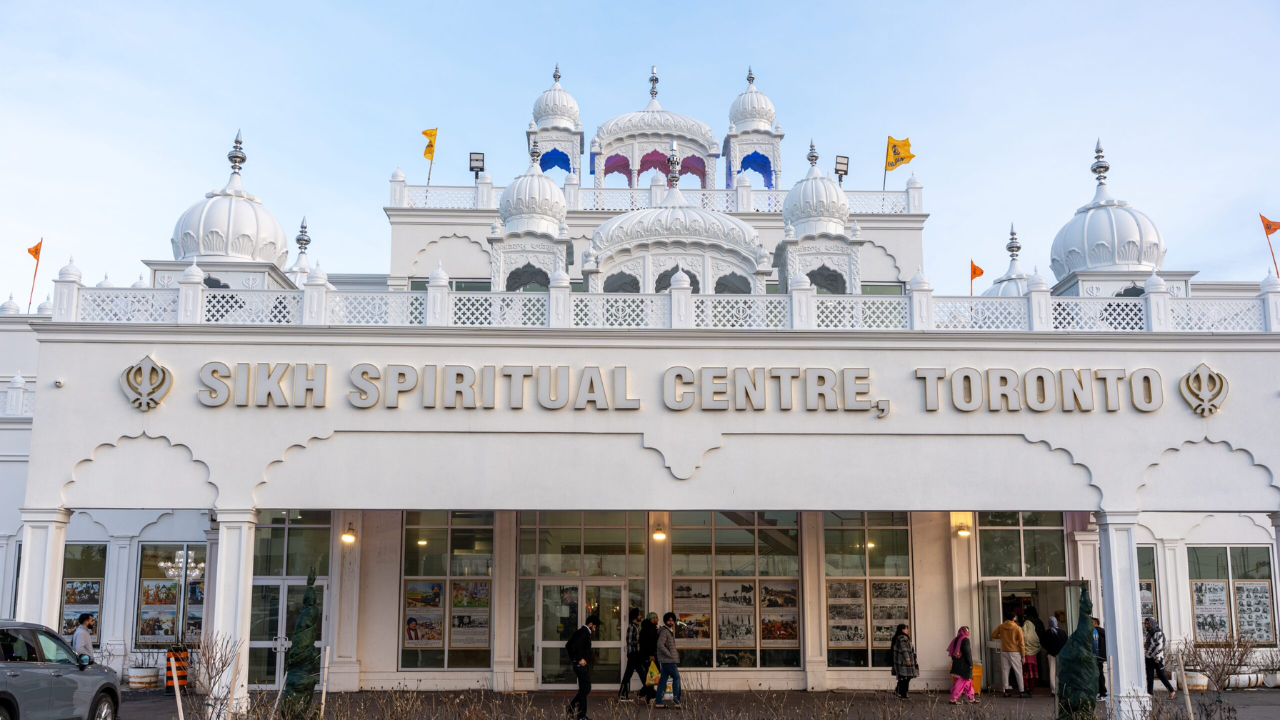
Two prominent Canadian gurdwaras—the Sikh Spiritual Centre Toronto and the Nanaksar Thath Ishar Darbar in Brampton—now find themselves tangled in a sprawling civil action involving millions of dollars in high-stakes debt. At the center of the web stands Rajvinder Grewal, a former Liberal Member of Parliament whose name has become synonymous with a dizzying cascade of financial entanglements.
To understand how a house of worship ends up tied to a labyrinth of multi-million dollar mortgages and predatory interest rates, you have to look past the cold ledgers. You have to look at how power operates in the diaspora.
According to court filings brought by private lenders like SSMT Management, the institutions jointly secured a massive loan that eventually ballooned to roughly $15 million. The terms attached to these funds read like a loan shark's checklist: interest rates starting at a staggering 15 percent for the first six months, before rocketing to 24 percent. At that top tier, the monthly interest alone translates to roughly $300,000.
Money of that scale does not appear overnight. It requires architecture. It requires intermediaries, blurred lines between legal counsel and community trust, and committees willing to gamble with collective assets.
Court documents allege that RSG Law—the firm founded by Grewal—and associated legal actors played a pivotal role in brokering and managing these transactions. Yet, as the civil claims assert, critical oversights occurred. A promised second charge meant to secure the financing against the Brampton property was allegedly never properly registered. Lenders looked for their collateral, only to find a paper trail that vanished into legal trusts, disputed property sales, and overlapping litigation.
None of these civil allegations have been proven in a court of law. Grewal and his representatives have maintained responses ranging from denials of personal wrongdoing to claims that certain matters have reached resolution—though plaintiffs vigorously dispute those assertions. Meanwhile, the Law Society of Ontario has stepped in, with Grewal agreeing not to practice law as disciplinary proceedings loom over him and other affiliated attorneys.
Across Ontario, the broader web of claims involving Grewal and his associates has reportedly crossed the $200 million mark. It is a staggering sum that stretches across failed real estate deals, disputed trust accounts, and frantic emergency court orders trying to freeze assets before they move offshore.
But numbers on a judicial balance sheet fail to capture the human cost.
Think of the elderly volunteer who spends his mornings peeling onions in the gurdwara kitchen, trusting that the institution safeguarding his spiritual home is built on bedrock. Think of the families who drop modest donations into the collection box, believing their money feeds the hungry and educates the struggling. They did not sign up to be silent underwriters in high-risk real estate speculation or collateral in private debt loops.
When places of worship are leveraged like corporate assets, the damage goes deeper than a lost judgment or a frozen bank account. It erodes the fragile trust that holds immigrant communities together far from their homelands.
The judges will deliberate. The lawyers will file their briefs. Asset freezes will hold properties in judicial limbo until winter hearings decide their fate.
Yet long after the court reporters pack up their laptops, the smoke from the communal kitchen will still rise. The question is whether the institution itself will survive the weight of the paper anchored to its name.