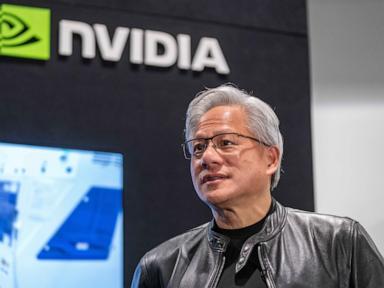
Chip empires don't spend twelve point nine billion dollars on hugs. They do it to lock down the plumbing of an entire industry. Nvidia just made its biggest structural bet yet by acquiring Hugging Face, the central hub where developers store, share, and build open models. It's a massive power grab. Most commentators are missing the real story here. This isn't just about hardware companies buying software toys. It's a calculated move to control where every future machine learning workload runs.
You've probably used Hugging Face if you've spent any time writing Python scripts for transformer models. It grew from a quirky chatbot app into the GitHub of artificial intelligence. Millions of developers rely on it daily to pull pre-trained weights for computer vision, natural language processing, and audio generation. Nvidia noticed that control point. When you own the physical silicon that trains the models and the digital storefront where those models live, you basically run the entire ecosystem.
Let's look at why this transaction happened right now. Proprietary tech giants like OpenAI and Anthropic keep their best recipes locked behind expensive APIs. They treat their weight matrices like state secrets. Meanwhile, the open source community keeps shipping fast, cheap, and surprisingly capable alternatives. Nvidia didn't want to get bypassed by a tidal wave of community-driven code. They want to monetize it.
The Hardware and Software Marriage
Jensen Huang isn't stupid. He knows that selling GPUs alone is a cyclical business. Chips wear out, data centers get saturated, and hyperscalers eventually design their own custom accelerators. Software creates sticky customer relationships. By absorbing Hugging Face, Nvidia binds its CUDA software ecosystem even tighter to the open source developer base.
Think about how this changes your workflow. You used to write code, pull a model from Hugging Face, and deploy it onto whatever hardware you had handy. Expect that experience to optimize heavily for Nvidia architecture. Optimization isn't always neutral. The silicon giant can easily prioritize driver stacks, quantization tools, and inference runtimes that favor their own chips over competitors like AMD or custom Google Tensor Processing Units.
Independent developers are panicking in private Slack channels. They worry about corporate meddling in a space that prided itself on decentralization. They're right to feel anxious. Open source purists love to pretend code is pure. Money talks louder. When a trillion-dollar hardware titan writes a massive check, governance changes.
What This Means for Enterprise Budgets
Corporate IT buyers love safe bets. For the last two years, CTOs struggled to justify running custom open source models because the deployment path felt messy. Security teams hated downloading random model weights from public repositories without knowing their origin or compliance posture.
Nvidia solves that friction overnight. They can package Hugging Face repositories into enterprise-grade bundles backed by enterprise-level support contracts. That's how you sell open source to conservative bank boards and healthcare providers.
- Unified Toolchains: Expect tight integration between enterprise AI development pipelines and hardware monitoring tools.
- Security Scans: Automated checks for model poisoning, bias, and license compliance will likely become standard features.
- Cost Predictability: Businesses will pay premium subscription tiers to guarantee low-latency inference on clustered GPU setups.
Smaller startups building vertical AI applications need to watch their backs. If Nvidia starts bundling infrastructure credits with repository management, venture-backed competitors will struggle to match those subsidies. The moat just got wider.
The Open Source Backlash
Community trust is fragile. Hugging Face built its reputation on neutrality. It didn't matter if you trained your weights on a cluster of old gaming cards or a brand new supercomputer; your repository sat on the same shelf as everyone else's.
That neutrality is gone. Developers hate feeling like products. If the platform starts pushing proprietary Nvidia features too aggressively, expect a massive migration toward alternative registries. Decentralized protocols and mirror sites will pop up overnight. Programmers are stubborn when corporate giants try to corner their playgrounds.
Look at what happened when Oracle bought historical open-source projects. People migrated away. AI is different because the compute requirements are so brutally high. You can't just run a seventy-billion parameter model on a dusty laptop in your garage. You need serious iron. That reliance on heavy infrastructure gives Nvidia immense leverage. They have the chips you need, and now they have the platform you use.
Navigating the Shift
If you're building products in this environment, don't tie your infrastructure to a single ecosystem out of pure convenience. Keep your model weights backed up locally or across multiple object storage buckets. Write hardware-agnostic code wherever possible, even if it takes a few extra lines of abstraction.
The twelve point nine billion dollar price tag proves that software distribution is just as important as silicon manufacturing. Keep building, keep shipping, and don't assume any platform stays neutral forever.