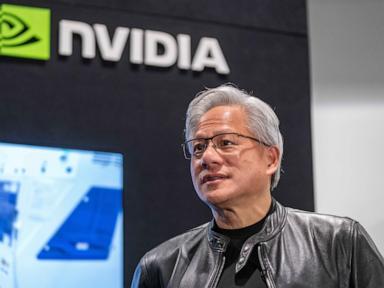
Wall Street loves a neat little story. Draw a straight line between the hardware kingpin of the silicon boom and the digital clearinghouse where developers store their open-source models, and analysts instantly reach for their checkbooks. Headlines scream about a thirteen billion dollar buyout, treating the marriage of compute and code as an inevitability.
It is a bad idea. In fact, it is a catastrophic waste of capital that completely misunderstands how modern software actually creates and destroys value.
I have spent the last two decades watching corporate titans swallow their supply chains whole, convinced that vertical integration solves every strategic headache. I have seen boardrooms burn through nine figures chasing platform consolidation, only to watch the very talent they bought walk out the back door with their laptops and GitHub tokens the moment the vesting schedule cleared.
The lazy consensus says Nvidia needs Hugging Face to lock down the application layer. The truth is much uglier for anyone holding stock in either camp.
The Open Source Mirage
Let us start by defining what Hugging Face actually is. It is not an asset-heavy tech company with proprietary moats. It is a social network for developers, a Git repository with a friendly UI, and a hosting utility for weights and biases. It operates on goodwill, community contributions, and the shared ethos of open science.
When a hardware monopoly steps in and slaps a corporate price tag on that ecosystem, the magic evaporates.
Open source survives on neutrality. The moment Hugging Face becomes a wholly-owned subsidiary of a chip vendor whose hardware margins make luxury watchmakers look like discount stores, the trust factor plummets to zero. Developers do not use the platform because they love corporate governance. They use it because it is an open arena where anyone can upload a model without paying a toll to the gatekeeper.
If Jensen Huang writes a massive check for thirteen billion dollars to acquire that traffic, he is buying an empty shell. The code stays, but the community migrates. Within eighteen months, a decentralized alternative emerges on neutral infrastructure, funded by competitors who have every incentive to bleed Nvidia dry.
The Developer Exodus Problem
Corporate acquisitions in the intelligence sector operate under a fundamental delusion about human capital. Executives assume engineers are attachments to server racks. They think you can buy a company the way you buy a forklift, park it in your warehouse, and expect the same output.
Software developers are migratory birds. They code for impact, autonomy, and speed.
Imagine a scenario where a monolithic hardware giant absorbs the central hub of community machine learning. Overnight, internal bureaucracy replaces agility. Compliance reviews slow down releases. Legal teams start scrutinizing every shared repository for intellectual property contamination or antitrust exposure. The brilliant minds who built the platform find themselves trapped in middle-management purgatory, filling out quarterly impact reports instead of pushing commits.
They leave. They always leave. You cannot retention-bonus your way out of a culture clash when you replace an open ecosystem with a proprietary corporate command structure. You end up paying billions for a URL and a database while the actual creators are three blocks away launching a direct competitor.
The Wrong Question About Control
People Also Ask why hardware companies need to own software layers to survive the next cycle. The premise itself is fundamentally flawed. It assumes that hardware value relies on captive software distribution.
Nvidia does not need to own the repository. They need people to build models that burn compute cycles on their GPUs. That is it. Whether those models live on Hugging Face, a decentralized peer-to-peer network, or a basement server in Berlin is completely irrelevant to the bottom line of a company selling seventy-thousand-dollar accelerators.
In fact, forcing developers onto a proprietary platform creates friction. Friction reduces experimentation. Reduced experimentation means fewer models trained. Fewer models trained means fewer chips sold.
By trying to capture the tollbooth, you destroy the highway.
What Actually Works Instead
If you run a trillion-dollar infrastructure giant, your job is not to buy every playground your users visit. Your job is to make sure your playground is the only one with the power supply to run the rides.
Instead of deploying thirteen billion dollars into an integration nightmare that alienates the open-source community, deploy that capital into distributed research grants, neutral compute subsidies, and open standards that make hardware interoperability trivial.
Make your silicon so fast and your software ecosystem so frictionless that developers choose your hardware out of pure economic rationality, not because they are trapped inside a walled garden.
The companies that win the next decade will not be the ones that build the biggest cages. They will be the ones smart enough to leave the doors wide open while charging rent on the electricity.
Stop trying to own the entire stack. Build better chips, keep your hands off the community, and let the developers do what they do best. Break things on their own terms.


