Emmanuel Macron did not just interrupt a panel at the University of Nairobi this week; he effectively personified the very "civilizing mission" rhetoric that France has spent a decade trying to bury. By seizing the microphone to lecture a room of young African innovators on "respect" and "rules," the French President punctured the carefully curated balloon of the Africa Forward Summit. What was intended to be a $27 billion pivot toward a "partnership of equals" instead devolved into a viral demonstration of European paternalism.
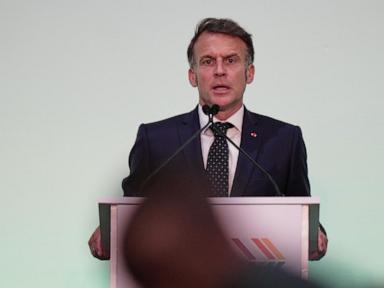
The optics were disastrous. As a speaker struggled against the rising hum of a restless crowd, Macron rose from his seat, walked onto the stage, and took the microphone. "Hey, hey, hey! I’m sorry guys, but it’s impossible to speak about culture... with such a noise," he admonished. He told the audience that if they wanted to talk, they should go to "bilateral rooms" or get out. While the hall fell silent under the weight of presidential authority, the silence outside that room has been far more deafening for French interests.
The Mirage of the Equal Partner
For years, Paris has attempted to scrub the stain of Françafrique—that opaque, post-colonial web of military interventions and hand-picked dictators—from its continental strategy. This summit in Nairobi was the crown jewel of that rebranding. By choosing Kenya, an English-speaking economic powerhouse, Macron was signaling that France is no longer just the "policeman of Francophone Africa." He was pitching France as a modern venture capitalist, ready to fund the "Africa Forward" vision with billions in tech and green energy investments.
However, the "Teacher Macron" moment exposed the fundamental friction in this transition. You cannot sell a "partnership of equals" while simultaneously treating the other party like schoolboys in a detention hall. The backlash from African intellectuals and political figures was swift. Fadzayi Mahere, a prominent Zimbabwean lawyer, captured the sentiment on social media, asking if a foreign guest would dare to seize the stage and scold an audience in Paris.
The answer is almost certainly no. This disparity in etiquette is not just about manners; it is about the lingering hierarchy of international diplomacy.
Why the Scolding Matters More Than the Money
The numbers Macron brought to Nairobi are significant. The French Treasury is moving toward:
- $16 billion in private and public funds for energy transition.
- $10 billion from African investors directed at digital and AI infrastructure.
- A goal of creating 250,000 jobs across the continent and France.
But money is no longer the primary currency of influence in Africa. Russia offers security without human rights lectures; China offers infrastructure without political strings. France, caught between its democratic values and its desire for relevance, often defaults to a moralizing tone that grates on a generation of Africans who view sovereignty as non-negotiable.
The interruption in Nairobi wasn't just a lapse in protocol; it was a symptom of a deeper cognitive dissonance in French foreign policy. Macron wants to be the "cool," startup-friendly president who understands the youth, yet he remains the head of a state that still maintains a military footprint—however shrinking—that many locals view with deep suspicion.
The Security Contradiction
While Macron talks about culture and innovation, the backdrop is one of military retreat. France has been unceremoniously pushed out of Mali, Burkina Faso, and Niger. Just last year, its presence in Senegal was challenged by the new administration of Bassirou Diomaye Faye.
To compensate, France is seeking new military tie-ups in "stable" nations like Kenya. Yet, even here, the ground is shaky. A recent defense agreement between Paris and Nairobi has already drawn fire from Kenyan civil society. Critics argue it provides too much legal immunity for French troops, echoing the frustrations Kenyans have had for decades with the British military’s legal protections.
The New Scramble for Influence
The Nairobi summit was supposed to prove that France can compete with the "no-strings-attached" models of its rivals. By focusing on the "ocean economy" and AI, Macron is trying to move the conversation toward sectors where French expertise is genuinely world-class.
Yet, the irony is thick. Macron touted Europe as the "ethical partner" that defends the "rule of law." But when that same partner interrupts a panel of African creatives to enforce "the rules" of the room, it reinforces the stereotype of the European leader who believes he knows what is best for Africa better than Africans do.
The moderator’s follow-up comment—calling Macron’s intervention "cold leadership"—was perhaps the most telling moment of the day. It was a polite, diplomatic way of acknowledging that the room had been hijacked.
The Cost of the Lecture
In the high-stakes game of geopolitical influence, tone is often as important as the checkbook. The Nairobi incident will likely be clipped, memed, and used by anti-French influencers across the Sahel to argue that "the more things change, the more they stay the same."
If France wants to truly pivot, it needs to do more than change the language of its treaties or the location of its summits. It needs to abandon the instinctive urge to manage the African narrative. The young entrepreneurs in that hall didn't need a French president to teach them how to listen; they needed a partner who knows how to sit in the audience and wait for his turn to speak.
France is running out of time to get this right. With only a year left in his current mandate and French influence at its lowest point in decades, Macron’s Nairobi scolding might be remembered not as a moment of "bold leadership," but as the moment the "New Africa" policy finally lost its audience.
Macron's Nairobi summit interruption
This video captures the exact moment French President Emmanuel Macron halted the summit to rebuke the audience, providing the necessary visual and auditory context for the diplomatic tension described.