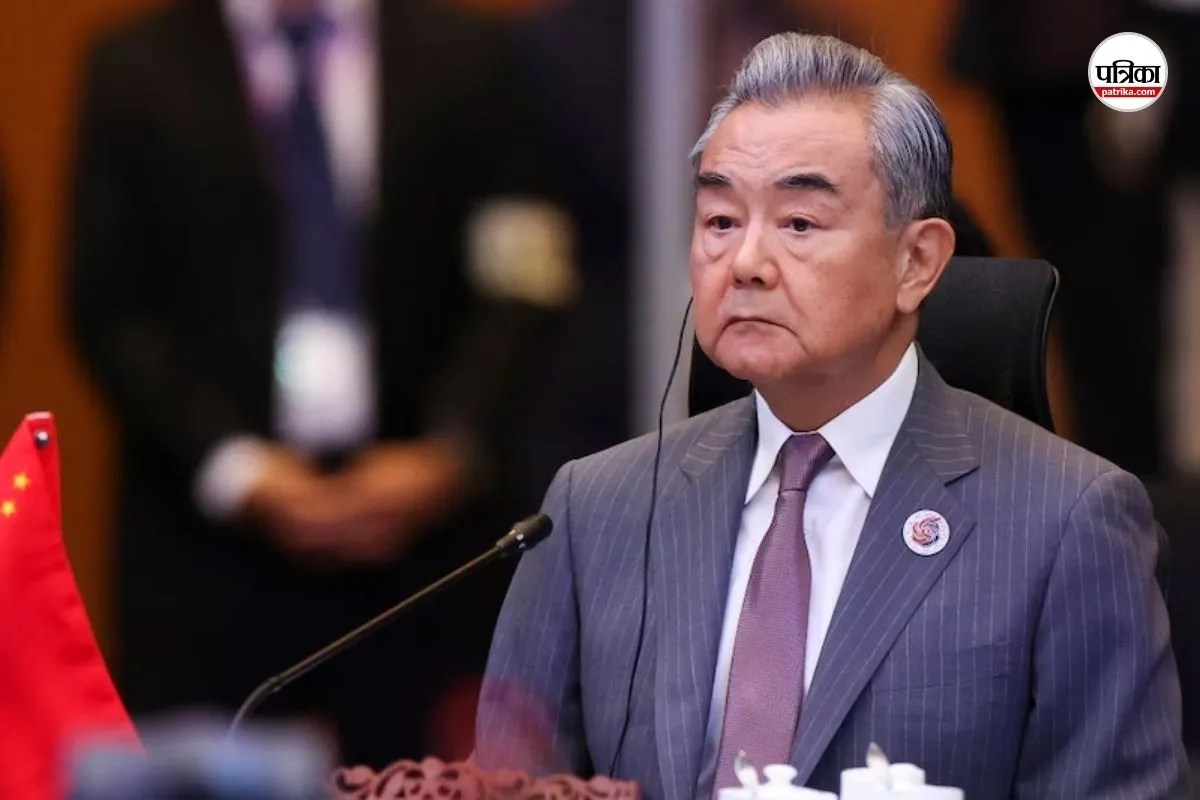
The absence of Chinese Foreign Minister Wang Yi from the BRICS Foreign Ministers' meeting in Nizhny Novgorod signifies a calculated recalibration of Beijing’s diplomatic bandwidth rather than a retreat from the bloc. While surface-level reporting attributes this to scheduling conflicts, a structural analysis reveals a prioritization of bilateral strategic synchronization over multilateral optics. The substitution of the Foreign Minister with Vice Foreign Minister Ma Zhaoxu indicates that China is maintaining functional continuity while signaling a shift in how it allocates high-level political capital within the expanded "BRICS Plus" framework.
The Strategic Resource Allocation Model
Diplomatic engagement functions as a finite resource. For China, the decision to send a deputy involves a trade-off between the symbolic weight of the BRICS collective and the immediate demands of concurrent high-level bilateral engagements. The "reason" cited—participation in the BRICS-related activities being managed by a deputy—masks the underlying reality of a congested diplomatic calendar where China is currently prioritizing the stabilization of its relations with European powers and the management of regional security architectures in Southeast Asia. Discover more on a related subject: this related article.
Three specific variables dictate this allocation:
- Seniority Thresholds: Sending a Vice Foreign Minister ensures that the technical and communiqué-level work continues without interruption. Ma Zhaoxu is not a peripheral figure; he is a seasoned diplomat who handles the BRICS portfolio extensively. This maintains the "operational" integrity of the meeting while withholding the "political" apex.
- Multilateral Dilution: As BRICS expands from five to ten members (and continues to engage dozens of "partner" nations), the marginal utility of a Foreign Minister’s presence at every ministerial gathering decreases. Beijing is transitionally treating these meetings as administrative milestones rather than high-stakes decision-making forums.
- The Russia-Ukraine Variable: The meeting, hosted by Russia, carries specific geopolitical baggage. China frequently calibrates its level of representation to manage international perceptions of its "no limits" partnership with Moscow, especially when Western scrutiny is at a peak.
Mapping the BRICS Internal Hierarchy
The expansion of BRICS has created a tiered system of influence. The absence of a top-tier minister from the bloc’s largest economy highlights a growing tension between the group’s aspirational goals and its operational realities. China's logic follows a pattern of "Institutional De-prioritization" where it utilizes secondary officials to test the waters of newly expanded formats. More analysis by The Washington Post highlights related views on this issue.
The Ma Zhaoxu Proxy Function
Ma Zhaoxu’s role is to ensure that China’s core interests—specifically the push for local currency settlement and the expansion of the New Development Bank—remain on the agenda without committing Wang Yi to the performative aspects of the summit. This allows China to:
- Maintain a "listening post" on the positions of new members like Iran and Ethiopia.
- Avoid direct, high-level confrontations or forced alignments on controversial communiqué language regarding global conflicts.
- Preserve Wang Yi’s schedule for direct mediation or bilateral "firefighting" in other theaters.
The Friction of Expansion
The BRICS 2024 cycle is the first major test of the bloc's expanded capacity. The transition from a quintet to a decet introduces a "Complexity Tax." Coordination becomes exponentially more difficult, and the probability of divergent interests increases. China, as the primary economic engine of the group, faces a disproportionate burden in reconciling these interests.
The ministerial absence serves as a subtle signal to the bloc: the era of BRICS as a purely consensus-driven, high-level photo opportunity is ending. It is evolving into a more bureaucratic, layered organization. This evolution mirrors the G20, where deputies and "sherpas" perform the heavy lifting, and ministers only converge when a significant breakthrough is imminent.
Geopolitical Signaling and the "Non-Alignment" Paradox
China’s diplomatic movements are rarely isolated. The decision must be viewed alongside recent high-level interactions with the Global North. By sending a lower-ranking official to a Russia-hosted BRICS event, Beijing maintains a degree of "strategic ambiguity." This provides a buffer when negotiating with the EU or the US, allowing Chinese interlocutors to claim a balanced approach to multilateralism.
However, this creates a risk for the internal cohesion of BRICS. Smaller members and new entrants look to China for leadership. A perceived downgrade in representation can be interpreted as a cooling of interest, which India or Brazil might exploit to assert their own leadership within the Global South.
Identifying the Bottleneck in Multilateral Efficiency
The "Cost Function" of attending a ministerial meeting includes travel time, preparation, and the opportunity cost of missed bilateral meetings. For a country managing a slowing domestic economy and intensifying trade frictions with the West, the opportunity cost of a multi-day trip to Nizhny Novgorod was deemed too high.
The mechanism at play here is Strategic Conservation. China is husbanding its top-level diplomatic assets for the BRICS Leaders' Summit later in the year. The Foreign Ministers' meeting is viewed as a preparatory stage where Ma Zhaoxu can effectively safeguard Chinese red lines without the need for Wang Yi’s direct intervention.
Structural Implications for Global South Leadership
The shift in representation suggests that China is moving toward a "Functional Multilateralism." This approach prioritizes specific outcomes—trade corridors, currency swaps, and infrastructure projects—over the traditional diplomatic pageantry of high-level meetings.
The following logical constraints define this new phase:
- Decoupling Diplomacy from Attendance: Influence is no longer measured solely by the rank of the attendee but by the financial and logistical support provided to the institution.
- Bilateral Dominance: China continues to favor bilateral "BRICS-plus-one" arrangements over collective bargaining within the bloc, as the former allows for greater leverage.
- Technocratic Transition: The movement of Ma Zhaoxu to the forefront suggests that BRICS is entering a phase of technical implementation, requiring specialists in international law and finance rather than generalist political figures.
Strategic Forecast
China will continue to use varying levels of ministerial representation as a thermostat to regulate its relationship with both the BRICS collective and the host nation. The absence of Wang Yi is a tactical maneuver designed to optimize the Foreign Minister's time for high-stakes bilateralism while ensuring that the "BRICS machine" continues to run on Chinese-vetted tracks.
The immediate result will be a communiqué that is heavy on technical cooperation and light on transformative political shifts. Analysts should expect the upcoming Leaders' Summit to be the true barometer of China's commitment. Until then, the delegation of authority to the Vice-Ministerial level indicates that China perceives the current BRICS agenda as stable and non-volatile, requiring maintenance rather than intervention.
Stakeholders should monitor the level of representation at the next three multilateral forums China attends. If a pattern of deputy-level attendance emerges, it will confirm a broader shift toward a "Hub-and-Spoke" diplomatic model where Beijing centers its efforts on direct bilateral power-brokering, relegating multilateral summits to the status of administrative reviews.