The steel door of a prison cell has a specific sound when it closes. It is not just the mechanical thud of metal meeting metal; it is the sound of a period being placed at the end of a sentence that was meant to be a paragraph. In Hong Kong, for thousands of young people who found themselves on the wrong side of that door following the social unrest of recent years, that sound has become the soundtrack of their youth.
But what happens when the door opens again? For a deeper dive into this area, we suggest: this related article.
Cardinal Stephen Chow Sau-yan, the head of Hong Kong’s Catholic Church, has spent much of his tenure looking at that door. He isn’t looking at the lock, but at the person standing behind it. He is asking a question that a city, still nursing its bruises and navigating its new reality, often finds too painful to answer: Are we a society that discards people, or one that restores them?
Consider a hypothetical young man. Let’s call him Him-chi. He is twenty-two now. Three years ago, he was a student with a backpack full of textbooks and a heart full of convictions that he didn’t quite know how to handle. He made a choice. It was a choice that led to a courtroom, a conviction, and a cell. Now, he is months away from release. He sleeps on a narrow bunk and wonders if the world outside has a place for someone with a permanent mark on his record. He wonders if he is a citizen or a ghost. For additional context on this issue, in-depth reporting can be read on NBC News.
Chow’s plea for a "second chance" for these young offenders is not a call for the erasure of the law. It is an argument for the survival of the community. When a young person is trapped in the amber of their worst mistake, the city loses more than just their labor. It loses their potential, their taxes, their family stability, and eventually, their hope. And a hopeless population is the most volatile substance on earth.
The Mathematics of Mercy
Mercy is often treated as a soft, sentimental concept—something for Sunday mornings and greeting cards. In reality, it is the most practical tool in the kit of any functioning civilization.
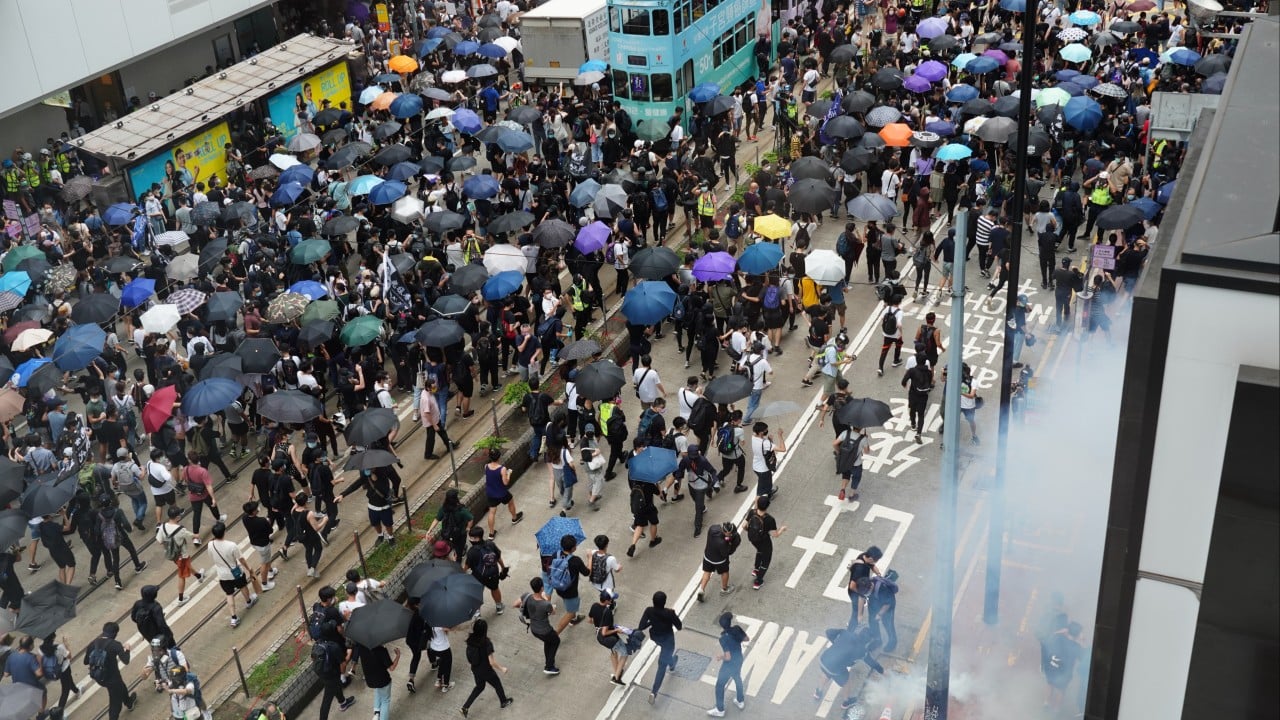
When we talk about thousands of arrests—over 10,000 in connection with the 2019 protests, with a significant portion being under the age of 25—we are talking about a demographic crisis in slow motion. If these individuals are barred from the civil service, if private companies shred their resumes the moment a background check flashes red, and if universities turn them away, we are effectively creating a permanent underclass.
The logic of the "long sentence" extends far beyond the prison walls. It manifests as a "no" from a landlord. It looks like a "rejected" notification from a job portal. It feels like the cold shoulder from an old friend who is too afraid to be seen with a "marked" person. Cardinal Chow understands that this social excommunication serves no one. It doesn't make the streets safer; it makes the margins of society more crowded.
He has consistently urged the government and the public to provide "concrete help." This isn't just about kind words. It’s about policy. It’s about tax incentives for businesses that hire rehabilitated youth. It’s about educational programs that don't discriminate based on a past that has already been paid for in time served.
The Bridge Over the Great Divide
Hong Kong is a city of bridges, but the most important ones are currently broken. The gap between the aging establishment and the disillusioned youth is wide, deep, and filled with mutual suspicion.
Chow occupies a unique, precarious space on that bridge. He is a man of faith in a secular-political storm. He travels to Beijing, he speaks to the local administration, and he sits with the families of those in jail. He is a translator of pain. His advocacy suggests that if the government wants a "harmonious society"—a phrase frequently used in official rhetoric—it cannot achieve it through subtraction. You cannot build a whole city by cutting out the pieces you find inconvenient.
The Cardinal’s approach is rooted in the belief that the human spirit is not a fixed asset. It is a living, breathing thing capable of radical change. If we believe that a nineteen-year-old is incapable of learning, growing, or regretting, then we have a very dim view of humanity itself.
Imagine Him-chi again. He walks out of the correctional facility. He has his belongings in a plastic bag. He looks at the skyline. If the first ten doors he knocks on are slammed in his face because of his history, the "rehabilitation" he underwent inside becomes a lie. He is told he has paid his debt, but the interest keeps mounting.
Beyond the Political Lens
It is easy to categorize this as a political issue. To do so is a mistake. This is a human developmental issue.
Young brains are high-performance engines with unfinished braking systems. Neurobiology tells us that the prefrontal cortex—the part of the brain responsible for impulse control and long-term consequence weighing—isn't fully cooked until the mid-twenties. Society recognizes this in almost every other context. We have different insurance rates for young drivers; we have age limits on alcohol and tobacco. Yet, when it comes to the errors made during times of intense social pressure, we suddenly demand the wisdom of a sage from the energy of a teenager.
Chow isn't asking for the world to pretend nothing happened. He is asking for a pathway. He is suggesting that the label of "offender" should be a description of a past action, not a definition of a future identity.
There is a historical precedent for this kind of restorative justice. After periods of great upheaval, the societies that thrive are the ones that find a way to reintegrate their youth. Those that fail to do so often find themselves trapped in a cycle of resentment and recidivism. The Cardinal is essentially acting as a social architect, trying to ensure that the foundation of Hong Kong’s future isn't built on the exclusion of its own children.
The Weight of the Gaze
We often underestimate the power of how we look at someone. When a young person who has been incarcerated enters a room, they can feel the weight of the collective gaze. It is a gaze that expects them to fail. It is a gaze that waits for the slip-up.
Chow’s message is an attempt to shift that gaze. He is calling on the business community, the educational sector, and ordinary families to look at these young people with the expectation of success.
"They need to see that there is a future," he has noted in various forums.
A future isn't a vague idea. A future is a Monday morning where you have a reason to get out of bed. It’s a paycheck that allows you to buy dinner for your parents. It’s a degree that says you are qualified to contribute. Without these tangible markers of belonging, the "second chance" is just a hollow slogan.
The church, under his leadership, has been working quietly. It isn't just about the high-level meetings; it’s about the visitation teams, the counseling services, and the push for vocational training. It’s about acknowledging that for many of these kids, the "crime" was the easiest part of their journey. The "punishment" is the life that follows.
The Silence of the City
There is a particular kind of silence that has fallen over parts of Hong Kong. It’s the silence of things not talked about. The Cardinal’s voice is one of the few breaking that silence, reminding the public that thousands of their fellow citizens are living in a state of suspended animation.
If we ignore the need for reintegration, we aren't just being "tough on crime." We are being short-sighted about our own safety. A young person with a stake in society—a job, a home, a community—is a person who protects that society. A young person who is told they will never belong is a person with nothing to lose.
Chow’s plea is an invitation to courage. It takes no courage to stay angry. It takes no courage to keep a door locked. It takes an immense amount of courage to reach out a hand to someone who once stood on the other side of a barricade and say, "We need you to help us build what comes next."
The city’s recovery isn't measured in GDP or the height of new skyscrapers. It is measured in the distance between the prison gate and the first day of a new job.
Night falls over the Victoria Harbour, the lights of the skyscrapers reflecting in the water like a thousand broken promises. Somewhere in a small apartment, a mother waits for a son who is still behind bars, or perhaps one who just returned and is staring at a blank computer screen, wondering what to type in the "criminal record" box of a job application. The Cardinal’s words are for them. But more importantly, they are for us.
We are the ones who decide if that box is a dead end or a detour. We are the ones who decide if the sound of the closing door is the last thing a young person hears, or if it is followed, eventually, by the sound of a key turning in a lock from the outside, welcoming them home.
The walk back is long. It is steep. It is exhausting. But the Cardinal is right: nobody should have to walk it alone.