Russia has launched a massive, well-funded initiative to funnel university students and vocational trainees directly into the front lines of electronic warfare. This is not a simple recruitment drive. It is a systematic restructuring of the Russian education system designed to convert civilian technical talent into a specialized military labor force. By offering financial packages that dwarf the average Russian salary, the state is effectively purchasing the future of its youth to maintain a technological edge in the ongoing conflict in Ukraine.
The strategy targets the Alabuga Special Economic Zone in Tatarstan and various technical colleges across the country. These institutions have shifted from teaching civil engineering and computer science to focusing on the assembly, programming, and operation of loitering munitions. Students as young as 16 are being integrated into production lines for Iranian-designed Shahed drones, now domestically manufactured under the Geran-2 moniker. The incentive is simple and brutal: cash. In regions where the monthly wage might hover around 50,000 rubles, students are being promised triple that amount, alongside tuition waivers and the unspoken promise of avoiding traditional infantry conscription.
The Alabuga Blueprint for War
The Alabuga Polytech serves as the epicenter of this transformation. Originally intended to be a hub for international investment and high-tech manufacturing, it has morphed into a closed-loop military industrial complex. The "internship" programs here are grueling. Participants report 12-hour shifts where they assemble airframes or wire flight controllers. This is not "work-study" in any traditional sense. It is industrial mobilization masked as vocational training.
The financial lure acts as a powerful anesthetic against ethical concerns. For a student from a provincial town, the offer of 150,000 rubles a month represents total financial independence. It allows them to support their families and escape the cycle of poverty that plagues much of the Russian hinterland. However, this money comes with a high price. Students sign contracts that include draconian non-disclosure agreements and heavy financial penalties for early withdrawal. Once they are in the system, they belong to the state.
A Specialized Meat Grinder
The transition from the factory floor to the cockpit of a drone is a short one. The Kremlin realized early in the conflict that the attrition rate of high-end equipment was sustainable only if they had a constant supply of operators. Unlike a traditional pilot who requires years of training, a First Person View (FPV) drone operator can be trained in weeks. The barrier to entry is low, especially for a generation raised on gaming and digital interfaces.
By recruiting students, Russia is tapping into a demographic that possesses the innate spatial awareness and digital literacy required for modern drone warfare. These are the "digital natives" of the battlefield. The government is not just looking for soldiers; they are looking for technicians who can troubleshoot a jammed signal under fire or reprogram a flight path on the fly. This shift signals a move away from the "human wave" tactics that defined earlier stages of the war toward a more tech-centric, albeit equally lethal, strategy.
The Illusion of Choice
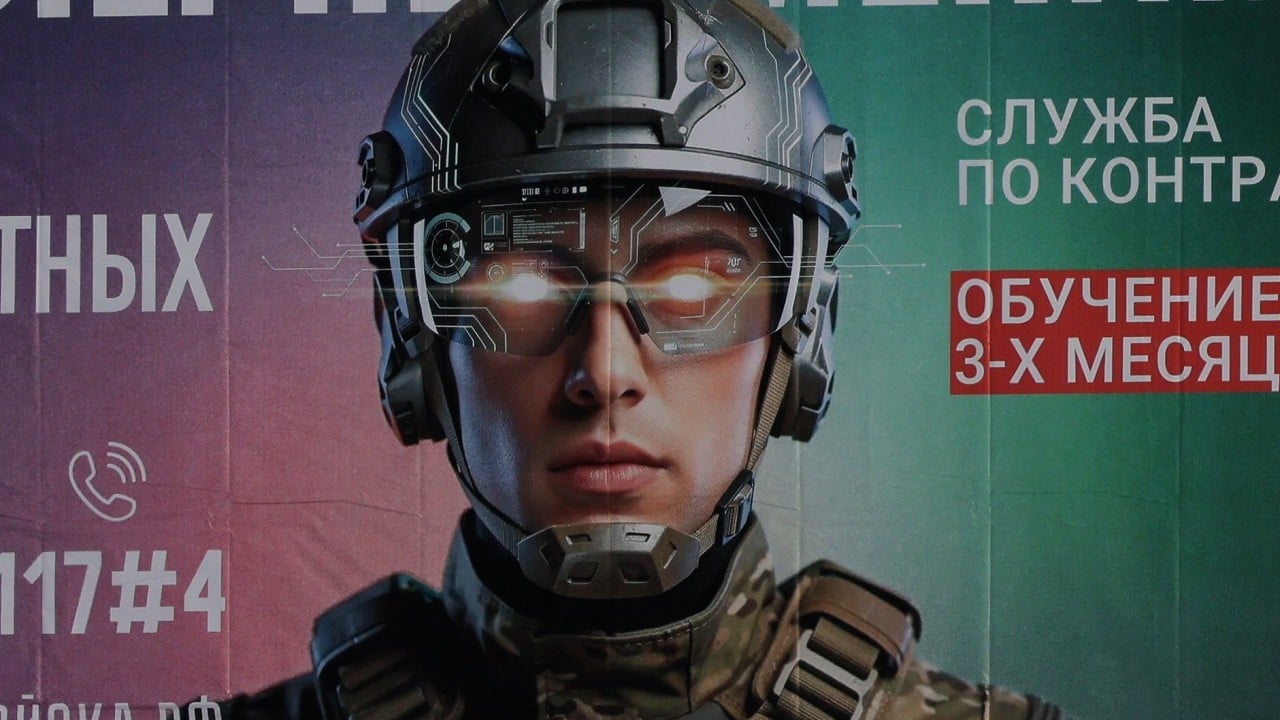
The recruitment literature often frames these roles as "safe" alternatives to the trenches. The propaganda suggests that sitting in a bunker miles from the line of contact, wearing a VR headset, is a sanitized version of war. This is a lethal misrepresentation. Drone operators are high-priority targets for counter-battery fire and Ukrainian "hunter-killer" drone units. The moment a signal is broadcast, the operator’s position is vulnerable to electronic detection and subsequent strike.
Furthermore, the legal framework is tightening. New legislation increasingly blurs the line between civilian defense workers and active-duty military personnel. A student who joins a drone unit at Alabuga might find their status changed overnight, moving from a "technical intern" to a combatant with no clear path back to civilian life. The state is creating a trap where the entrance is paved with gold and the exit is guarded by military police.
Dismantling the Academic Future
The long-term cost to the Russian economy is incalculable. By redirecting the brightest technical minds toward the immediate needs of the war machine, the state is cannibalizing its own future. Innovation in the civilian sector has ground to a halt. The "brain drain" that saw hundreds of thousands of tech workers flee the country in 2022 is now being compounded by a "brain rot," where those who stayed are being siloed into narrow military applications.
Universities that once sought partnerships with MIT or Siemens are now taking direction from the Ministry of Defense. Curricula are being rewritten to prioritize ballistics, signal processing, and composite materials over general scientific inquiry. This creates a generation of specialists whose skills are highly optimized for destruction but potentially useless in a globalized peacetime economy. If and when the conflict ends, Russia will be left with a workforce trained to build weapons for a war that has already moved on.
The Mechanics of the Financial Hook
- Direct Payments: Monthly stipends for "interns" often exceed 100,000 rubles.
- Performance Bonuses: Extra pay for meeting production quotas or successful field deployments.
- Debt Forgiveness: Forgiveness of existing student loans or government-subsidized mortgages for family members.
- Social Status: Elevation of drone operators to "technical heroes" in state media, providing a sense of purpose to disillusioned youth.
The Global Implications of Cheap Precision
What Russia is doing at Alabuga is a proof-of-concept for authoritarian regimes worldwide. It demonstrates how a mid-tier power can bypass traditional military bottlenecks by industrializing the recruitment of youth. The reliance on commercial off-the-shelf (COTS) components combined with a steady stream of student labor has allowed Russia to scale its drone production to thousands of units per month.
This is the democratization of precision strike capabilities. When the cost of the operator is low and the cost of the weapon is even lower, the traditional math of air defense fails. It costs an adversary significantly more to intercept a drone than it costs Russia to build it and pay a student to fly it. This economic imbalance is the core of the Kremlin’s current military philosophy.
Key Centers of Drone Education
| Institution | Primary Focus | Estimated Student Intake |
|---|---|---|
| Alabuga Polytech | Shahed/Geran Assembly | 1,000+ per year |
| Samara National Research University | Engine Design | 400+ per year |
| Moscow Aviation Institute | Autonomous Flight Software | 600+ per year |
| St. Petersburg Polytechnic | Electronic Warfare Systems | 300+ per year |
The Ethics of Displacement
There is a profound psychological toll on the students involved. Many are recruited under the guise of patriotic duty, only to find themselves working in sweatshop conditions. Reports have surfaced of students being forced to work through the night to meet delivery deadlines for the Ministry of Defense. The pressure is immense, and the mental health support is non-existent. They are being treated as components in a larger machine, easily replaceable and constantly monitored.
The recruitment of students also serves a domestic political purpose. By involving a broad cross-section of the youth in the war effort, the Kremlin ensures that the civilian population has "skin in the game." It becomes harder for families to oppose the war when their children are the ones building and operating the weapons. This is a form of societal conscription that goes beyond the physical drafting of bodies; it is the conscription of the Russian mind.
Technical Barriers and the Components Gap
Despite the massive influx of student labor, Russia still faces a significant hurdle: the lack of high-end domestic semiconductors. The drones being built by these students rely heavily on smuggled Western technology or Chinese alternatives. The "students" are often tasked with retrofitting these foreign components to work with Russian software. It is a massive exercise in reverse engineering and "gray market" integration.
This creates a paradox where the Russian war effort is dependent on the very globalized economy it claims to be rejecting. The student-led drone units are a temporary solution to a structural problem. They can provide the volume, but the quality of the technology remains precarious. If the supply of foreign chips were to truly dry up, the thousands of trained operators would be left holding plastic shells with no brains.
The Hard Reality for the Class of 2026
The current cohort of technical students in Russia is graduating into a world that has no place for their original dreams. The engineer who wanted to design sustainable energy systems is now wiring thermal cameras for night-time raids. The coder who wanted to build the next great app is now optimizing targeting algorithms. This is the tragedy of the Russian "drone generation." They are being paid well to build their own cage, and by the time the money stops flowing, the cage will be the only home they know.
The financial packages are a bridge to nowhere. They provide a temporary reprieve from economic reality while ensuring that the recipient is permanently alienated from the global community. For the Kremlin, this is a successful policy. For the students, it is a mortgage on a future they will likely never see.
Every ruble spent on a student drone pilot is a ruble stolen from the Russian hospitals, schools, and infrastructure of the 2030s. The state is gambling that it can win the war before the bill for this generational theft comes due.