If you only watch the news clips of splashing water cannons and ramming ships, you'd think the South China Sea is on the verge of a total meltdown. But look closer at the relationship between Beijing and Hanoi right now. While the Philippines is locked in a high-stakes standoff with China over the Second Thomas Shoal, Vietnam has quietly pivoted. They aren't backing down on their claims—not by a long shot—but they've decided that screaming at each other isn't nearly as profitable as building high-speed rails and fixing supply chains.
The shift from confrontation to a calculated, tense calm isn't an accident. It's a survival strategy for both sides. For Vietnam, it's about "bamboo diplomacy"—bending with the wind so you don't snap. For China, it's about keeping one major neighbor from sprinting into the arms of the Americans while the U.S. tries to encircle them with "mini-lateral" alliances.
The Trillion Dollar Handshake
Let's talk numbers because that's where the real story lives. In 2025, bilateral trade between these two reached a staggering $256.4 billion. To put that in perspective, Vietnam's trade deficit with China alone is over $115 billion. You can't just flip the table on your biggest supplier when 41% of your imports—the very parts your factories need to build iPhones and Samsung TVs—come from across that northern border.
Vietnam has become the "plus one" in the "China Plus One" strategy. When Western companies move manufacturing out of China to avoid tariffs, they often just move it to Northern Vietnam. But here's the kicker: those Vietnamese factories still rely on Chinese components. They're basically two lungs in the same body. If one stops breathing, the other dies.
Hard Connectivity over Hard Power
While the world was distracted by maritime skirmishes, Beijing and Hanoi were busy signing 45 different cooperation agreements in April 2025. We're talking about massive infrastructure like the $8.4 billion Lao Cai–Hanoi–Hai Phong railway.
This isn't just about moving people; it's about "hard connectivity." Vietnam is finally switching to the international standard gauge for its tracks. Why? Because right now, they have to offload goods at the border and move them to different trains. Once these tracks are unified, goods will flow from Kunming to the port of Hai Phong without a single hiccup. When you're that integrated, you tend to think twice before firing a missile at your business partner.
The Philippine Contrast
You can't understand Vietnam's "calm" without looking at the Philippines' "chaos." Manila has gone all-in on its alliance with the U.S., granting access to more military bases and conducting very loud joint patrols. China has responded by getting aggressive, using "gray-zone" tactics to bully Philippine resupply missions.
Vietnam sees this and wants no part of it. They've watched the Philippines lose control of Scarborough Shoal in the past and they've decided that a "struggle and cooperation" model works better. They still build up their islands—Vietnam has been on a massive dredging spree lately—but they do it quietly. They don't put it on TikTok. They don't invite CNN crews on their supply boats. They keep it "in the family" of the Communist parties.
Party to Party Ties are the Secret Sauce
There's a special layer to this relationship that the U.S. can't replicate: the ideological bond. Both countries are ruled by Communist Parties that prioritize one thing above all else: staying in power.
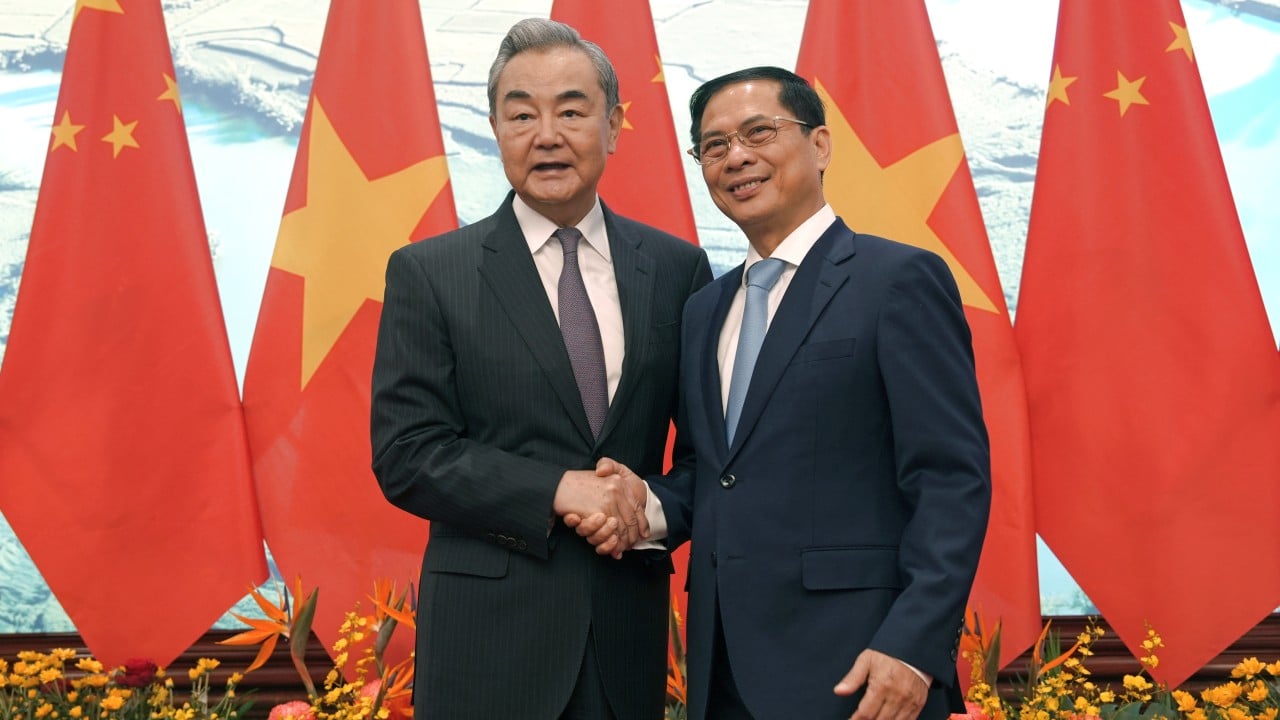
When Vietnam’s General Secretary To Lam visited Beijing in August 2024, it wasn't just a state visit. It was a pilgrimage. These leaders speak the same political language. They both fear "color revolutions" and Western interference. In March 2026, we saw something new: a strategic dialogue between the foreign affairs, defense, and public security ministers of both countries.
When your public security ministers are meeting to discuss "maintaining social stability," you're not just neighbors; you're partners in regime survival. That shared DNA provides a floor for how low the relationship can sink.
Navigating the 2026 Code of Conduct
The goal for the end of 2026 is a finalized Code of Conduct (COC) in the South China Sea. Malaysia, as the 2025 ASEAN Chair, pushed hard for this, and the momentum has carried over.
Is the COC going to solve everything? Probably not. It’s likely going to be a "gentleman’s agreement" with no real teeth. But the process of negotiating it gives everyone an excuse to keep the temperature low. Vietnam is using this window to de-risk. They're signing agreements on "less sensitive" maritime issues—like search and rescue or fisheries management—to build a habit of cooperation.
What This Means for You
If you’re an investor or a policy wonk, stop waiting for the "Big Bang" conflict in the South China Sea between China and Vietnam. It’s not coming. Instead, watch the "salami slicing" of diplomacy.
- Watch the rail lines: If the tracks get laid, the peace stays.
- Watch the trade deficit: As long as Vietnam depends on Chinese inputs, they’ll keep the maritime rhetoric in check.
- Watch the "Bamboo": Vietnam will continue to upgrade its military and its islands, but they’ll do it while smiling at Beijing.
The "calm" isn't about friendship; it's about the cold, hard reality of the 2026 economy. Both sides have realized that the sea is big enough for both their claims, as long as they don't let those claims get in the way of the money.
Start looking at the specific border economic zones like the one in Quang Ninh. That's where the future is being built, not on a tiny reef in the middle of nowhere. If you want to understand where Southeast Asia is heading, follow the freight trains, not the frigates.