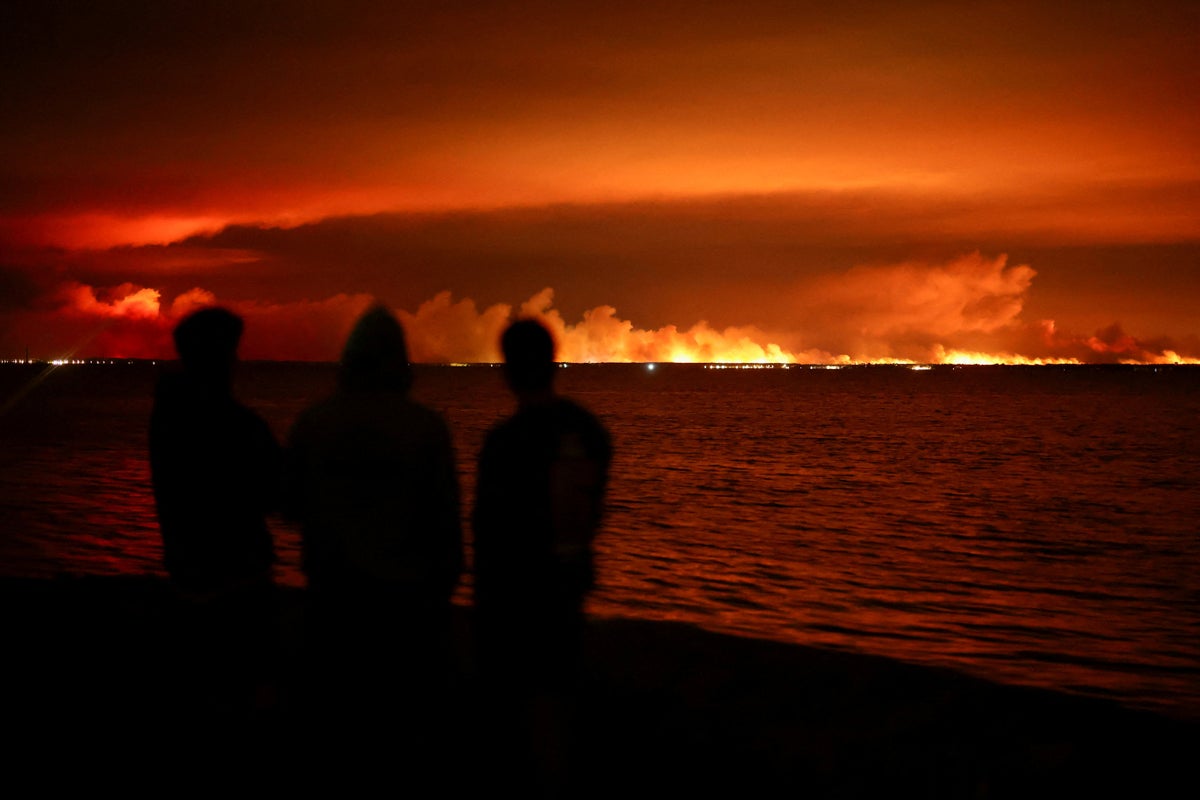
When back-to-back 7.2 and 7.5 magnitude earthquakes ripped across northern Venezuela, the earth did not discriminate between the hilltop informal settlements of Caracas and the gated high-rises of Altamira. Human engineering and political corruption did that job instead. The double quakes devastated the coastal corridor of La Guaira and the capital region, leaving thousands dead and exposing a structural divide built over decades of institutional neglect. Wealthy enclaves suffered cracked plaster and broken glass, while unreinforced masonry in working-class neighborhoods sheared flat, crushing thousands under cheap cinder blocks and uninspected concrete.
The disaster laying bare Venezuela's wealth gap is not an act of God. It is an act of systemic urban negligence.
The Engineering of Inequality
Tectonic plates do not read property deeds. When the Caribbean and South American plates slipped near Yaracuy state, sending shockwaves through the soil, energy migrated along path of least resistance.
Substandard construction killed people. In poorer sectors like Catia and the steep hillsides of Petare, homes are built using self-construction techniques. Families stack hollow concrete blocks on informal steel rebar without structural calculation, lateral load assessments, or soil stabilization tests. When shallow seismic waves struck at a depth of six miles, these structures suffered immediate soft-story failure. The ground floor collapsed, dragging upper levels straight down into pancake formations.
By contrast, mid-century commercial towers and luxury residential blocks in eastern Caracas were built under stricter seismic engineering frameworks established in the late twentieth century. Though many suffered non-structural damage, structural frames held. The divide in survival rates was not luck. Money bought structural integrity, professional structural modeling, and actual concrete testing before poured foundations set.
Building codes exist on paper in Venezuela. In practice, regulatory enforcement dissolved during years of hyperinflation and bureaucratic degradation. Developers with access to foreign currency purchased imported cement, high-grade steel, and private inspection certificates. Municipal authorities routinely ignored building violations in informal settlements, treating millions of residents as invisible until the concrete gave way.
How Corrupt Supply Chains Killed Hundreds
Construction materials tell the real story of survival in Venezuela.
Cement grade matters. For decades, state-controlled cement factories suffered from equipment breakdowns, missing spare parts, and political patronage hires. The cement reaching local hardware stores in working-class barrios was frequently adulterated with filler dirt or stored improperly, exposing it to humidity that degraded its binding capacity long before it met water.
When a builder pours concrete using degraded aggregate and insufficient water-to-cement ratios, tensile strength drops precipitously. During a 7.5 magnitude tremor, structural columns do not flex; they explode. Inspecting collapsed sites in La Guaira revealed structural columns containing smooth rebar instead of deformed rebar. Deformed rebar features ridges that grip concrete tightly. Smooth rebar pulls right out of the matrix under dynamic lateral stress, causing instant detachment of floors from load-bearing walls.
Higher-income developments utilized private supply networks. Contractors imported steel from abroad and relied on independent laboratories to verify compressive strength. That financial insulation translated directly into life-saving shock absorption when the ground shook for forty-five seconds.
The Geography of Slope Instability
Topography widened the casualty gap. Poor neighborhoods occupy the steepest slopes of the Ávila mountain range.
When shockwaves passed through unsaturated, loose soil on 40-degree inclines, localized landslides swept away entire clusters of self-built homes. Wealthier developments sit lower in the valley on flatter alluvial terrain. While alluvial soil presents liquefaction risks if water tables are high, flat geography prevented the catastrophic gravitational slides that buried families in hillside shantytowns before they could reach an exit.
Emergency Response split Along Class Lines
Rescue operations following the twin tremors exposed a secondary layer of inequality.
Heavy machinery went where power resided. In the initial 72-hour survival window, state emergency services deployed hydraulic cutters, heavy cranes, and thermal imaging gear primarily to high-visibility public buildings and prominent commercial zones. In peripheral communities, survivors clawed through pulverized masonry with bare hands and shovels.
Consider a concrete slab weighing four tons. Without motorized hydraulic jacks or heavy excavators, a neighborhood mobilization cannot move it. Countless victims trapped in air pockets beneath lightweight roofing or collapsed stairwells suffocated while waiting for equipment that never arrived from state depots.
Public morgue facilities and forensic services collapsed within forty-eight hours under the influx of casualties. Relatives in low-income districts faced horrific conditions, searching through unconditioned facilities without electricity or refrigeration. Families with private financial resources bypassed public morgues entirely, engaging private transport services and securing rapid cremation permits through private funeral homes. Even in death, administrative access required hard currency.
+--------------------------+---------------------------------+----------------------------------+
| Structural Metric        | Low-Income Barrios / Slums      | Wealthy / Commercial Enclaves    |
+--------------------------+---------------------------------+----------------------------------+
| Primary Material         | Hollow block, smooth rebar      | Reinforced concrete, ribbed steel|
| Soil Stability           | High-risk, unmapped slopes      | Flat valley floor, surveyed earth|
| Municipal Inspection     | Virtually non-existent          | Privately audited / certified    |
| Failure Mode             | Soft-story collapse, landslides | Non-structural cracking, glass   |
| Heavy Machinery Arrival  | 72+ hours post-event            | Within 12-24 hours               |
+--------------------------+---------------------------------+----------------------------------+
The Economic Aftershocks Threatening Millions
Direct physical destruction tells only part of the story. The broader financial displacement will entrench poverty for a generation.
Reconstruction costs are projected to consume a massive portion of national economic output. The United Nations Development Programme estimates direct physical damage at several billion dollars, with wider economic fallout stretching far higher. Public treasuries were depleted long before the first tremor hit. State reserves cannot fund a nation-wide rebuild, meaning federal recovery dollars will be funneled selectively.
Property loss hits low-income families with total finality. A middle-class homeowner with foreign bank accounts or international insurance coverage faces a financial setback, but keeps operational cash flow. A family in Catia who invested thirty years of savings into a four-story brick house on an un-titled plot loses everything instantly. They have no insurance policy to file, no land title to secure bank collateral, and no emergency government stipend capable of matching inflation.
Hyperinflationary pressure is already spiking. Localized food shortages, disrupted supply lines, and expanded emergency government spending financed through fiat printing threaten to drive inflation back toward historic highs. The price of basic staples like flour, clean water, and medicine doubled within weeks of the quakes in hard-hit coastal zones.
Why Rebuilding Same Way Guarantees Next Disaster
International aid agencies are pouring emergency supplies into northern Venezuela, but long-term recovery faces a structural roadblock.
Rebuilding damaged neighborhoods using the exact same informal methods guarantees a duplicate disaster when the next major fault line slips. Venezuela sits squarely along the complex strike-slip boundary of the Caribbean plate. Future seismic events are a geological certainty, not a theoretical possibility.
Preventing future mass casualties requires three concrete policy pivots.
First, municipal authorities must formalize construction standards for low-income housing without creating exclusionary cost barriers. Providing pre-engineered structural templates, free municipal engineering sign-offs, and standardized structural rebar grids to self-builders would dramatically improve seismic resilience at minimal public expense.
Second, state regulatory agencies must establish strict chain-of-custody tracking for construction materials. Penalizing manufacturers and distributors who sell substandard cement or unrated rebar would remove lethal building supplies from the market before they are encased in concrete.
Third, national disaster management must decentralized heavy rescue equipment distribution. Staging hydraulic lifting equipment, power generators, and concrete saws in municipal community centers across high-risk slope neighborhoods ensures immediate deployment during the critical initial hours after a disaster, rather than waiting for centralized military units to negotiate blocked highways.
Without these structural overhauls, reconstruction will simply rebuild the next mass casualty event. The fault line runs deep through the earth, but the deadliest divide remains engineered on the surface.