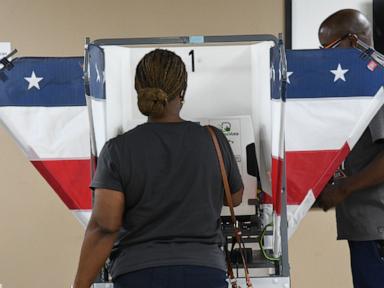
A federal judicial panel refused to block Tennessee’s redrawn congressional map, allowing state lawmakers to dismantle the state’s only majority-Black congressional seat in Memphis just weeks before primary elections. The decision by the three-judge court permits the state to split Shelby County across three separate districts, diluting urban Black voters into sprawling, rural, majority-white safe havens that stretch toward the Nashville suburbs. By holding that partisan greed takes legal priority over allegations of racial discrimination, the court established a precedent where raw party dominance serves as a complete legal defense against constitutional claims.
The mechanics of this map are as deliberate as they are stark. For decades, Tennessee’s 9th Congressional District provided a concentrated political voice for Memphis, the largest majority-Black city in the state. Under the new lines passed by the General Assembly, that cohesive urban core was sliced into fragments. Discover more on a similar topic: this related article.
One fragment remains in a reshaped 9th District that winds hundreds of miles eastward. Another chunk is tethered to District 5, linking urban neighborhoods in Memphis directly to affluent, overwhelmingly white suburban communities in Williamson County. A third piece gets absorbed into District 8.
Longtime Democratic Representative Steve Cohen, who represented the 9th District for nearly two decades, announced his retirement shortly after the legislature approved the map. The redrawn lines wiped out any realistic path for a Democratic candidate to win in the region, effectively handing state Republicans a clean 9-0 sweep of Tennessee's U.S. House delegation. Additional reporting by The Guardian delves into related views on the subject.
The Legal Loophole That Shielded the Map
The court's ruling relies on a stark reality of modern election law. Under current U.S. Supreme Court jurisprudence, federal courts cannot strike down congressional maps for pure partisan gerrymandering. State legislatures are entirely free to draw district lines specifically designed to wipe out the opposition party.
To win a federal challenge, plaintiffs must prove that race was the predominant factor in drawing the lines, and that those decisions cannot be explained by partisan strategy alone.
Defense attorneys representing Tennessee election officials used that standard as an impenetrable defense. During hearings, state lawyers argued openly that lawmakers turned off racial data while drafting the map, insisting the boundaries were drawn strictly to maximize Republican political advantage.
The court agreed with that argument. The three-judge panel noted that because the road to a completely Republican congressional delegation required neutralizing Democratic votes in Memphis, partisan intent fully explained the resulting geographic dilution.
Plaintiffs, including the ACLU, the League of Women Voters, and the NAACP Tennessee State Conference, presented extensive testimony showing how the redraw systematically stripped Black voters of political influence. They pointed to the speed of the legislative process and the sudden repeal of state laws prohibiting mid-decade redistricting.
Yet, under current federal standards, showing that a map overwhelmingly harms Black voters is no longer enough on its own. So long as a state legislature asserts that its sole goal was killing the opposing party's electoral chances, federal judges are instructed to step aside.
What Happens When Communities of Interest Splinter
Maps do not just dictate which party wins seats. They dictate who gets heard in Washington.
Memphis faces acute local challenges, from infrastructure and public health needs to targeted economic investment. Pairing urban Memphians with voters in distant suburban and rural counties creates fundamental conflicts in representation. A voter in inner-city Memphis shares almost no economic or civic priorities with a voter living in a wealthy suburb two hours away.
When voters with vastly different needs are lumped into the same district, federal representatives naturally prioritize the majority block that guarantees their reelection. In these newly configured districts, that majority block is white, conservative, and suburban or rural.
Civil rights organizations argue that this framework effectively eliminates the ability of Black Memphians to elect candidates who reflect their specific interests.
The timing of the ruling adds another layer of complication. Early voting was already underway when the panel issued its decision, making any immediate judicial remedy functionally impossible for the upcoming election cycle. State officials argued that altering district boundaries mid-stream would create administrative chaos for election workers and voters alike.
A Template for Mid-Decade Redistricting
The decision in Tennessee does not exist in a vacuum. It represents part of a broader national trend where state legislatures perform mid-decade redistricting to lock in structural advantages.
By utilizing partisan intent as a legal shield, supermajorities across the country can routinely dismantle districts carved out to protect minority representation. The burden of proof placed on civil rights groups has become nearly impossible to clear without a direct written confession of racial bias from state lawmakers.
As litigation moves forward toward a full trial, the new lines remain locked in place for the current election cycle. The immediate result is clear: Memphis enters the midterms with its historic voting bloc broken into pieces, while state leaders have secured a bulletproof blueprint for converting partisan power into permanent electoral control.