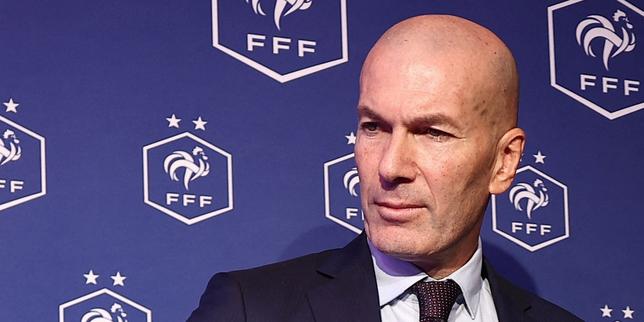
The prospective appointment of Zinedine Zidane to the managerial position of the French national football team, commonly known as Les Bleus, represents a critical intersection of legacy asset allocation, high-performance personnel transition, and systemic institutional continuity.
National team governance differs fundamentally from club-level operations. While a club manager functions within a high-frequency, daily-contact iteration loop, a national team selector operates in an environment characterized by acute temporal sparsity, constrained training windows, and heavy reliance on pre-existing club infrastructure. Evaluating the viability of Zidane assuming this role requires a systematic deconstruction of his tactical footprint, the structural constraints of international management, and the macroeconomic dynamics of the French Football Federation.
The Structural Mechanics of International Management
Transitioning from elite club environments—such as Real Madrid—to a national federation setup imposes severe operational limits. A club manager exercises total architectural control over daily conditioning, tactical assimilation, and squad composition via the transfer market. Conversely, a national team selector inherits a fixed talent pool dictated by European club economics.
[Club Management] ---> Daily Contact / Complete Squad Control / Transfer Market Agency
[National Management] ---> Periodic Gathering / Fixed Talent Pool / Institutional Oversight
In the context of the French setup, the primary strategic variable is not tactical innovation, but rather squad cohesion management and ego mitigation. Zidane previously demonstrated a specific managerial methodology defined by man-management authority, pragmatic tactical adjustments, and an ability to optimize output from veteran hierarchies.
Talent Pool Availability and Club Dependencies
Les Bleus draw their core roster from elite European clubs competing in congested fixture calendars. Consequently, physical degradation and injury velocity prior to major international tournaments represent significant operational risks. A national coach cannot retrain players physically; they can only manage recovery states and deploy tactical systems that minimize cognitive and physical load.
Zidane’s historical preference for a fluid, player-centric framework relies heavily on elite spatial awareness rather than rigid positional automatisms. This philosophy aligns with the profile of the current French player pool, which features high-velocity, transitional profiles across multiple positions.
Tactical Footprint and Historical Precedents
Analyzing Zidane's tenure at Real Madrid reveals a distinct operational model rather than a Dogmatic tactical system. His approach relies on three core pillars:
- Hierarchical Respect: Deferring to established veteran leaders to self-regulate the dressing room environment.
- Asymmetric Spatial Exploitation: Utilizing dynamic rotations on the flanks while maintaining defensive block stability through disciplined central midfielders.
- Momentum Management: Capitalizing on transitional phases and high-conversion finishing profiles rather than dominating possession metrics for its own sake.
Applying these principles to the French national structure requires examining how the current squad executes defensive transitions. Unlike club teams that spend ten months refining pressing triggers, international sides rely on simplified defensive blocks to mitigate communication errors under fatigue. Zidane’s historical reliance on a medium block with explosive counter-pressing triggers fits the tactical baseline established over the prior decade.
The Succession Timeline and Federation Dynamics
The timing of a managerial transition in international football is invariably tied to tournament cycles and contractual horizons. The French Federation operates under strict institutional governance, where coaching appointments are scrutinized through both sporting performance metrics and political alignment within regional bodies.
When Didier Deschamps concludes his tenure, the institutional expectation for his successor centers on continuity of competitive baseline performance rather than radical stylistic departure. Zidane remains the primary candidate due to his symbolic capital, his alignment with the generation of 1998, and his proven capacity to manage high-pressure knockout environments.
However, symbolic capital does not insulate a manager from structural vulnerabilities. The primary failure mode for high-profile player-turned-manager appointments is the mismatch between inspirational authority and tactical adaptability when confronted with generational squad turnover. As younger cohorts enter the national setup, management styles must evolve from paternalistic authority to analytical partnership.
Risk Factors in National Team Deployment
Deploying a manager with Zidane's specific profile introduces distinct operational bottlenecks:
- Tactical Rigidity under Duress: When faced with deep defensive blocks, historical samples suggest his teams occasionally struggle to break down low blocks without elite individual playmaking.
- Media and Institutional Friction: The French national team operates within an intense media ecosystem where every squad selection undergoes public audit, increasing the administrative overhead for the coaching staff.
- Motivational Decay: Managing players who have already secured domestic and international honors requires shifting from extrinsic motivation to elite cultural maintenance.
Addressing these risks demands a support staff capable of high-level opposition scouting and micro-tactical innovation during brief pre-match preparation windows.
Strategic Outlook
The potential integration of Zinedine Zidane into the French national setup hinges on the Federation's willingness to grant structural autonomy while maintaining institutional oversight. If appointed, the immediate operational priority will be establishing a clear succession framework for aging positional anchors while preserving the transitional speed that defines the squad's competitive advantage. Success will not be measured by stylistic revolution, but by the efficiency of resource allocation across short preparation windows leading up to major continental and global fixtures.
[Operational Priority] ---> Succession Planning for Positional Anchors ---> Preservation of Transitional Speed ---> Optimization of Short Preparation Windows
Federation leadership must align contract parameters with multi-year tournament milestones, ensuring that tactical iteration is insulated from short-term public sentiment fluctuations.