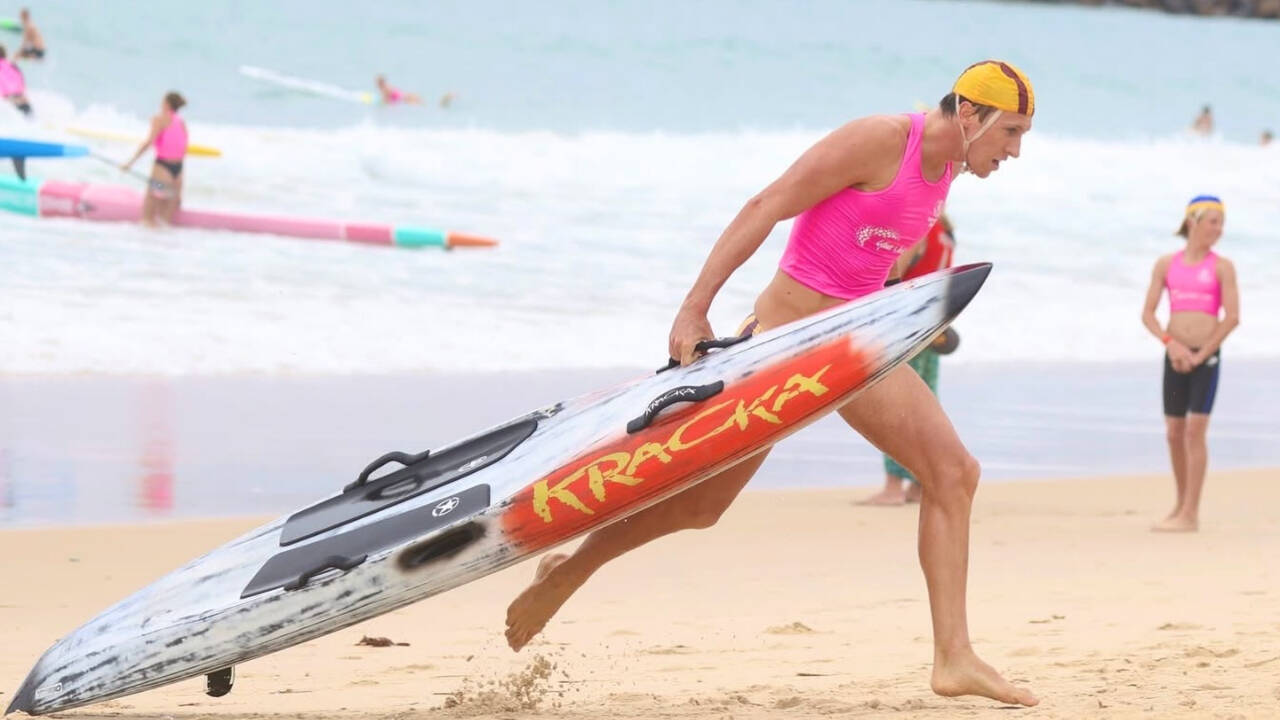
In the brutal, unpredictable expanse of the Kaiwi Channel, Charlie Verco did more than secure a fourth world title. He shattered a long-standing record, completing the 52-kilometer Molokai to Oahu paddleboard crossing in four hours, 18 minutes, and three seconds. This feat of endurance, accomplished while battling the winds of a passing hurricane, occurred only six weeks after Verco found himself in a violent confrontation with a great white shark off Sydney’s Coogee Beach. The proximity of these events—a life-altering rescue followed by an unprecedented athletic triumph—reveals a specific, dangerous form of human resilience.
The public narrative focuses on the heroics. It is a clean, palatable story of a trained lifesaver using his skills to pull a swimmer from the jaws of a predator, then finding the mental fortitude to return to the ocean and dominate his sport. However, the internal reality for an athlete like Verco is rarely so linear. For a more detailed analysis into similar topics, we suggest: this related article.
The Mechanics of the Rescue
When Verco paddled toward the commotion at Coogee Beach in June, he was operating on a survival heuristic honed through years of surf lifesaving. He expected the typical inquisitive behavior of a juvenile shark. Instead, he encountered a 3.5-meter great white exhibiting predatory aggression.
The decision to intervene when an animal of that size is actively attacking a human is not a matter of instinct. It is a cold, calculated evaluation of risk. Most people freeze. Verco, driven by a specific set of protocols taught in surf lifesaving clubs, understood that his paddleboard was the only barrier between the victim and a fatal outcome. He did not defeat the shark; he distracted it long enough to extract the victim. This moment underscores a truth about ocean sports: the line between a routine training session and a critical emergency is razor-thin. For additional context on the matter, detailed reporting can be read at Bleacher Report.
Redefining Athletic Performance
Winning a world title is often framed as a product of physical exertion. Verco’s victory, however, suggests a shift in how elite endurance athletes manage the psychological burden of their craft. After a failure in the previous year’s race, where he admitted to chasing the clock rather than the conditions, he changed his strategy.
He stopped obsessing over the metrics. By focusing on the nuances of the water—the currents, the swell, the energy of the Kaiwi Channel—he achieved a state of performance that data-driven training often misses. The record-breaking time was not the result of increased output alone. It was the result of removing the mental friction caused by performance anxiety.
The Unspoken Toll of High-Stakes Training
There is a misconception that elite athletes are immune to the trauma of the environments they inhabit. Witnessing an attack of that magnitude leaves a psychological imprint. To return to the water and compete at the highest level so soon requires a suppression of survival instincts. This is the hidden tax of extreme sports. The ability to compartmentalize fear is not a permanent state; it is a finite resource.
Furthermore, the physical demands of preparing for a race of this intensity are immense. Two to three training sessions a day, six days a week, places a consistent strain on the body. This level of conditioning is sustainable only for short periods. Athletes who maintain this pace are effectively living on the edge of burnout or injury. Verco’s success is an outlier, a demonstration of how a specific individual can channel extreme pressure into a singular, high-performance outcome.
The industry often celebrates these stories as proof of human potential. Yet, the reality is that such achievements depend on a precarious balance of skill, timing, and an environment that—in this instance—permitted a record time despite the presence of dangerous conditions and marine life.
The accolades will eventually fade, and the record will be broken again. What remains is the fact that Verco navigated a series of events that would have permanently removed most athletes from the water. Whether this resilience is a repeatable attribute or a singular moment of defiance remains to be seen. The ocean does not care about records. It only provides the arena, and the athletes who survive it are those who understand that the next challenge is always just beneath the surface.