The invitation arrives on heavy cardstock, embossed with silver lettering that practically whispers excess. For generations, the wedding season in Lahore or Karachi has not merely been a celebration of union; it has been an arena of quiet, glittering warfare. Families mortgage futures to feed five hundred guests. They erect temporary palaces of marquee canvas and fairy lights, serving tables groaning under the weight of mutton korma, chicken biryani, seekh kebabs, zarda, and multiple tiers of imported pastry.
Outside those velvet ropes, a different reality unfolds.
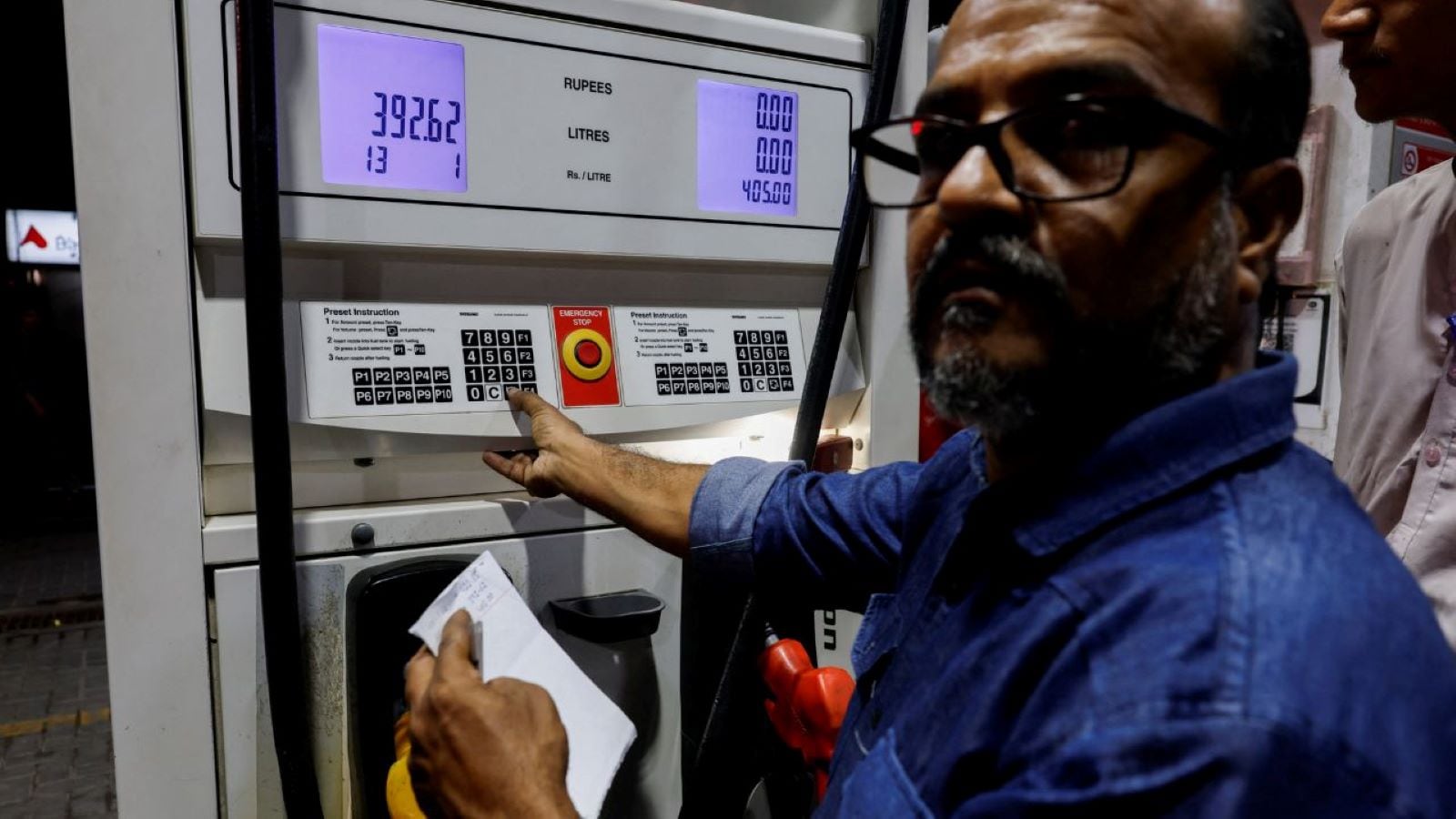
Consider Tariq, a fictional name for a very real accountant whose ledger has become a battlefield. Tariq sits at his kitchen table under the flickering amber glow of a single 12-watt bulb, staring at a utility bill that has doubled over the past year. His tea is lukewarm because the gas pressure in his neighborhood drops to a ghostly whisper every evening. When he walks his daughter to school, he watches the neighborhood gas station queues snake around the block, a line of frustrated metal and anxious drivers watching numbers spin upward at a terrifying velocity.
Tariq does not care about macroeconomic theory. He cares about the price of flour. He cares about whether his salary, static while inflation roars upward like a dry furnace wind, can survive another month.
And then, thunder rolls from the halls of power.
It is a strange thing when a nation's government decides to pull the emergency brake. In Islamabad, mahogany doors are closed. Calculators click. Officials lean over sprawling spreadsheets stained with the cold sweat of impending default. The conclusion is stark: the state is bleeding foreign exchange reserves, burning through expensive imported petroleum just to keep luxury sedans idling in traffic jams outside ministry buildings.
The emergency measures arrive not with a whisper, but with a series of heavy bureaucratic gavels dropping simultaneously.
Fifty percent. That is the magic, brutal number slashed from the fuel budgets of government vehicles. No more endless motorcades of gleaming black Toyota Fortuners and Honda Civics rolling through Red Zone intersections on the taxpayer's dime. No more casual cross-continental flights for bureaucratic delegations whose meetings could easily be handled over a flickering Zoom screen. The state, for the first time in decades, is looking at its own bloated reflection and wincing.
Yet the most culturally seismic tremor in this austerity decree does not happen in ministerial offices. It happens in the banquet halls.
Enter the one-dish rule.
To the uninitiated, the phrase sounds quaint. One dish? Surely a buffet can accommodate a single, magnificent stew. But in the social grammar of South Asian celebrations, a wedding with one dish is a linguistic and cultural earthquake. It strikes at the heart of hospitality, status, and centuries of social choreography.
Let us be honest about why we pile tables high. We do it because food is love, yes, but it is also armor. It is a declaration of arrival, a shield against social irrelevance. When a host serves six different meat dishes, three desserts, and fresh fruit carved into the shapes of tropical birds, they are communicating stability to the room. They are saying: We have survived. We are thriving. Look at the abundance.
Now, imagine the wedding planner receiving the new edict. The district administration has descended. Plainclothes inspectors walk the perimeter of marquees with clipboards. If a third curry touches the buffet line, the venue faces immediate sealing, heavy fines, and public disgrace.
Panic ensues. The caterers are summoned. Families who have spent eighteen months curating a menu meant to dazzle the extended clan find themselves paring down their dreams to a single main course, perhaps a traditional chicken salan, accompanied by naan, raita, and a solitary dessert.
At first, there is outrage. Group chats hum with indignation. How can we invite our relatives from abroad and serve only one dish? What will the neighbors say?
But beneath the cultural friction lies an invisible, desperate necessity.
Pakistan is caught in a classic balance-of-payments squeeze. For decades, the national economy has operated like a household that consistently spends twice what it earns, funding the gap by borrowing from international lenders, friendly nations, and commercial banks. Every imported barrel of oil burned in a bureaucrat's luxury vehicle, every dollar spent flying delegations to luxury seminars abroad, draws down the nation's remaining foreign currency reserves. When those reserves drop below a critical threshold, the country faces the unthinkable: an inability to pay for life-saving imports like crude oil, industrial raw materials, and essential pharmaceuticals.
Austerity is not a moral crusade; it is triage.
When you are bleeding out on an operating table, you do not debate the aesthetic quality of the bandages. You apply pressure.
The state’s decision to ban foreign travel for bureaucrats unless strictly necessary—along with the drastic cuts to government vehicle fuel—saves millions of dollars. But more importantly, it signals a psychological shift. It says to the ordinary citizen standing in line for subsidized flour: We are sharing the burden. We are no longer asking you to tighten your belt while we loosen ours.
Leadership by example is a rare commodity in modern governance. Too often, structural adjustment programs are pushed downward, crushing the working and middle classes while the political elite insulate themselves behind high walls and generator-powered compounds. By targeting the bureaucratic machinery first, the state establishes a moral baseline.
Of course, human ingenuity is remarkably resilient, particularly when it comes to circumventing rules. Within weeks of the one-dish rule announcement, whispers circulated of underground receptions, suburban lawns hosting secret multi-course feasts behind locked gates, and elaborate legal gymnastics defining what constitutes a single "dish." Is a mixed grill one dish if all the meats share a skewer? Can a massive, overflowing platter of rice count as a single entry despite containing three different types of meat hidden beneath the grains?
The inspectors adapt. The hosts adapt. A cat-and-mouse game plays out between tradition and the treasury.
Yet, as the wedding season progresses, something unexpected happens in the minds of the guests.
Tariq attends a nephew's wedding under the new regulations. He walks into the marquee expecting the usual sensory overload—the dizzying aromas of butter chicken, mutton biryani, fish fry, and endless trays of sweets competing for attention. Instead, he finds a simpler spread. One rich, steaming pot of chicken korma, fragrant with cardamom and cloves. Piles of fresh, blistered naan. A bowl of cooling cucumber raita. And a single, comforting dish of kheer to finish.
There is no embarrassment. Because everyone is eating the same thing.
When the social penalty for simplicity is removed by universal law, a strange liberation occurs. The pressure to outspend one's neighbors evaporates overnight. Families realize, with a collective exhale, that nobody actually leaves a wedding hungry because there were only ten dishes instead of thirty. Conversations at the tables shift away from critiques of the catering and toward actual conversation—catching up with cousins, laughing at old memories, focusing on the couple standing on the stage rather than the plate in front of them.
The economic ripple effects of these austerity measures extend far beyond the banquet halls and government motor pools. They speak to a broader macroeconomic stabilization effort backed by international financial institutions like the International Monetary Fund. To unlock crucial bailout tranches, Pakistan must demonstrate structural fiscal discipline. It must prove it can collect taxes more effectively, curb runaway current account deficits, and rein in non-development public expenditure.
Every liter of fuel saved by a government bureaucrat walking or carpooling is a fraction of a cent preserved in the national foreign exchange reserves. Every extravagant wedding curtailed means millions of rupees kept within the domestic banking system rather than flushed away on imported luxury ingredients and exorbitant catering margins.
Skeptics point out, quite rightly, that these measures are superficial compared to the monumental structural reforms required to fix Pakistan’s tax-to-GDP ratio, reform loss-making state-owned enterprises, and fix the circular debt choking the energy sector. A ban on foreign travel and a one-dish wedding rule will not, by themselves, transform a struggling developing economy into an Asian tiger.
They are symbols. But symbols matter.
In politics, narrative is as powerful as arithmetic. A government that projects frivolous excess while demanding sacrifice from its populace invites cynicism, tax evasion, and social unrest. A government that forces its own machinery to retrench creates a psychological compact with its citizens. It signals that the pain of stabilization is shared, not outsourced entirely to the vulnerable.
Back in his kitchen, Tariq turns off the television news broadcast detailing the latest cabinet subcommittee report on expenditure cuts. The figures scroll past—billions of rupees saved, travel allowances slashed, fleet sizes halved.
He looks at his daughter, who is fast asleep over her open arithmetic textbook. The room is quiet, save for the hum of the refrigerator. The economic road ahead remains daunting; inflation will not vanish overnight, and the structural imbalances of decades will take years of painful correction to untangle.
Yet, for the first time in a very long time, the ledger in his head balances just a little bit better. The state has finally decided to stop living on credit, and in the quiet dignity of a simpler wedding banquet across town, a culture is slowly learning how to live within its means.
The lights in the marquee dim. The guests disperse into the cool night air, untburdened by the frantic excess of yesterday.
The banquet table is cleared, not with a sense of loss, but with the quiet, steady strength of a nation trying to find its footing on solid ground.