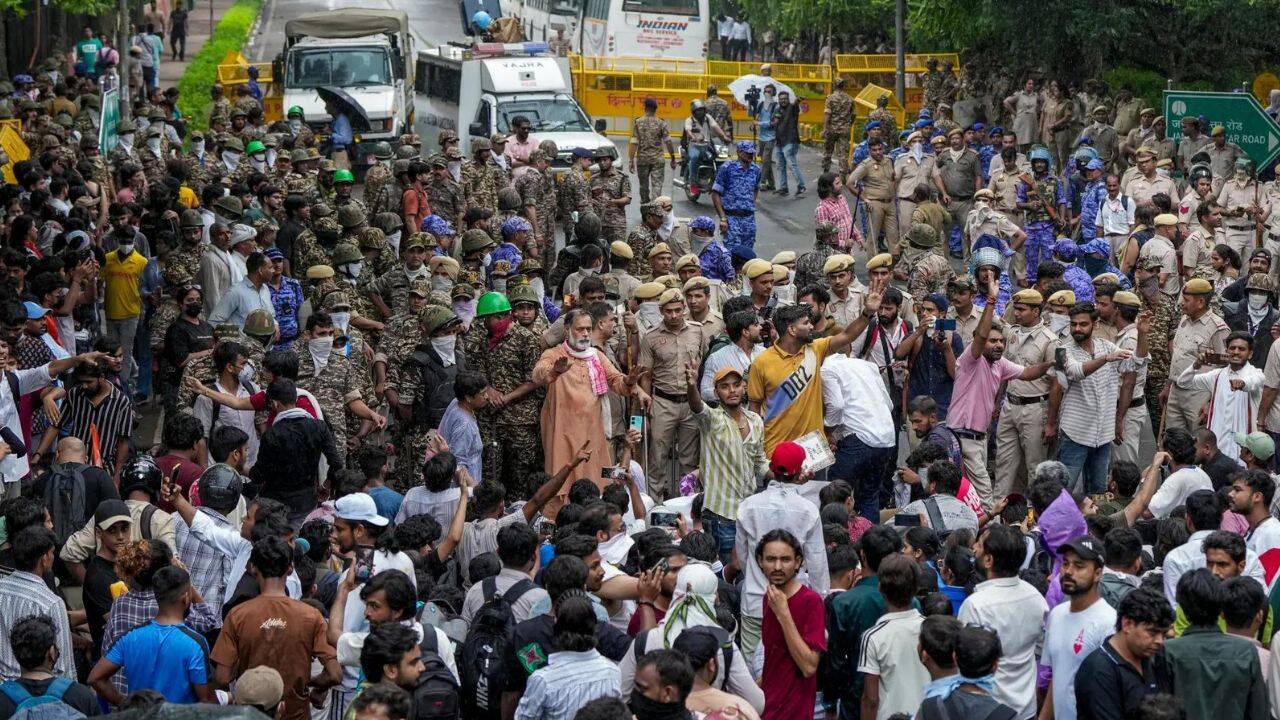
When Hannah Einbinder and Susan Sarandon found themselves in police custody during protests targeting Israeli Prime Minister Benjamin Netanyahu, the flash photography captured more than a routine misdemeanor arrest. It captured a collision between institutional power, modern celebrity culture, and the raw friction of contemporary geopolitics. The images of recognizable actors facing detention on Washington streets quickly flooded newsfeeds, overshadowing the policy debates inside legislative chambers with the undeniable visual currency of physical defiance. But beneath the viral headlines and the superficial social media applause lies a more complex architecture of political dissent. Understanding why these arrests happened requires looking past the immediate spectacle of red carpet names trading velvet gowns for zip ties. It demands an examination of how public figures weaponize their visibility, how law enforcement manages high-visibility civil disobedience, and whether crossing police lines alters the political calculus of a fractured nation.
The Currency Of Attention
Civil disobedience has always relied on the currency of attention. Without an audience, a blocked intersection is merely an inconvenience to morning commuters. With cameras present, it becomes a staging ground for ideological battle. When public figures step into the fray, the exchange rate of that attention spikes dramatically. Security details shift. Journalists adjust their lenses. Algorithms prioritize the disruption because human faces anchor abstract policy disputes into recognizable narratives. Yet this dynamic introduces an inherent tension. The very visibility that amplifies the protest message also threatens to swallow it whole. Critics frequently reduce celebrity activism to performative theater, questioning whether an Emmy-nominated actor being processed by Capitol Police translates to any meaningful policy shift or if it simply offers a momentary halo of moral clarity for an elite resume. Building on this theme, you can find more in: Why Blaming Mother Nature For San Bernardino Mudslides Is A Dangerous Lie.
The mechanics of this attention economy are ruthlessly efficient. Traditional newsrooms operate under commercial pressures that favor high-contrast imagery over dry policy analysis. A photograph of a well-known entertainer with plastic zip ties around their wrists moves faster across global networks than a ten-page white paper on military aid packages. Organizers understand this imbalance implicitly. They know that inviting or welcoming high-profile participants guarantees a multiplier effect on press coverage. Yet this reliance on star power creates a fragile symbiosis. When the media spotlight focuses entirely on the celebrity, the collective nature of the movement can fracture, reducing a broad-based grassroots mobilization into a star-studded photo opportunity.
The Choreography Of Civil Disobedience
The operational reality of protesting a visiting head of state involves a tightly choreographed dance between demonstrators and security forces. Law enforcement agencies in major metropolitan centers and federal districts maintain explicit playbooks for managing mass gatherings during high-security diplomatic visits. Arrests are rarely accidental. They are the culmination of calculated decisions made by both sides of the police barricade. For organizers, a certain threshold of arrests guarantees sustained media coverage that raw pamphleteering could never buy. For police departments, targeted detentions manage crowd flow and maintain the illusion of order without escalating into widespread conflict. Analysts at TIME have provided expertise on this situation.
When individuals like Sarandon and Einbinder cross the line into restricted zones, they enter a well-worn legal pipeline where misdemeanors are processed, bail is posted, and the news cycle moves on to the next crisis within forty-eight hours. The federal and local police forces tasked with securing these high-profile visits approach crowd control not as an emotional response, but as a risk-management exercise. Barricades are placed with mathematical precision. Warnings are issued through megaphones at legally mandated intervals. The moment of crossing into a prohibited zone is often negotiated in real-time between protest marshals and police liaisons. This administrative predictability strips some of the danger from the encounter while maximizing its symbolic impact.
Generational Divides In Hollywood Activism
To evaluate the weight of these arrests, one must examine the generational lineage of Hollywood activism they represent. Susan Sarandon belongs to an older vanguard of performers who view political agitation as a lifelong vocation, forged in the fires of anti-war movements, labor strikes, and decades of public alignment with progressive causes. Her presence on the front lines carries the institutional memory of an era when celebrity dissent often came with steep professional penalties from studio executives and advertising boards. In decades past, studio contracts contained strict moral clauses and political vetting procedures designed to shield corporate balance sheets from controversy.
Conversely, Hannah Einbinder represents a younger creative cohort. For millennial and Gen Z creators, political expression is not an optional extracurricular activity divorced from art; it is treated as an inescapable baseline requirement of public existence. The distance between a comedy set and a protest barricade has collapsed entirely in an era where silence is routinely interpreted as complicity by hyper-connected audiences. This generational shift reflects a broader transformation in how creators view their own labor. Younger artists are less inclined to separate their commercial output from their personal ethics, often treating their public platforms as direct conduits for political organizing rather than insulated avenues for purely commercial entertainment.
The Corporate Calculus Of Controversy
The media ecosystem treats these events with a predictable binary reaction. On one side, partisan networks and sympathetic commentators elevate the arrests as acts of heroic moral clarity, framing the actors as modern-day dissidents standing tall against foreign aggression and state violence. On the other side, conservative media outlets and defenders of foreign policy orthodoxy dismiss the demonstrations as out-of-touch virtue signaling by wealthy elites who enjoy the safety nets of their privilege while meddling in complex international conflicts they ostensibly do not understand. Both narratives miss the nuanced mechanical reality of how state power responds to dissent.
Consider the operational economics of modern studio entertainment. Decades ago, the Hollywood blacklist ensured that political dissent could ruin a career overnight. Studio moguls enforced strict ideological conformity to protect box office returns and appease government watchdogs. Today, the corporate environment is drastically different, though no less calculated. Media conglomerates operate in a fragmented global marketplace where brand loyalty is volatile and audience polarization is baked into the business model. When an actor courts arrest, the corporate calculus shifts. Networks no longer drop talent over misdemeanor political protests because outrage itself has become a monetizable engagement metric. The backlash from one demographic is often offset by fervent loyalty from another, creating a closed-loop ecosystem where controversy functions as free publicity.
Navigating The Media Ecosystem
Yet dismissing these demonstrations as mere publicity stunts ignores the genuine personal conviction driving many of the participants. Law enforcement holding cells are cold, bureaucratic, and thoroughly unglamorous. The threat of legal escalation, however minor the initial charge, carries real anxiety. To reduce every high-profile arrest to a calculated public relations maneuver is to adopt a cynicism so totalizing that it denies the possibility of authentic human conscience. Einbinder and Sarandon chose to put their bodies in a space of physical conflict not because a publicist mapped out a weekend trajectory, but because the moral weight of the humanitarian crisis and the broader implications of unconditional military aid created an internal imperative to act.
The broader public impact of celebrity-led protests remains intensely debated among political scientists and grassroots organizers alike. Some movement veterans argue that famous faces distract from the grueling, unglamorous labor of local organizing, pulling media oxygen away from community activists who have spent years building coalitions without the benefit of a Wikipedia page. When the microphones inevitably chase the actor in handcuffs, the local organizer holding a bullhorn is pushed to the margins of their own movement. This critique carries undeniable weight. The media's obsession with celebrity culture threatens to distort grassroots struggles, transforming collective resistance into a vehicle for individual heroism.
At the same time, practical pragmatists argue that star power remains one of the few levers capable of piercing the apathy of a distracted public. Millions of people who might otherwise scroll past a sobering report on geopolitical conflict will pause when an actor they recognize from a popular streaming series appears in handcuffs on the evening news. That momentary jolt of recognition can act as a gateway to deeper political inquiry. If a viral photograph of an arrest prompts even a fraction of those viewers to read an unvarnished foreign policy brief or question the status quo of international alliances, the disruption has achieved a functional purpose. The celebrity acts as a wedge, forcing open a conversation that institutional channels prefer to keep tightly sealed.
The intersection of fame and foreign policy will only grow more volatile as global conflicts continue to stream directly into the palms of billions of people. The traditional barriers separating the red carpet from the geopolitical arena have completely dissolved. Leaders can no longer manage international diplomacy behind closed doors without accounting for the immediate, visceral reactions of citizens and public figures alike. When the next high-profile arrest occurs on the steps of a government building, the ensuing spectacle will follow a familiar script of media outrage, partisan posturing, and rapid institutional normalization. But beneath the transient noise of the news cycle, the fundamental friction remains unresolved. The state demands order, compliance, and the smooth execution of diplomatic protocol, while individuals, armed with nothing more than their bodies and their visibility, demand that the machinery of power look them in the eye and account for the human cost of its decisions.