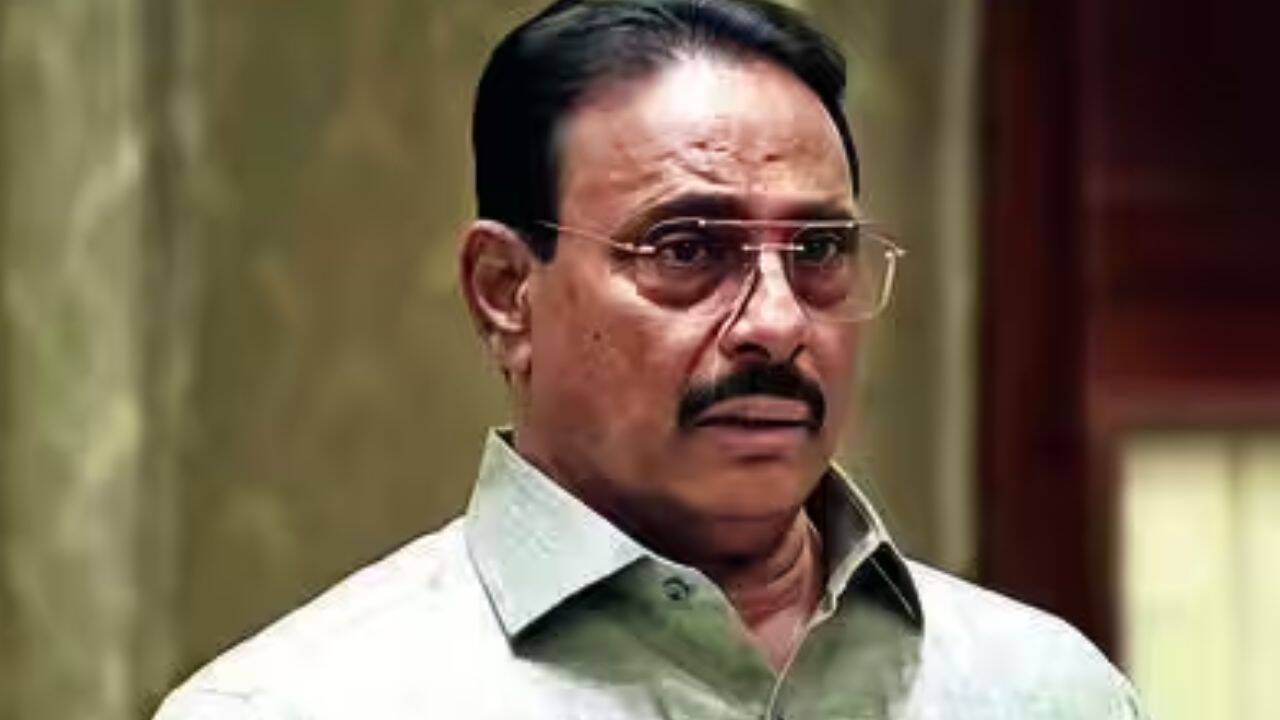
You cannot keep one foot in your old party and the other in a rival camp during a national election and expect the Constitution to look the other way. That is the blunt takeaway from the Supreme Court's decision to throw out former Khairatabad MLA Danam Nagender's petition against his disqualification.
During the hearing in September 2026, a three-judge bench led by Chief Justice of India Surya Kant, alongside Justices Joymalya Bagchi and V. Mohana, refused to interfere with the Telangana High Court's ruling that stripped Nagender of his Assembly seat. Justice Bagchi summed up the political gymnastics with a sharp courtroom quip that instantly made headlines across Hyderabad and New Delhi. He told Nagender's legal team that their case wasn't just the classic Aaya Ram, Gaya Ram—it was Phir Aaya Ram.
If you've followed Telangana politics over the last few years, you know this wasn't an isolated stunt. It was a high-stakes legal gamble that finally hit a brick wall, leaving the Khairatabad Assembly seat vacant and exposing a massive loophole politicians have tried to exploit for decades.
How Danam Nagender Tried to Play Both Sides
To understand why the Supreme Court came down so hard on Nagender, you have to look at the timeline of his political switches. It reads like a textbook example of hedging your bets in Indian electoral politics.
Nagender won the Khairatabad Assembly constituency in November 2023 on a Bharat Rashtra Samithi (BRS) ticket. Just four months later, in March 2024, he crossed over to the ruling Indian National Congress. He didn't resign from his Assembly seat when he made that move. Instead, he held onto his MLA status while accepting a Congress ticket to contest the Secunderabad Lok Sabha seat in the 2024 general elections.
Justice Bagchi called out that exact strategy from the bench. He compared Nagender's move to holding a safe "fixed deposit" in his MLA seat while taking a "share market investment" on a parliamentary ticket. When the parliamentary bid didn't pan out, Nagender wanted to fall back on his Assembly membership—and even argued through senior advocate Mukul Rohatgi that a subsequent return to the BRS, framed as a ghar wapasi or homecoming, should wipe the slate clean.
The court wasn't buying it.
- Party membership isn't House membership. The bench made a clear distinction between returning to a political party and retaining a seat in the legislature. A party might forgive a leader and welcome them back into the fold, or even nominate them for another office down the line. That forgiveness does not erase a constitutional violation committed inside the legislature.
- Defection triggers at the moment of betrayal. Once an elected representative voluntarily gives up the membership of the party that got them elected, the disqualification clock starts ticking immediately. You can't undo that act months later when the political winds shift.
- Contesting on a rival symbol is open-and-shut proof. Usually, defection cases get bogged down in endless debates over whether attending a rival party's meeting or wearing a different scarf counts as leaving a party. Running as an official candidate for a competing party in a Lok Sabha election removes every shred of ambiguity.
The Tenth Schedule and the Ghar Wapasi Defense
Most people think India's anti-defection law—enshrined in the Tenth Schedule of the Constitution—only kicks in when an MLA votes against their party's whip on the floor of the House. That's a massive misconception, and it was central to the arguments before the Supreme Court.
Paragraph 2(1)(a) of the Tenth Schedule states that a legislator becomes disqualified if they "voluntarily give up" their membership of the original political party. Courts have consistently ruled over the years that "voluntarily giving up membership" is much broader than submitting a formal resignation letter. It is inferred from conduct. When you accept a ticket from a rival party and campaign under their symbol, you have severed ties with your original party in the eyes of the law.
During the Supreme Court hearing, Mukul Rohatgi tried to lean on provisions of the Tenth Schedule regarding condonation, arguing that Nagender's return to the BRS meant the party had forgiven his actions. The bench shut that down quickly. Condonation under the Tenth Schedule applies to a very specific scenario—when a member votes or abstains contrary to a party whip and the party forgives them within 15 days. It does not apply when someone ditches their party altogether to run on another party's ticket.
Even worse for Nagender's defense, the BRS itself opposed his petition in court. BRS MLA Padi Kaushik Reddy was one of the original petitioners who demanded his disqualification, alongside BJP legislature party leader Alleti Maheshwar Reddy. You can't claim your party condoned your defection when that very party is standing in front of the Chief Justice of India asking for your removal.
Why the Telangana High Court Stepped In
For years, the biggest weakness in India's anti-defection framework hasn't been the law itself. It's been the referee.
Under the Tenth Schedule, the Speaker of the Legislative Assembly holds the authority to decide disqualification petitions. In practice, Speakers across India—regardless of which party is in power—have routinely sat on defection petitions for years, letting turncoat MLAs serve out their full five-year terms while enjoying the perks of the ruling party.
In Telangana, ten BRS MLAs crossed over to the Congress after the 2023 Assembly elections. Disqualification petitions piled up before Assembly Speaker Gaddam Prasad Kumar. On March 11, 2026, the Speaker dismissed the petitions seeking Nagender's disqualification, effectively giving him a clean chit.
That decision didn't survive judicial scrutiny. On September 18, 2026, a division bench of the Telangana High Court—comprising Chief Justice Aparesh Kumar Singh and Justice G.M. Mohiuddin—set aside the Speaker's order. The High Court didn't just disqualify Nagender; it ruled that his disqualification took effect retrospectively from April 23, 2024, the exact day he entered the fray as a Congress candidate for the Secunderabad Lok Sabha seat while still holding his BRS Assembly membership.
The High Court also refused Nagender's request to pause its order while he appealed to New Delhi. When the Supreme Court dismissed his Special Leave Petition less than a week later, the Khairatabad seat's vacancy became irreversible.
Where the Phrase Aaya Ram, Gaya Ram Came From
Whenever an Indian court invokes Aaya Ram, Gaya Ram, they're reaching back to one of the most notorious episodes in Indian political history.
In 1967, Gaya Lal, an independent MLA from the Hodal constituency in Haryana, switched political parties three times within a single fortnight. He moved from Congress to the United Front, back to Congress, and then returned to the United Front within nine hours. When he rejoined Congress yet again, Rao Birendra Singh—then Chief Minister of Haryana—brought him before the press in Chandigarh and famously declared that "Gaya Ram is now Aaya Ram."
That single afternoon gave Indian politics its permanent shorthand for opportunistic floor-crossing. It took nearly two decades after Gaya Lal's antics for Parliament to pass the 52nd Constitutional Amendment in 1985, introducing the Tenth Schedule to curb the menace of horse-trading and toppled state governments.
Nearly sixty years after 1967, Justice Bagchi's update of the phrase to Phir Aaya Ram captures how politicians have evolved. Modern defectors don't just jump ship once; they try to engineer round-trip tickets using procedural delays and legal technicalities.
What Happens Next in Khairatabad and Telangana
The immediate fallout of the Supreme Court's order lands squarely on Khairatabad, one of the most high-profile urban constituencies in Hyderabad. Following the court verdict and the official notification declaring the seat vacant, the constituency is headed toward a three-cornered prestige battle among the Congress, BRS, and BJP.
For Danam Nagender, disqualification under the Tenth Schedule does not bar him from contesting again. The Supreme Court bench explicitly pointed out during the hearing that he is free to go back to the voters and seek a fresh mandate. Nagender himself struck a defiant tone right after the verdict, telling reporters that facing elections isn't new to him and that he plans to fight and win.
Still, the political ripple effects stretch well beyond one constituency in central Hyderabad:
- Pressure on the remaining defectors. Nagender was one of ten BRS MLAs who switched to the Congress after the 2023 Assembly polls. Opposition leaders from both the BRS and the BJP—including K.T. Rama Rao, Jeevan Reddy, and Telangana BJP president N. Ramchander Rao—have already seized on the verdict to demand fresh elections and accountability across the board. While the Supreme Court noted that its ruling applied specifically to Nagender's case, the legal precedent makes it much harder for Speakers to shield legislators whose defections are documented in the public record.
- A test for the ruling Congress. Winning a by-election in the heart of Hyderabad carries huge symbolic weight ahead of future civic and state contests. If the Congress backs Nagender or fields another candidate and loses, the opposition will frame it as a public rejection of defection politics.
- A warning to party-hoppers nationwide. Courts have grown visibly impatient with legislative Speakers acting as partisan shields. When a High Court steps in to overturn a Speaker's dismissal and the Supreme Court backs that intervention within days, the old playbook of stalling disqualification cases until the end of an Assembly term starts falling apart.
If you're tracking how this plays out over the coming months, keep your eyes on three concrete developments. First, watch the Election Commission of India's schedule for the Khairatabad bypoll—specifically how pending election petitions affect the notification timeline. Second, pay attention to whether the BRS and BJP push fresh judicial challenges against the remaining MLAs who crossed floors in Telangana. Third, watch who actually gets the party tickets in Khairatabad. A by-election forced by a Supreme Court disqualification isn't just another local race—it's a direct referendum on whether voters punish or reward a politician who treated an Assembly seat like a backup plan.
For a closer look at the local political reactions in Hyderabad following the court's decision, you can watch Khairatabad By-Election Updates on TV9 Telugu, which breaks down the immediate fallout in the constituency after the seat was declared vacant.