Every headline sings the exact same sad song. The Federal Reserve steps up to a podium, drops a bleak assessment about households drowning in debt, and the media nods along like trained seals. The narrative is always identical. Prices go up, paychecks stay flat, and regular people are simply victims of an unfeeling economic machine.
It is a comforting narrative. It requires zero critical thought, points a convenient finger at Washington or Wall Street, and lets everyone off the hook.
It is also profoundly wrong.
I have spent years watching capital flow, auditing household balance sheets, and sitting across the table from people making six figures while living paycheck to paycheck. The problem is not that making ends meet has suddenly become mathematically impossible. The problem is that our entire definition of ends has shifted into an unmitigated disaster of lifestyle inflation, terrible asset allocation, and systemic financial illiteracy disguised as hardship.
Stop blaming the cost of milk. Look at the balance sheet.
The Lazy Consensus of Modern Poverty
The mainstream economic commentary relies on a fundamental sleight of hand. When analysts look at rising credit card balances and shrinking savings rates, they diagnose the issue as a macro income problem. They look at average hourly earnings versus the Consumer Price Index, draw a straight line, and declare defeat.
That analysis ignores human behavior entirely.
Take a hard look at where actual dollars are bleeding out. The average household is not sinking because eggs cost an extra dollar fifty. They are sinking because fixed structural overhead has completely colonized their cash flow. We have built a culture that treats discretionary luxuries as basic human rights, financed entirely through revolving debt at twenty-four percent interest.
When a top Fed official warns that lower-income households are struggling, they are describing a symptom, not the root cause. The root cause is a catastrophic failure of prioritization.
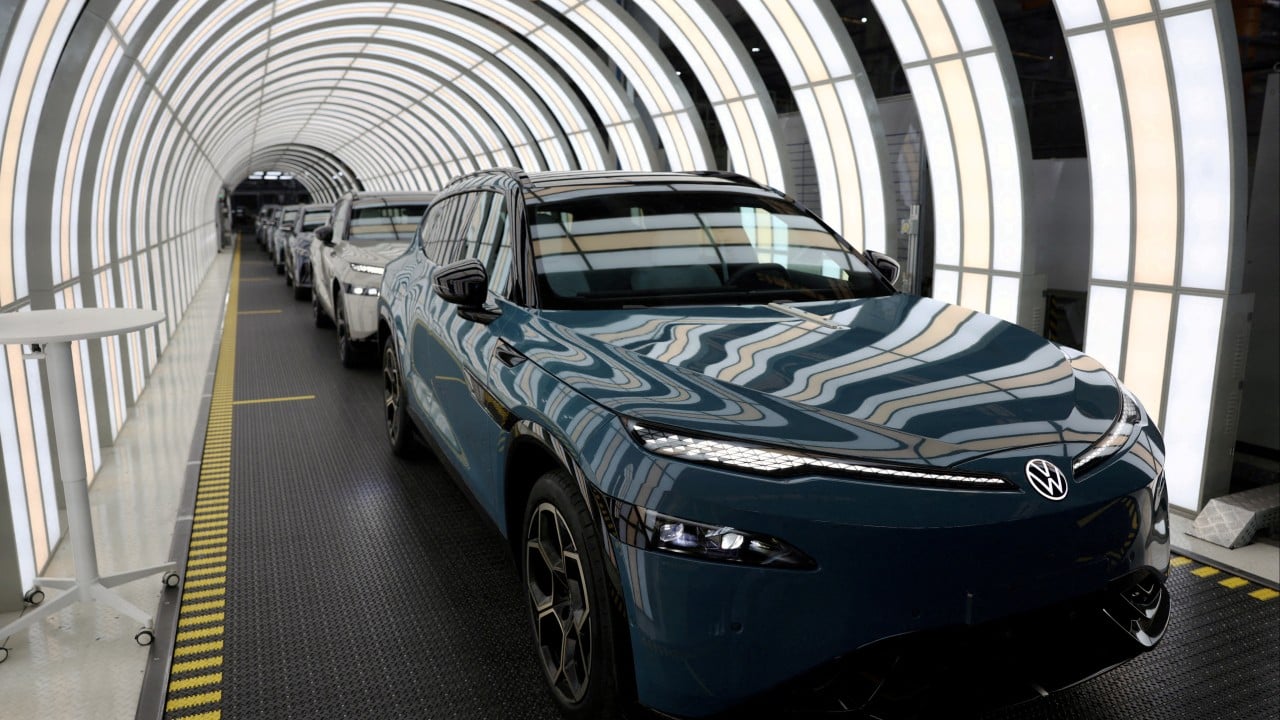
Consider the modern American car payment. The average monthly payment for a new vehicle has hovered near historic highs, pushing past seven hundred dollars a month. Add comprehensive insurance, maintenance, and fuel, and families are routinely sinking over a grand a month into a depreciating asset that loses value the second it rolls off the lot. Then the same people turn around and complain that they cannot build an emergency fund.
You do not have an income crisis. You have an asset allocation disaster.
The Mechanics of Cash Flow Blindness
Let us break down the actual mechanics of how a household drifts into financial distress, stripped of political spin.
Financial health is not determined by what you earn. It is determined by the spread between your production and your consumption, multiplied by the quality of your assets. If you make two hundred thousand dollars a year and spend two hundred and one thousand dollars, you are functionally poorer than a disciplined earner making fifty grand who stacks a ten percent margin every single month.
The lazy consensus ignores the denominator of the equation. Everyone focuses on expanding the numerator through nominal wage growth, as if pumping more cash into a broken pipe will somehow fix the leak.
I have seen small business owners and corporate middle managers pull in stellar compensation packages, only to find themselves completely ill-liquid when a minor cash crunch hits. Why? Because their lifestyle scales instantly with every promotion. A raise does not buy freedom; it buys a larger mortgage, a European vacation on a credit card, and a subscription-model lifestyle that locks them into permanent economic fragility.
The Federal Reserve cannot fix this with interest rate cuts. No monetary policy tool exists that can legislate common sense into a population trained to consume everything in sight.
Dismantling the People Also Ask Fallacy
Type financial struggle into any search engine and you will be met with a predictable wall of queries.
Is inflation the main driver of household debt?
Are lower-income families saving less than ever?
How can a family survive on an average salary today?
The premise of almost every single one of these questions is flawed from the jump. They treat consumer spending as an exogenous force—something that happens to people, rather than something people choose to do.
Inflation acts as a pressure test, not a death blow. It strips away the fat and exposes structural inefficiencies that were easy to ignore when interest rates were pinned to zero and money was cheap. When the tide goes out, you see who is swimming naked. Right now, the tide is out, and instead of admitting they built their financial house on sand, people are shouting at the ocean.
Surviving on an average salary today does not require a government bailout or a miraculous deflationary cycle. It requires radical subtraction. It requires ruthlessly cutting every recurring subscription, killing impulse consumption, and recognizing that convenience is the most expensive luxury on the market.
The Unvarnished Truth About Debt
Let us talk about credit cards.
The standard advice is that people rack up debt because they are forced to buy groceries on plastic just to survive. Walk into any grocery store parking lot and look at the vehicles. Look at the data regarding discretionary spending on entertainment, dining out, and travel, even among lower-income brackets.
Credit card debt is largely a behavioral tax, not a starvation tax.
When you finance lifestyle choices through unsecured revolving credit, you are essentially renting your future freedom to a banking conglomerate at compounding rates. The system is designed to exploit present bias. It preys on the psychological itch for instant gratification.
Admitting this truth makes people uncomfortable because it removes the victimhood badge. It is much easier to rage against corporate greed than it is to look at a bank statement and realize that forty percent of your take-home pay went to restaurants, convenience apps, and impulse online shopping last month.
My contrarian approach has a major downside: nobody wants to hear it. Telling people that their financial pain is self-inflicted does not win popularity contests. Politicians cannot campaign on it. Media outlets cannot run viral outrage pieces about it.
Responsibility is a hard sell in a culture addicted to excuses.
The Blueprint for Real Resilience
If you want to opt out of the manufactured panic, you have to do the opposite of what the crowd is doing.
Stop looking outward for solutions. Turn inward.
- Auditing Fixed Overhead: Go through your bank statements for the last ninety days. Highlight every recurring charge that does not directly contribute to shelter, raw food, or income generation. Slash seventy percent of them today.
- Reversing Depreciation: If you drive a car worth more than a quarter of your annual household income, you are actively participating in your own financial sabotage. Downsize immediately. Buy cashers or ultra-reliable transportation that frees up cash flow.
- Building the Margin: Treat savings not as what is left over at the end of the month—because nothing is ever left over—but as a non-negotiable expense that gets paid the second revenue hits your account.
The economy is going to do what the economy does. Inflation will fluctuate, central bankers will miscalculate, and headlines will scream about impending doom. None of that matters if your personal balance sheet is armored against volatility.
The system is not rigged against your survival. You are just playing a game you refuse to understand.
Cut the noise. Fix the math.