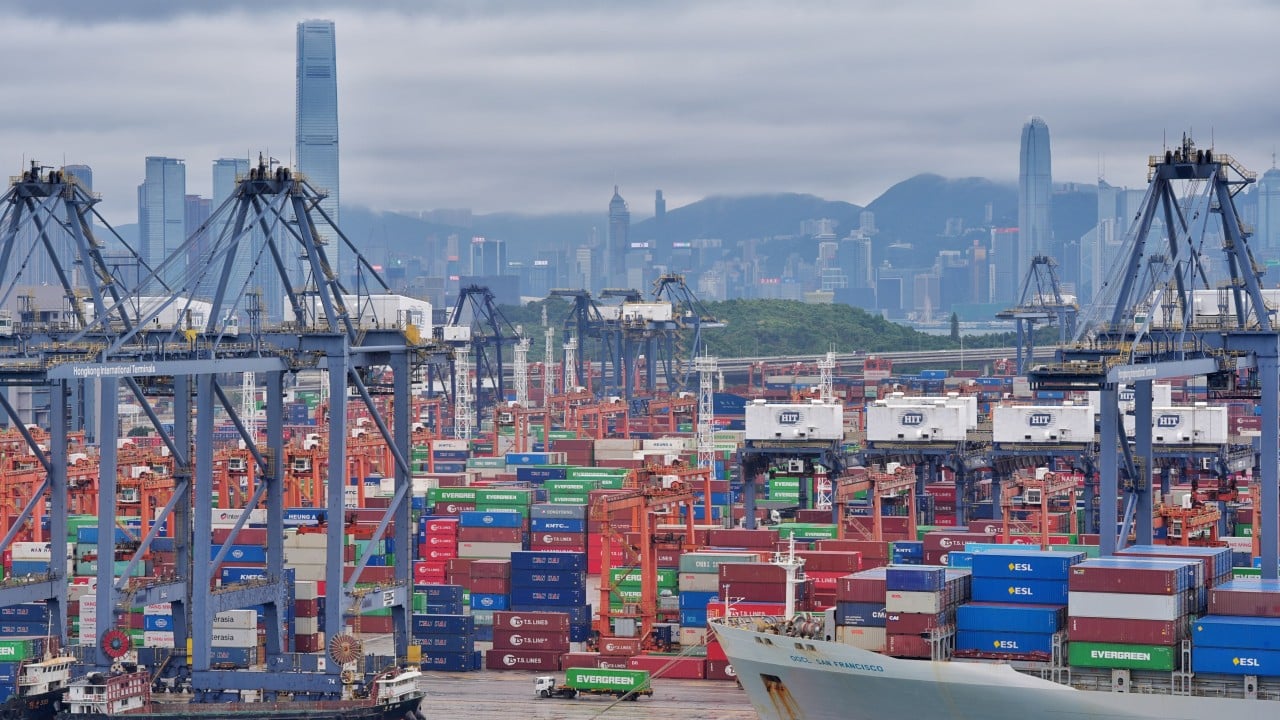
The humidity in a cargo terminal at Chek Lap Kok hits you like a warm, wet blanket.
It is 3:00 AM. Outside, a Boeing freighter hums on the tarmac, its belly stuffed with microchips, high-end electronics, and medical supplies destined for Jakarta. Inside, Mei stands over a glowing monitor, her eyes burning from lack of sleep. She is a logistics coordinator with twelve years on the floor, and she knows every single bottleneck between the Pearl River Delta and the Malacca Strait.
She also knows something the glossy economic reports love to gloss over.
Paperwork.
Right now, in this exact moment, a stack of customs documentation sitting in her queue threatens to stall a shipment worth two million dollars. Not because the cargo is dangerous. Not because the taxes are unpaid. But because two different bureaucratic systems—one anchored in Hong Kong, the other spreading across the sprawling archipelago of ASEAN—are speaking dialects that refuse to translate cleanly.
This is the hidden friction of modern commerce. We talk about trade booms with the casual enthusiasm of football commentators. We look at the macro charts, pointing excitedly at rising billions, double-digit growth, and expanding shipping lanes. ASEAN is now Hong Kong’s second-largest trading partner, trailing only mainland China. The numbers are staggering. The potential is intoxicating.
Yet, down here in the trenches, it feels like trying to pass a thread through a needle while wearing heavy winter gloves.
To understand why Hong Kong’s trade boom with Southeast Asia feels so frustratingly heavy, we have to look past the GDP metrics. We have to look at the human cost of missed connections.
The Weight of a Bill of Lading
Trade is not an abstract spreadsheet. It is a series of handshakes across vast distances of ocean and culture.
For decades, Hong Kong played a singular, unchallenged role: the ultimate middleman. It was the Turnstile to China. Western capital went in; manufactured goods came out. The city grew rich on this single, beautiful friction point. But the world shifted. Mainland ports matured. Singapore built an empire of efficiency. Southeast Asia—vibrant, chaotic, young, and hungry—began to industrialize at a breakneck pace, driven by manufacturing shifts out of East Asia and a rising middle class demanding everything from smartphones to fresh produce.
Today, ASEAN nations like Vietnam, Indonesia, Thailand, and Malaysia are surging. Their combined economies represent a demographic powerhouse of over 600 million people. They need capital, professional services, dispute resolution, and logistical wizardry.
Hong Kong has all of those things in abundance. Lawyers, financiers, maritime insurers, arbitrators—the city's professional services ecosystem is among the finest on Earth.
So why does it feel like we are leaving money on the table?
Let us be honest with ourselves. For a long time, Hong Kong suffered from a mild case of tunnel vision. The gaze was fixed almost entirely northward. The mainland was the sun, and everything else orbited in its gravitational pull. While Hong Kong executives were looking north, ASEAN was quietly building its own internal momentum, forging trade pacts like the Regional Comprehensive Economic Partnership (RCEP), and modernizing ports from Da Nang to Surabaya.
When Hong Kong finally turned its head toward the south, the landscape had changed. The rules were different. The players were younger, faster, and less reliant on traditional colonial-era intermediaries.
To unlock the real value of this trade boom, Hong Kong cannot simply rely on its historical reputation. Reputation is a ghost story you tell yourself when you are losing market share.
What the Numbers Actually Tell Us
Let us ground this in reality.
Bilateral trade between Hong Kong and ASEAN has hovered around the $140 billion mark in recent years, accounting for roughly 12 to 13 percent of Hong Kong's total external trade. That is not small change. It represents hundreds of thousands of jobs, billions in maritime services, and an entire sub-economy of warehousing, insurance, and fintech.
Consider what happens when a Vietnamese textile manufacturer wants to list on an international exchange or secure financing for a massive factory expansion in Binh Duong. They need capital. They need a financial center that understands both Western common law and Asian commercial realities. Hong Kong is uniquely positioned to offer that.
And yet, structural barriers remain stubborn.
Take the RCEP. Hong Kong has been eager to join this massive free trade agreement, which binds ASEAN plus China, Japan, South Korea, Australia, and New Zealand. Joining the RCEP is not just a diplomatic checkbox; it is a vital operational necessity. Without formal membership, Hong Kong businesses face tariff walls and non-tariff barriers that their competitors in Singapore or mainland China can bypass with ease. (Note: When I speak of RCEP integration here, I am referring to the regulatory harmonization and tariff reductions that come with formal accession.)
Tariffs are only the visible tip of the iceberg. The deeper issue is professional mobility.
Imagine you are a structural engineer based in Kowloon. You win a major infrastructure consultancy contract for a transit hub in Kuala Lumpur. Simple, right? Your credentials are world-class. Your firm has built skyscrapers that pierce the clouds.
Then you hit the wall of professional credential recognition.
Your Hong Kong license does not automatically grant you the right to sign off on architectural blueprints in Malaysia. You have to navigate a maze of local accreditation boards, separate insurance policies, and redundant examinations. Months bleed away. Margins shrink.
This is where the real value of the trade boom is leaking out—not in massive, catastrophic crashes, but in a thousand tiny paper cuts.
The Human Element of Finance
Money moves where it is treated best, but it stays where it is understood.
This is where the emotional core of Hong Kong’s advantage lies. It is not just about capital adequacy ratios or foreign exchange reserves. It is about cultural fluency.
Walk through the bustling commercial districts of Jakarta or Bangkok, and you will find a dense web of ethnic Chinese business families, cross-border corporate networks, and generational ties that stretch back over a century. Hong Kong has historical bloodlines running straight through these networks. Grandfathers did business with grandfathers.
Yet, younger generations of ASEAN entrepreneurs operate differently. They are tech-savvy, educated in London or Melbourne or Singapore, and deeply nationalistic about their own domestic markets. They do not care about historical sentiment if your digital infrastructure feels like it was coded in 1998.
If Hong Kong wants to capture their business, it has to offer more than nostalgia. It has to offer a frictionless digital experience.
Think about trade finance. For decades, the process of issuing a letter of credit was a ritual of physical signatures, couriers racing across Victoria Harbour, and bank clerks shuffling paper files. Even today, a significant portion of regional trade is financed through legacy systems that take days to clear.
We are living in an era of instant messaging and algorithmic trading, yet a container of frozen seafood from Thailand can still get held up in a bank vault because an ink signature is missing a corporate stamp.
Rewiring the Connection
How do we fix this? The answer requires a deliberate shift in strategy, moving away from passive reliance on geography toward active, aggressive integration.
First, digital harmonization. Hong Kong’s fintech sector is brilliant, but it often looks inward or toward the mainland. Platforms like eTradeConnect—Hong Kong’s blockchain-based trade finance platform—need to build permanent, interoperable bridges with ASEAN digital trade corridors. When Mei’s digital customs manifest in Hong Kong can talk instantly and securely to the port authority in Laem Chabang, hours of delay vanish.
Second, talent mobility agreements. We need mutual recognition of professional qualifications across professional services, logistics, accounting, and law. If an accountant in Singapore can operate seamlessly across the region, a practitioner in Central should be able to do the same. Hong Kong must proactively negotiate bilateral mutual recognition agreements with key ASEAN economies rather than waiting for overarching multilateral treaties to do the heavy lifting.
Third, tapping into the green transition. Southeast Asia is ground zero for climate vulnerability, yet it is also a massive growth market for renewable energy, sustainable agriculture, and green infrastructure. ASEAN needs trillions of dollars to green its grids and industrial parks over the next decade. Hong Kong’s green bond market is sophisticated, deep, and hungry for quality issuances. By positioning itself as the premier green finance hub for ASEAN transition projects, Hong Kong can solve two problems at once: finding sustainable yields for global capital while helping its southern neighbors build a resilient future.
The Choice Ahead
Back at the terminal, the digital clock ticks past 4:00 AM.
Mei finally gets the green light on her screen. The documentation clears. The cargo manifests match, the automated tariffs process correctly, and the two-million-dollar shipment is cleared for departure. The Boeing on the tarmac sputters its engines to life, preparing for the long, sunlit flight down toward the equator.
She breathes a sigh of relief, knowing that tomorrow night, she will have to do it all over again.
That is the reality of the trade boom. It is built by people working through the night, wrestling with outdated systems, trying to force two very different worlds to understand each other.
Hong Kong stands at a historic crossroads. It can remain a passive observer of Southeast Asia’s rise, content with old glories and comfortable margins. Or it can roll up its sleeves, digitize its processes, harmonize its professional standards, and become the indispensable, beating heart of a new Asian century.
The ships are already waiting on the water. The question is whether we will clear the paperwork before they sail.