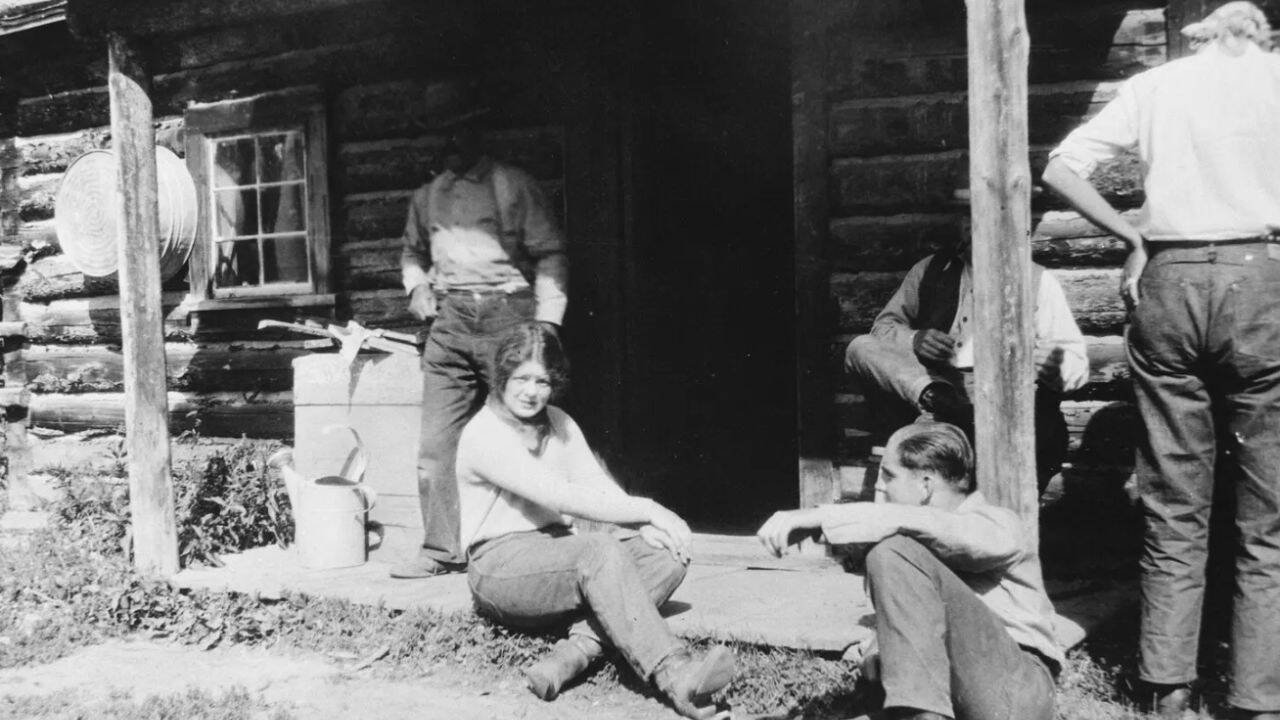
Real estate divestiture involving federal conservation entities introduces distinct legal constraints, asset valuation challenges, and operational trade-offs. When asset owners negotiate transactions with public preservation bodies, standard market liquidity models fail. The 1967 transaction involving Emily Frew Oliver and the federal government within Grand Teton National Park illustrates a specialized mechanism: fee-simple divestiture paired with a retained life estate. Analyzing this structure requires deconstructing the financial trade-offs, operational liabilities, and ultimate asset surrender dynamics that govern public-private property transfers.
The Economics of Retained Life Estates
A life estate functions as a bifurcated property interest. The grantor surrenders the underlying fee-simple title while retaining an exclusive possessory right for the duration of a designated life. This mechanism creates an immediate liquidity event for the seller alongside capital gains or tax adjustments, while deferring physical possession for the buyer.
From an investment perspective, this structure alters risk distribution. The public entity assumes long-term asset value appreciation and eventual operational control without paying current full-market vacancy pricing. Conversely, the life tenant secures immediate capital realization while absorbing ongoing maintenance expenditure, casualty risk, and regulatory oversight from the governing agency.
Asset longevity under this framework depends on structural upkeep. Operational costs do not pause upon title transfer. The life tenant remains responsible for day-to-day capital expenditure to prevent structural degradation, creating an inverse relationship between aging infrastructure and cash flow generation.
Operational Pressures and Revenue Decay
The 4 Lazy F Ranch operated as a commercial dude ranch for decades following family inheritance. Maintaining a commercial hospitality operation within a federal park boundary imposes structural cost ceilings. The economic viability of such a remote enterprise relies on three core variables: labor availability, guest turnover velocity, and capital reinvestment cycles.
As generational succession occurred—moving from William and Margaretta Frew to Emily Frew Oliver and subsequently to her sons—the operational model faced declining margins. Commercial dude ranching in Jackson Hole shifted from an agrarian-adjacent lifestyle business into a capital-intensive hospitality sector.
- Labor overhead scaled non-linearly with remote site requirements, necessitating dedicated teams for culinary and maintenance logistics.
- Guest duration models transitioned from extended seasonal stays to fragmented short-term bookings, compressing revenue per available room night.
- Regulatory compliance demands from the surrounding National Park Service constrained physical expansion or modernization of historic structures.
These pressures created an operational bottleneck. To offset maintenance liabilities, the enterprise required continuous capital injections that commercial guest operations could no longer reliably generate after the mid-1990s.
The Mechanics of Voluntary Relinquishment
A common misconception in public-private property agreements assumes that life estates persist rigidly until natural termination. In practice, long-term asset holding costs frequently outpace the utility of possession. In 2006, thirty-nine years after the initial transaction, Emily Frew Oliver voluntarily surrendered the life estate to the National Park Service ahead of mandatory expiration.
This decision highlights an inflection point in asset management known as the maintenance-utility crossover. When the marginal cost of compliance, supervision, and physical preservation exceeds the subjective utility of occupancy, the rational economic choice shifts from retention to early termination. Retaining a historic footprint inside an expanding federal reservation exposes the holder to increasing scrutiny, liability, and logistical friction.
The structural transition followed a predictable trajectory:
- Phase One: Capital monetization via fee-simple sale combined with guaranteed operational continuity.
- Phase Two: Extended operational decay managed through familial labor subsidies and seasonal oversight.
- Phase Three: Utility exhaustion leading to voluntary extinguishment of possessory rights.
Strategic Capital Allocation Lessons
Evaluating historical transactions of this scale offers clear principles for modern real estate and conservation negotiations. When evaluating government acquisition offers that incorporate delayed possession instruments, asset holders must model the total cost of ownership across a multi-decade horizon.
Future-proofing generational land assets against mandatory public absorption requires establishing dedicated maintenance endowments or structuring clear exit triggers tied to operational cost thresholds. Without explicit provisions for capital replacement, a retained life estate transforms from a preservation tool into a depreciating liability. Asset holders must weigh the certainty of upfront liquidity against the compounding friction of operating under a public conservation landlord.