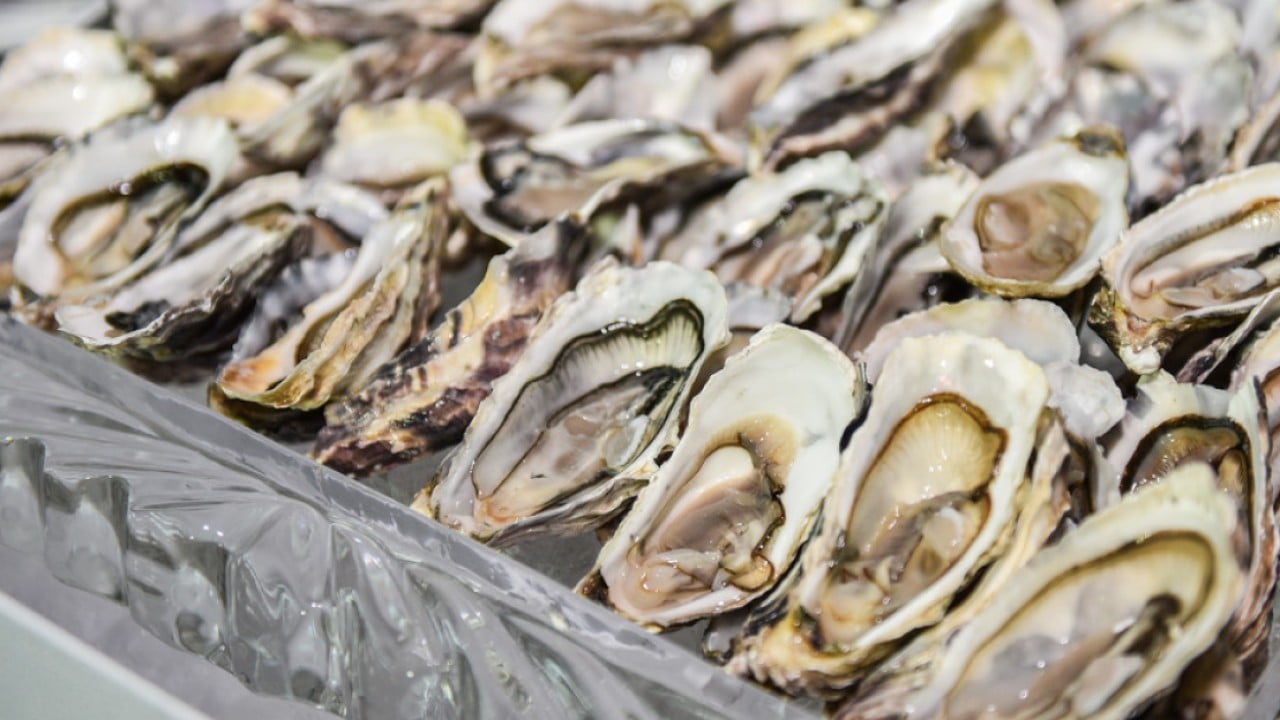
When headlines blared that thieves made off with 400,000 oysters worth a quarter-million dollars in Australia, the collective media panicked over a surging wave of high-end seafood crime. Security pundits called for night-vision drones, biometric tags on bivalves, and heavy maritime patrol fleets. They missed the plot entirely.
Focusing on the criminals who lifted four hundred thousand Pacific oysters misses the structural rot that allowed a stationary, filter-feeding target to be cleaned out in broad daylight or quiet night. The real story isn't about rogue aquatic corsairs operating in the dead of the night. It's about an agricultural sector that treats high-value biological assets like cash left sitting on a park bench. Also making waves in related news: Why The Strait Of Hormuz Corridor Is A Total Illusion.
I have spent years advising boutique marine aquaculture operations and watching operators burn capital on useless perimeter fences while ignoring the core mechanics of supply chain vulnerability. Let us look past the sensationalism of the heist and dismantle the fragile economics of modern oyster farming.
The Lazy Consensus on Oyster Security
The conventional narrative surrounding the Australian pearl and mollusk raids points directly to inadequate policing. Local authorities bemoan vast coastlines, sparse maritime units, and the difficulty of tracking perishable contraband through black markets. Further insights into this topic are covered by CNBC.
This view assumes that seafood theft is a law enforcement failure. It is not. It is an architecture failure.
Oysters sit in intertidal racks for months or years, doing nothing except absorbing nutrients from the water column while accumulating market value. They are completely immobile. They cannot run, hide, or be locked in a bank vault. When you leave half a million dollars of edible luxury attached to wooden stakes in public waterways without immediate, constant verification, you are not farming. You are running a charity for ambitious thieves with a flat-bottomed boat and an outboard motor.
Blaming the police is a comforting coping mechanism for producers who refuse to modernize their logistics. If your entire asset protection strategy relies on the assumption that nobody will notice a commercial harvest crew working a lease at two in the morning, your business model is built on luck, not management.
The Flawed Physics of Traceability
Governments love to propose digital tagging and blockchain tracking for seafood. Regulators insist that if every individual shell carried a unique identifier, black market distribution would dry up overnight.
Imagine a scenario where every single oyster leaving a farm is stamped with a cryptographic hash. Sounds brilliant on paper. In reality, it collapses under basic retail economics.
Oysters are sold by the dozen, shucked into bins, served raw on half-shells, and swallowed in seconds. Nobody checks the digital provenance of a mollusk when it is drowned in mignonette and washed down with a crisp Chablis at a harborside bistro. The velocity of hospitality consumption makes individual-level product tracking completely unviable.
When stolen stock enters the supply chain, it bypasses traditional ledgers because corrupt or negligent buyers do not care about paper trails. They care about margins. A thief selling stolen grade-A Sydney Rock oysters at half price to a desperate restaurateur does not need a receipt. The restaurant industry’s dirty secret is that margin pressure often overrides moral provenance.
Fixing the Wrong Problem
People ask how farmers can better secure their leases against nocturnal raids. They suggest motion-activated cameras, sonar tripwires, and armed private security.
These ideas are expensive, impractical, and fundamentally misguided. Saltwater environments destroy electronics with terrifying efficiency. Cameras fail, solar panels foul with algae, and false alarms from dolphins or rogue tides drive operators insane within a month.
Instead of building a naval fortress around a mudflat, producers need to decentralize risk and compress time-to-market.
Stop leaving mature inventory sitting in static locations for months after it hits market size. If the growth cycle allows thieves to harvest your crop, your inventory management is too slow. Modern aquaculture must adopt agile inventory rotation, aggressive cash-to-cycle optimization, and dynamic pricing models that clear inventory before it becomes a lucrative target for midnight poachers.
Furthermore, producers must integrate real-time weight and vibration sensors into lease infrastructure rather than visual surveillance. A floating rack losing three tons of displacement triggers an instant, automated alert long before the thieves finish loading their haul. We do not need more guards; we need smarter telemetry.
The Hard Truth About Marine Property Rights
The deeper issue exposed by the Australian heist is the archaic legal framework governing aquatic leases. Governments treat aquaculture leases as real estate rather than high-performance manufacturing floors.
Property rights in marine environments are notoriously weak. If someone steals cattle from a ranch, rustling laws carry severe felony charges with aggressive asset forfeiture. If someone steals oysters from a tidal lease, prosecutors often treat it as petty theft of wild game, ignoring the capital, labor, and years of husbandry required to grow them.
Until legal jurisdictions classify cultured marine protein with the same intellectual and physical property protections applied to land-based livestock, poachers will view aquaculture as a low-risk, high-reward enterprise.
The quarter-million-dollar loss in Australia should serve as a violent wake-up call. The vulnerability was never the coastline. The vulnerability was an industry asleep at the wheel, clinging to outdated husbandry models while waiting for the next big score to wash away their margins.
Stop blaming the thieves. Fix your supply chain.