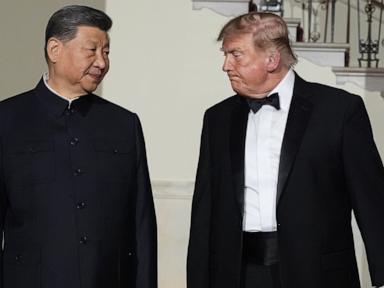
Media coverage surrounding high-level diplomatic visits often relies on easy symbolism, framing moments like Chinese President Xi Jinping viewing the U.S. Constitution and Bill of Rights at the National Archives as a striking study in political irony. According to standard geopolitical commentary, the juxtaposition of the Chinese Communist Party’s General Secretary standing over America's foundational charters of individual liberty and limited government represents a quiet ideological rebuke or a moment of diplomatic theater.
However, political historians and international relations scholars point out that reading this stop on a Washington itinerary solely through the lens of Western constitutionalism misses how Beijing actually interprets statecraft, historical legitimacy, and legal codification. Don't forget to check out our earlier post on this related article.
The Western Lens vs. The Historical Text
In American political discourse, the Constitution and the Bill of Rights are treated as living guarantees of individual autonomy designed to restrain state power. When foreign leaders visit the Rotunda for the Charters of Freedom, Western observers naturally project this framework onto the encounter, assuming the documents serve as a silent lecture on democratic norms.
Yet diplomatic historians note that state visits to the National Archives—or similar repositories of foundational texts—are standard protocol designed to honor the host nation's heritage rather than concede ideological ground. From the perspective of Chinese political thought, as analyzed by scholars of comparative politics, foundational legal documents are viewed primarily as instruments of state stability and national sovereignty rather than checks against centralized authority. To read more about the context of this, Al Jazeera offers an in-depth breakdown.
How Beijing Reads Constitutionalism
To understand how Chinese leadership views American founding documents, analysts look to China's own constitutional tradition and historical narrative:
- State-Building Over Individualism: Scholars at institutions such as the Brookings Institution and the Center for Strategic and International Studies (CSIS) have frequently observed that Beijing views the 1787 U.S. Constitution through the prism of institutional consolidation. After the failure of the Articles of Confederation, the American founders created a stronger federal government capable of taxation, defense, and regulating commerce—objectives that align with Beijing’s emphasis on centralized administrative capacity.
- The Distinction Between Rights and Governance: While the Bill of Rights enumerates protections against government overreach, Chinese legal theorists distinguish between Western "constitutionalism" (xianzheng)—which they associate with multi-party competition and separation of powers—and socialist rule by law, where the constitution codifies the leadership of the ruling party and the collective goals of the state.
- Historical Relativism: In official Chinese historiography, political systems are evaluated based on their suitability to a nation's specific historical and cultural conditions rather than universal applicability. Viewing the U.S. charters is therefore framed not as examining a universal standard, but as observing an artifact specific to American historical development.
The Role of Diplomatic Protocol
Diplomatic protocol experts emphasize that itineraries for state visits are meticulously negotiated months in advance by both the U.S. State Department and the visiting delegation. Every stop serves a calculated purpose for both domestic and international audiences.
- For the Host Nation: Including the National Archives underscores American identity and projects confidence in the durability of U.S. institutions during periods of strategic competition.
- For the Visiting Delegation: Engaging respectfully with a host country's foundational history demonstrates diplomatic sophistication and adherence to international norms of mutual respect, countering narratives that portray Beijing as dismissive of established global order.
- For Global Audiences: Visuals of leaders engaging with historical archives signal a baseline of diplomatic normalcy, even when substantive negotiations over trade, technology, and regional security remain deadlocked.
Beyond the Photo Opportunity
Focusing on the perceived irony of a photo opportunity at the National Archives obscures the substantive legal and ideological debates actually taking place between Washington and Beijing. Both nations increasingly use legal frameworks—from U.S. export controls and national security reviews to China’s anti-espionage laws and data security regulations—as primary tools of statecraft.
Understanding the U.S.-China relationship requires looking past symbolic headlines and examining how each side defines law, sovereignty, and governance on its own terms. The documents in the Rotunda represent one distinct model of political order, while Beijing operates from another—and neither side views a museum visit as a conversion experience.