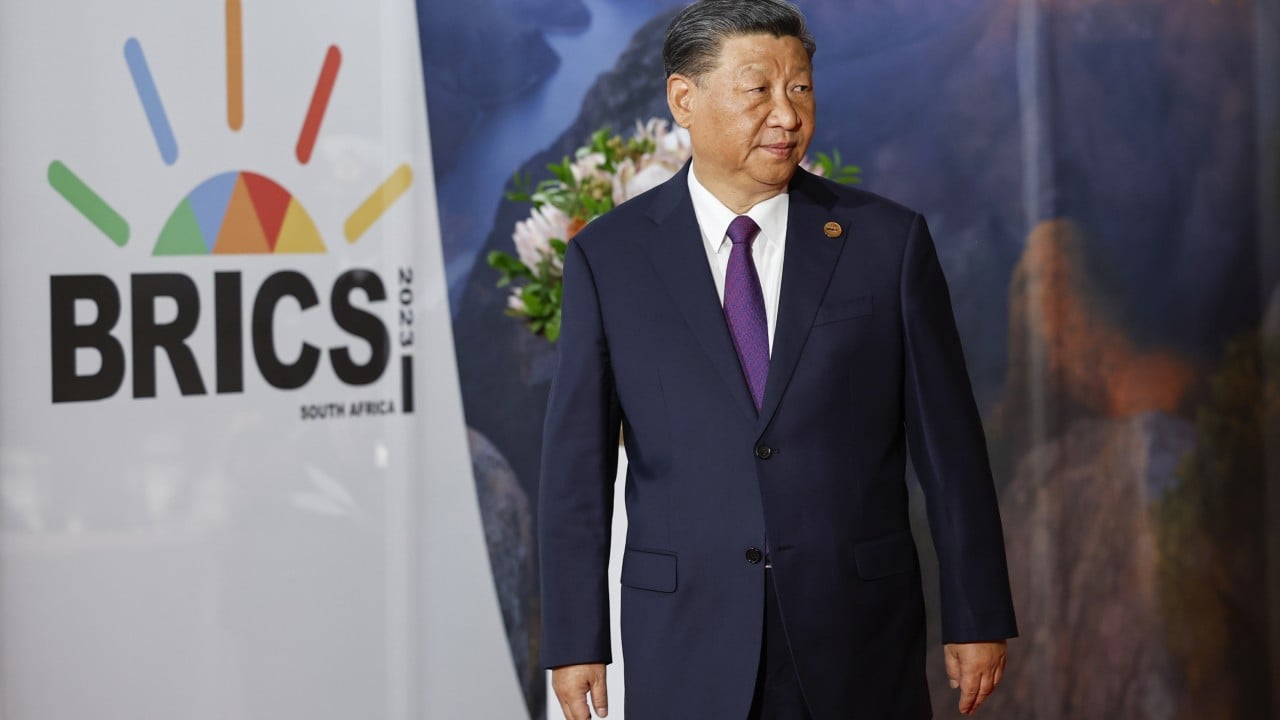
Chinese President Xi Jinping is landing in New Delhi this week. That sentence alone would have sounded impossible a couple of years ago.
This trip marks Xi's first visit to India in seven years. The last time he touched down on Indian soil was back in October 2019 for an informal summit in Mamallapuram. Then came 2020. The deadly Galwan Valley clashes happened, thousands of troops rushed to the Line of Actual Control, and relations between the world's two most populous nations hit a deep freeze. Trade restrictions followed, direct flights vanished, and a wall of diplomatic suspicion went up. Expanding on this theme, you can also read: The Mechanics Of Deterrence Failure Within The Mecca Joint Defence Architecture.
Now, the ice is cracking. Xi is heading to New Delhi for the 18th BRICS Summit on September 12 and 13, hosted by Indian Prime Minister Narendra Modi.
If you think this is just another routine diplomatic handshake, you're missing the bigger picture. Here is what is really happening behind the scenes and why this visit matters immensely for the future of Asian geopolitics. Observers at NPR have shared their thoughts on this matter.
The Massive Delegation Tells the Real Story
Diplomacy often runs on optics, but logistics reveal intent. Reports indicate that Xi is bringing a massive delegation of around 400 officials. Compare that to fewer than 200 officials who accompanied him during his 2019 trip.
Beijing isn't just sending a token representative. They are sending a small army of trade, security, and foreign policy experts. High-ranking figures like Foreign Minister Wang Yi and Commerce Minister Wang Wentao are part of the lineup.
Security teams from China have already checked into New Delhi hotels, setting up tight perimeters. This heavy footprint shows that Beijing wants to signal serious engagement. They want things fixed, or at least managed, because prolonged hostility serves neither economy well.
Fixing the Border Is Only Step One
For years, New Delhi maintained a strict boundary rule: normal relations cannot happen while the border stays hot. Prime Minister Modi's administration held firm on that stance.
Slowly, things began to shift. National Security Adviser Ajit Doval met with Chinese officials in Beijing to hash out disengagement terms. Direct flights between Delhi and Beijing started returning, and the Kailash Mansarovar Yatra pilgrimage routes reopened.
Yet, trust remains brittle. Just last month, reports of brief patrol face-offs near the border triggered quick diplomatic warnings. Xi's presence in Delhi proves that both leaderships want a political ceiling placed over their military friction. They want to ensure minor border flare-ups don't spiral into actual conflict.
The Economic Reality Check
Politics creates the headlines, but commerce pays the bills. Indian industries heavily rely on Chinese machinery, electronics, and specialized industrial components. At the same time, New Delhi has spent years trying to cut down its strategic dependence on Beijing.
Expect fierce conversations behind closed doors. Indian commerce officials are pushing back against Chinese investment restrictions and bottlenecks on high-tech imports. On the flip side, Chinese firms want smoother market access.
Chinese export curbs on critical technologies—like battery cells, wafers, and renewable energy components—have hit Indian manufacturing plans hard. If India wants to build out its massive green energy infrastructure, it needs raw materials and tech components that currently flow through Chinese supply chains. Commerce Minister Piyush Goyal and Chinese counterpart Wang Wentao will sit down on the sidelines of the summit to tackle these exact roadblocks.
Why BRICS Matters Right Now
The timing of this summit amplifies every single discussion. With global trade policy facing heavy turbulence, shifting American tariffs, and ongoing conflicts in West Asia and Europe, emerging economies are looking for stability.
BRICS has expanded aggressively, turning into an 11-member bloc that includes heavyweights like Russia, Brazil, South Africa, and recent additions like Iran, the UAE, and Indonesia. Russian President Vladimir Putin is also arriving in New Delhi for the meetings.
When the leaders of India and China stand together on a BRICS platform, they project an image of non-Western solidarity. It signals that despite their bilateral distrust, they refuse to let external pressures dictate their macro-diplomacy.
Watch the bilateral meetings between Modi and Xi closely this weekend. They won't solve every historical grievance overnight. But the fact that Xi is finally back in India after seven long years means both sides are ready to write a new chapter of pragmatic, guarded coexistence.