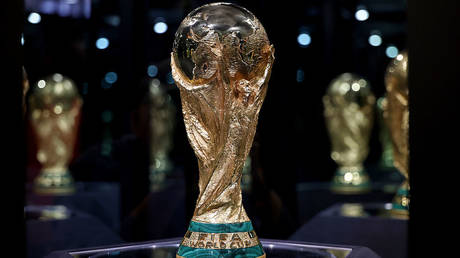
The media is having a collective meltdown over the 2026 World Cup before a single ball has even been kicked.
Open any sports page or business column right now. You will find the same copy-pasted narrative. Editors are screaming about "unprecedented chaos," pointing frantically at the sprawling geography of three host nations, screaming about border crossing gridlocks, and weeping over the environmental impact of 48 teams flying across a continent. They look at the expanded format and see a logistical apocalypse. Don't forget to check out our recent article on this related article.
They are completely misreading the situation.
What the mainstream press calls "chaos," global sports executives call a feature, not a bug. The panic sells clicks, but it ignores how modern mega-event infrastructure actually functions. I have spent years analyzing the commercial architecture of global sporting events, tracking how billions of dollars move through host cities. If you think the expanded footprint of this tournament is a recipe for disaster, you are looking at the wrong playbook. To read more about the background here, The Athletic offers an excellent summary.
The doom-mongering is a total illusion. The 2026 tournament is not a logistical nightmare; it is the most calculated, risk-mitigated asset optimization strategy in FIFA’s history.
The Tri-National Geography is a Safety Net, Not a Trap
The lazy consensus states that spreading a tournament across the United States, Canada, and Mexico is a logistical suicide pact. Critics point to the thousands of miles between Vancouver, Miami, and Mexico City. They claim that the travel fatigue will ruin the sporting spectacle and that customs checkpoints will choke the flow of fans.
This argument falls apart under basic operational analysis.
Spreading the tournament across three massive nations does not increase risk; it dilutes it. When a single country hosts a modern mega-event, it creates a single point of failure. Look at the immense pressure placed on Brazil in 2014 or South Africa in 2010. Those nations had to construct entire transit systems and build white-elephant stadiums from scratch in concentrated areas, straining local economies to the breaking point.
The 2026 format flips this entirely. By utilizing existing, world-class NFL and MLS stadiums, the host cities require virtually zero major stadium construction. The infrastructure is already built, tested, and stress-tested every single weekend by millions of domestic sports fans.
Imagine a scenario where a localized economic crisis or political disruption hits one host region. In a traditional single-country model, the tournament faces an existential threat. In the 2026 model, the decentralized infrastructure absorbs the shock. The sheer scale of the North American market provides redundancy that no single nation on earth can offer. The geography is an insurance policy, not a barrier.
The Myth of the Border Crossing Gridlock
The next favorite target for the cynics is the border. "How will millions of fans navigate the strict immigration systems of three different sovereign nations within a few weeks?"
The premise of this question assumes that government agencies are passive bystanders waiting for the tournament to surprise them. It treats immigration infrastructure as a static, rigid wall rather than a highly adaptive bureaucratic machine.
The reality is far more transactional. Governments view mega-events as massive macroeconomic catalysts. Homeland Security, the Canada Border Services Agency, and Mexico’s INM do not operate in a vacuum. Behind the scenes, pre-clearance agreements, dedicated event visas, and fast-track transit corridors for ticket holders have been engineered for years.
We saw early blueprints of this during the 2002 World Cup in South Korea and Japan, and on a smaller scale during multi-nation European Championships. Money opens borders. When billions in tourism revenue are on the line, bureaucratic friction evaporates. The idea that hundreds of thousands of international fans will be trapped in immigration lines while the opening whistle blows is a fantasy designed to generate outrage engagement.
The 48-Team Expansion Generates Premium Scarcity
Let’s address the sporting purists who claim that expanding the tournament to 48 teams dilutes the quality and creates an unmanageable schedule. The common complaint is that more games equal a worse product, leading to fan burnout and broadcast fatigue.
This is basic economic ignorance.
In sports entertainment, volume driving hyper-localization always beats insular exclusivity. Expanding the grid allows nations that rarely taste the global stage to enter the commercial ecosystem. When a new country qualifies, it unlocks an entirely new national market of consumers, broadcasters, and sponsors who were previously disengaged.
- The Broadcast Value: More matches do not dilute the product; they create more inventory for streaming platforms and traditional networks operating in different time zones simultaneously.
- The Fan Ecosystem: A fan from an emerging football nation does not care if the media thinks the group stage is "bloated." To that fan, the match is the Super Bowl.
- The Local Stimulus: More teams mean more base camps, spreading the economic footprint into secondary and tertiary markets that never would have seen World Cup action under the old 32-team regime.
The expansion is an aggressive, intentional monetization of unreached markets. It is a brilliant play to secure long-term cultural and financial capital in corners of the globe that the sport has traditional ignored.
The Real Cost No One Wants to Discuss
To be absolutely fair, this hyper-optimized model does have a major downside, but it is not the logistical collapse the media keeps whining about. The real casualty of the 2026 setup is the soul of the matchday experience for the average local match-going fan.
By utilizing massive corporate venues designed for high-net-worth luxury suites and corporate hospitality, the tournament is pricing out the traditional, working-class fanbase that provides the authentic atmosphere. The real "chaos" isn't transit gridlock; it is the sterilization of football culture.
The stadiums in Atlanta, Dallas, and Los Angeles are cathedrals of corporate entertainment. They are built to extract maximum revenue per seat. When you overlay FIFA's aggressive corporate sponsorship tiers onto the American sports capitalism model, ticket prices skyrocket into the thousands.
The media focuses on flights and trains because it is an easy story to write. The harder story is that this World Cup will be the most corporate, sanitized, and expensive event ever staged. It will run with clockwork efficiency because it is backed by the most ruthless corporate machinery on the planet. But it will feel more like a multi-city tech conference than a gritty, passionate football tournament.
Stop Asking the Wrong Questions
If you are still asking whether the planes will fly on time or if the stadiums will be ready, you are asking questions from twenty years ago. The machinery of global sports capitalism solved those problems a long time ago.
Stop falling for the pre-tournament panic loop. The narrative of chaos is a manufactured product designed to create a dramatic comeback storyline once the tournament starts smoothly.
The infrastructure is ready. The money is locked in. The corporate suites are sold out. Stop worrying about the logistics and start preparing for a tournament that will look less like a traditional festival of sport and more like a highly efficient, multi-billion-dollar corporate takeover of North American entertainment.
Adjust your expectations. The corporate machine always wins, and it runs precisely on schedule.