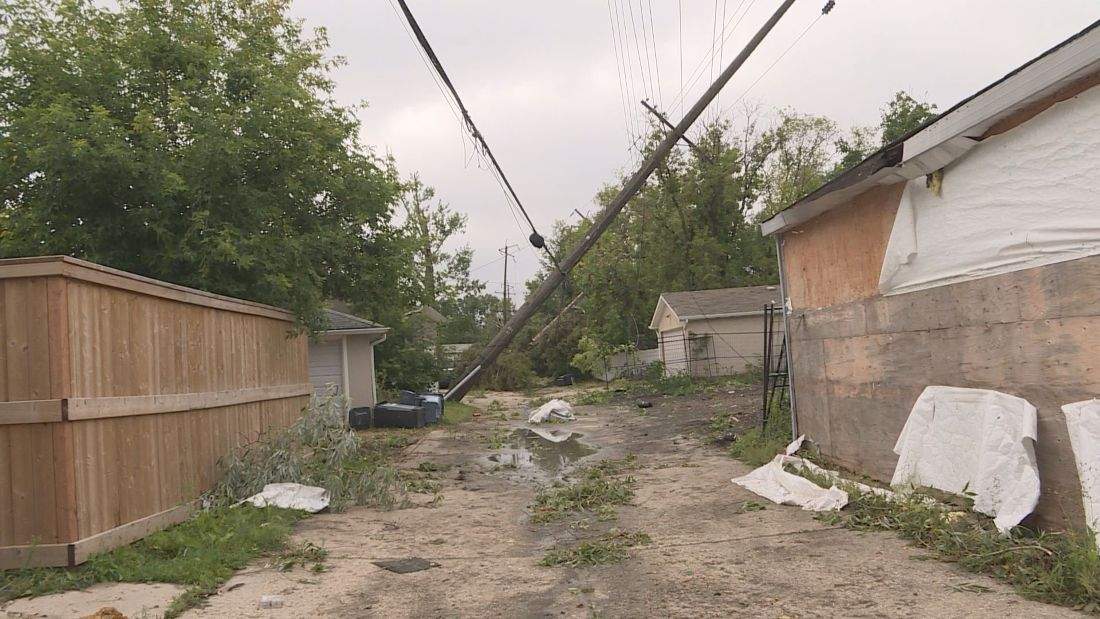
Severe weather doesn't usually hit the middle of a Canadian city like this. Most folks assume twisters stick to rural fields and empty highways. Sunday night proved that assumption dead wrong.
The Northern Tornadoes Project officially confirmed that an EF-1 tornado touched down right inside Winnipeg's residential River Heights neighbourhood. Winds ripped through at a staggering 155 km/h. Trees snapped. Roof shingles flew. A vehicle even shifted across a front lawn.
If you live on the prairies, urban tornadoes are no longer just an abstract threat. They are happening.
Inside the Storm That Struck River Heights
Sunday's chaos started long before dark. A heavy system rolled across Manitoba, dumping massive amounts of rain and overwhelming drainage systems. But the real danger dropped unexpectedly at 6:31 p.m.
The EF-1 twister carved a two-kilometre path directly through a heavily populated suburb. Drone surveys and ground teams from the project—based out of Western University—mapped the damage days later. They found structural hits to homes, wrecked sheds, and mangled canopies of mature urban trees.
Miraculously, no injuries were reported. Property damage, however, tells a different story. Manitoba Hydro crews scrambled for days to restore power to hundreds of homes stranded in the dark. Street flooding added to the misery as thousands of litres of rain pooled across major intersections.
The Second Twister West of the City
Urban areas didn't bear the brunt alone. Less than an hour before the River Heights touchdown, another tornado hit near Bénard, Manitoba.
That rural system tore into farm property roughly 50 kilometres west of Winnipeg. It flattened grain bins and caused severe structural damage to multiple agricultural buildings.
This marks the second time this summer that Winnipeg proper has faced a direct tornado strike. Back in June, a similar system clipped the Whyte Ridge area, ripping off roofs and uprooting trees. Two urban hits in a single season forces a hard look at local climate patterns. Severe weather is changing its habits.
What to Do When Urban Warnings Sound
People living in densely built neighbourhoods tend to ignore tornado sirens or weather alerts. Concrete and asphalt create a false sense of security. You think storms break apart before hitting the core.
They don't.
When Environment Canada issues a severe thunderstorm or tornado warning for your sector, take it seriously. Move away from exterior walls and windows immediately. Basements remain the safest spot in any house. If you live in an apartment high-rise, head for an interior hallway or ground-floor stairwell.
Keep an emergency kit ready with basic supplies, flashlights, and a battery-powered radio. Power outages can drag on for days, as Winnipeg residents found out this week. Stay alert, stop assuming your postcode protects you, and watch the skies when the barometer drops.