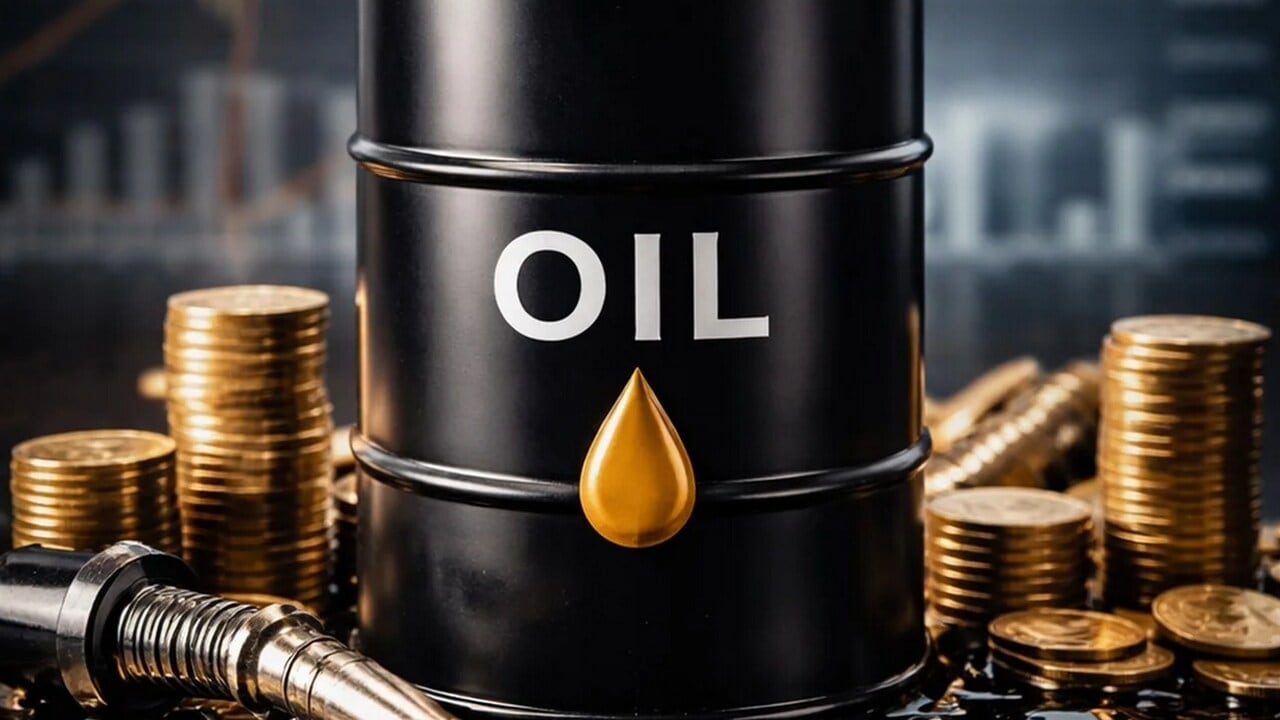
Washington just blinked again. For the third time in three months, the US Treasury Department quietly extended a 30-day sanctions waiver allowing third countries to scoop up Russian crude oil currently stranded at sea.
If you feel like you're experiencing deja vu, you're not alone. Treasury Secretary Scott Bessent had previously indicated he would let the previous waiver expire on May 16. It did expire. For roughly 48 hours, the legal channel closed. Then, on Monday morning, the Trump administration engineered a predictable about-face, reissuing the general license to keep Russian barrels flowing.
The administration frames this as a humanitarian gesture to assist "energy-vulnerable" nations. Don't buy the corporate spin. This isn't charity. It's a desperate scramble to keep global energy markets from collapsing while the US-Israel conflict with Iran chokes off the world's primary oil arteries. By letting Russia sell its stranded crude, Washington is trying to prevent domestic gas prices from destroying its political capital ahead of the midterm elections.
The Hypocrisy of the 30-Day Sanctions Loophole
The mechanics of this waiver are simple but devastating to the broader Western geopolitical strategy. The new license from the Treasury’s Office of Foreign Assets Control (OFAC) allows any country to buy Russian seaborne crude and petroleum products, provided the oil was already loaded onto tankers and sitting out on the water.
Bessent took to X to justify the move, arguing that the extension provides "additional flexibility" and will prevent China from hoarding and stockpiling heavily discounted oil. He claims that without these short-term waivers, global crude prices would have spiked to $150 a barrel.
Maybe he's right about the math. Brent crude futures are already trading above $111 a barrel, and US WTI is hovering over $107 following the recent attack on the Barakah nuclear power plant in the United Arab Emirates. The physical crude market is incredibly tight. But this rolling 30-day policy creates a bizarre paradox where the US acts as both Russia’s financial executioner and its economic lifeguard.
Last October, the US placed heavy sanctions on Russian state energy giants Rosneft and Lukoil to choke off funding for the war in Ukraine. Now, because of Washington's separate geopolitical entanglement in the Middle East, those same restrictions are being systematically dismantled 30 days at a time.
Why the Middle East War Changes Everything
You can't understand the Russian oil retreat without looking at the disaster unfolding in the Strait of Hormuz. The US-Israeli military campaign against Iran, now dragging into its third month, has completely upended global shipping. Tehran’s effective blockade of the strait has trapped millions of barrels of Gulf crude that Western allies rely on.
When you yank that much supply out of the market, something has to give. The poorest, energy-dependent nations in Asia and Europe faced immediate shortages. Leaders like Indian Prime Minister Narendra Modi have been aggressively lobbying Washington behind the scenes. India, which transformed into a massive buyer of discounted Russian crude after the 2022 invasion of Ukraine, suddenly found itself cut off from both Middle Eastern suppliers and sanctioned Russian barrels.
Faced with a choice between forcing allies to suffer severe energy starvation or letting Vladimir Putin cash an unexpected check, the White House chose the latter. The result? Russia is capitalizing beautifully on a war it has nothing to do with. According to tracking data, Moscow's oil revenues nearly doubled during the initial supply shocks, benefiting directly from the price premium created by the conflict with Iran.
The Furious Domestic Backlash
Unsurprisingly, not everyone is thrilled with the administration's flexibility. The policy has triggered fierce resistance on Capitol Hill, splitting lawmakers who argue the White House is showing immense weakness.
Senior Senate Democrats, including Jeanne Shaheen and Elizabeth Warren, blasted the decision as a shameful reversal of American foreign policy. They point out a harsh reality: American consumers aren't even seeing the benefits of this moral compromise. Despite three consecutive months of waivers, domestic petrol costs have remained stubbornly high. The crude might be stabilizing the global floor price, but it isn’t lowering the bill at the pump for voters in Ohio or Pennsylvania.
Furthermore, critics argue that the 30-day rolling format is the worst of both worlds. It doesn't offer enough long-term certainty for global markets to truly calm down, yet it offers just enough economic relief to keep the Kremlin’s war machine well-funded.
What Happens Next for Energy Buyers
If you are managing supply chains, trading energy, or trying to forecast where fuel costs are heading this summer, the message from Washington is clear.
First, do not expect a permanent resolution to the Russian sanctions framework anytime soon. The administration will continue to use these short-term general licenses as a macroeconomic thermostat, turning them on whenever Brent inches closer to $115 and threatening to turn them off when prices cool.
Second, pay attention to the specific terms of these waivers. OFAC is explicitly targeting "oil on the water." It is a green light for clearing out backlogs, not a blank check for long-term supply contracts with Rosneft. If you are dealing with maritime logistics or trade finance, your compliance teams must audit the exact loading dates of these cargoes to avoid crossing the line into non-exempt territory.
The geopolitical reality is messy. Washington wants to punish Russia and crush Iran simultaneously, but the laws of global supply and demand won't allow both. For the next 30 days, the oil will keep flowing from Russian ports, and the Kremlin will keep collecting its premiums.