Consider a winter storm in a small, wind-whipped town in northern Europe or the American Midwest. The air is brutal, a freezing shroud dropping the thermometer well below zero. For years, engineers running local power grids have lived with a quiet anxiety during these cold snaps. They watch the screens, tracking the power flowing from wind turbines or solar arrays into massive banks of lithium-ion batteries.
Lithium batteries are remarkable. They power our phones and electric sedans. But when the temperature falls off a cliff, they struggle. The chemistry inside freezes up, refusing to take a charge or discharge effectively. Grid operators are forced to turn on auxiliary heating systems just to keep the batteries warm enough to function. It is an expensive, stressful balancing act.
Now, imagine an entirely different substance handling the load. It is common, cheap, and immune to the panic of a freeze.
The global energy transition has been built almost entirely on the back of lithium. This choice was logical for small gadgets, but it created an invisible bottleneck for the world's power grids. Lithium is finite, geographically concentrated, and prone to wild price swings. This heavy reliance leaves our future grid infrastructure vulnerable to supply chain shocks and political posturing.
The world needed an alternative that was abundant enough to secure the energy needs of billions of people.
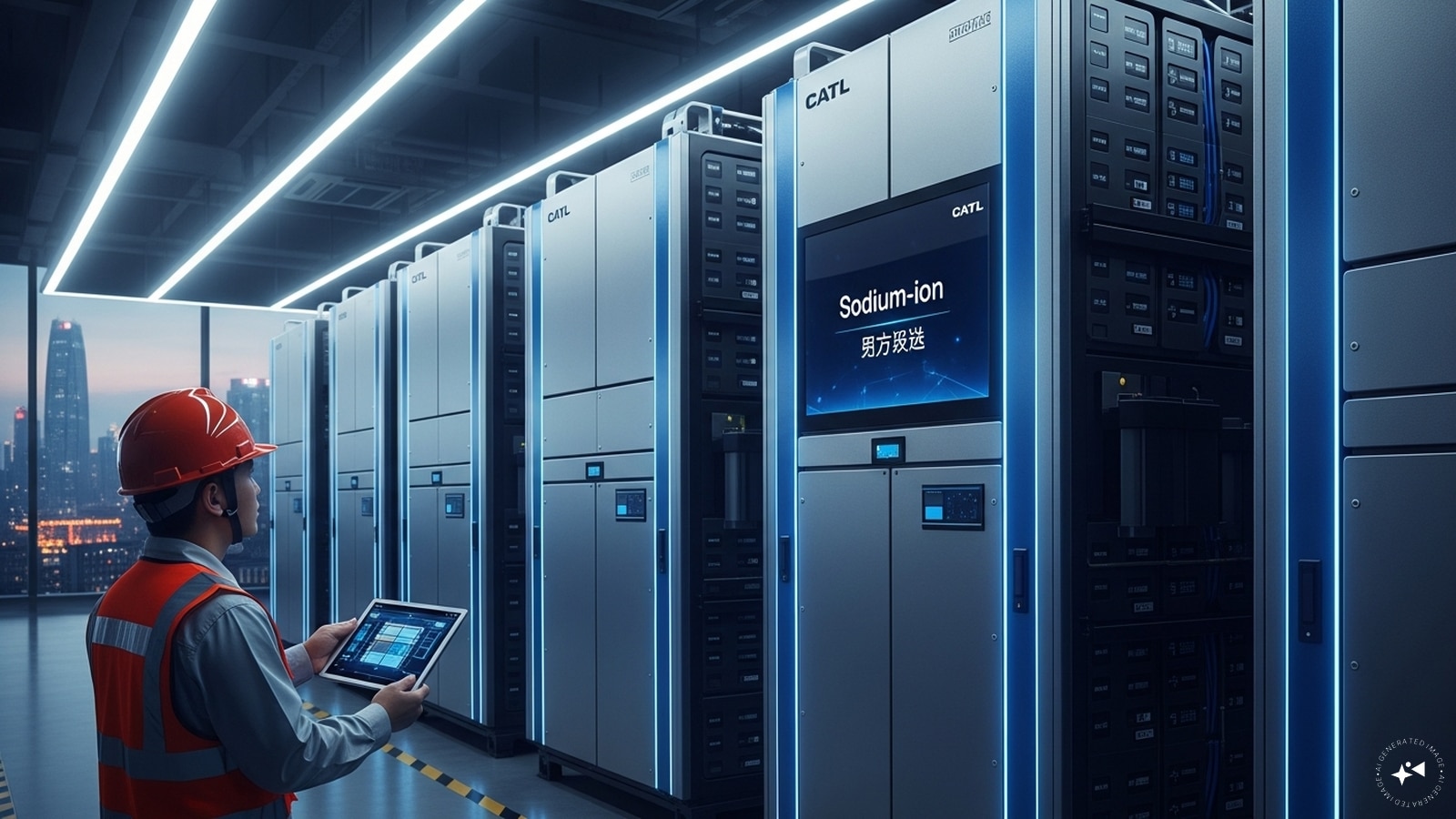
In Munich, a shift in that narrative quietly began. The world's largest battery manufacturer, CATL, introduced a system called TENER Sodium. It replaces the scarce lithium with sodium—the foundational element of ordinary table salt.
This is not a lab experiment or a prototype meant for a slideshow. It is a massive, field-validated commercial reality.
To understand why this matters to someone freezing in a winter storm, look at the physical properties of the metal. Sodium is more than one thousand times more abundant than lithium. It is scattered across every continent, sitting in oceans and salt flats worldwide. By building an energy storage system out of sodium, the global grid can break free from the geographic monopolies of lithium mining.
But the real victory lies in how it behaves when the world freezes.
While a traditional lithium system acts sluggish and inefficient in extreme cold, this sodium architecture retains over 92% of its capacity at minus 20 degrees Celsius. It breathes through the freeze. It does not need energy-draining heaters to stay alive. In the blistering heat of summer, it is equally stubborn, capable of running over 10,000 cycles at 45 degrees Celsius without breaking a sweat.
The scale of these machines is monumental. Each individual module is a steel vault weighing 42 tonnes. When engineers connect 34 of these modules together, they create a 1-gigawatt-hour energy storage station. That is enough electricity to power roughly 750,000 homes for an hour during a peak blackout.
The engineers decoupled the energy and power blocks. This modular design means a utility company can configure the system to dump its power fast over a single hour, or let it trickle out over two, four, six, or eight hours depending on what the community needs.
For the people living near these massive installations, the change is subtle but profound. Traditional grid batteries use aggressive cooling fans that create a constant, industrial drone. The new system relies on an optimized liquid-cooling setup that drops the noise level down to 65 decibels. It sounds like a quiet conversation, allowing these massive units to sit closer to towns and cities where the power is actually consumed.
The numbers behind this shift represent a decade of quiet work. CATL poured nearly 10 billion yuan into sodium research and development. They built hundreds of thousands of test cells, seeking a molecular structure that could survive the repetitive stress of grid life.
They found it. At normal temperatures, the system is rated to survive 15,000 cycles. In plain terms, that means the battery can charge and discharge every day for 25 to 30 years before it needs replacing. It matches the lifespan of the solar panels and wind turbines it pairs with, turning volatile renewable energy into a permanent pillar of the community.
Safety has long been the unspoken fear of battery tech. A lithium fire is an terrifying event, fueled by high temperatures and internal pressures. The sodium system alters this risk profile entirely. The physical chemistry reduces internal expansion force by 40% and cuts gas generation by more than a third. Its thermal runaway temperature is roughly 200 degrees Celsius—about 60% lower than that of lithium. It is engineered to suppress fire and explosion even under catastrophic damage.
A grid operator can sleep at night knowing the system also features an automatic self-healing mechanism. If a fault occurs somewhere in the massive array of cells, the software detects it, isolates the damaged section within 200 milliseconds, and restores power to the rest of the facility just 150 milliseconds later. The lights in the town miles away do not even flicker.
Mass production lines are already running. Initial shipments will hit the grid in China this September, with global commercial deliveries beginning in June of next year. The transition is designed to be invisible to the utility companies buying them; the physical footprint matches existing lithium systems perfectly, letting companies slide sodium modules into existing setups without redesigning their facilities.
We have spent decades worrying if the wind would blow or the sun would shine enough to keep our modern lives running. We looked for answers in rare, expensive minerals dug out of a few deep holes in the earth. The realization that the key to a stable, global grid might just be the same basic element we shake onto our food is a beautiful twist of science. The future of energy is turning out to be ordinary, safe, and incredibly abundant.