The engineering drawings in the defense journals always show it as a knife edge. A streak of silver slicing through a vector, guided by algorithms that can distinguish between a speck of dust and a structural rivet through a sandstorm at forty thousand feet. They call it precision. They talk about circular error probable in millimeters, as if the modern battlefield were a laboratory bench where sterile mathematics neutralize human error.
Let me tell you what a millimeter looks like when it hits the ground.
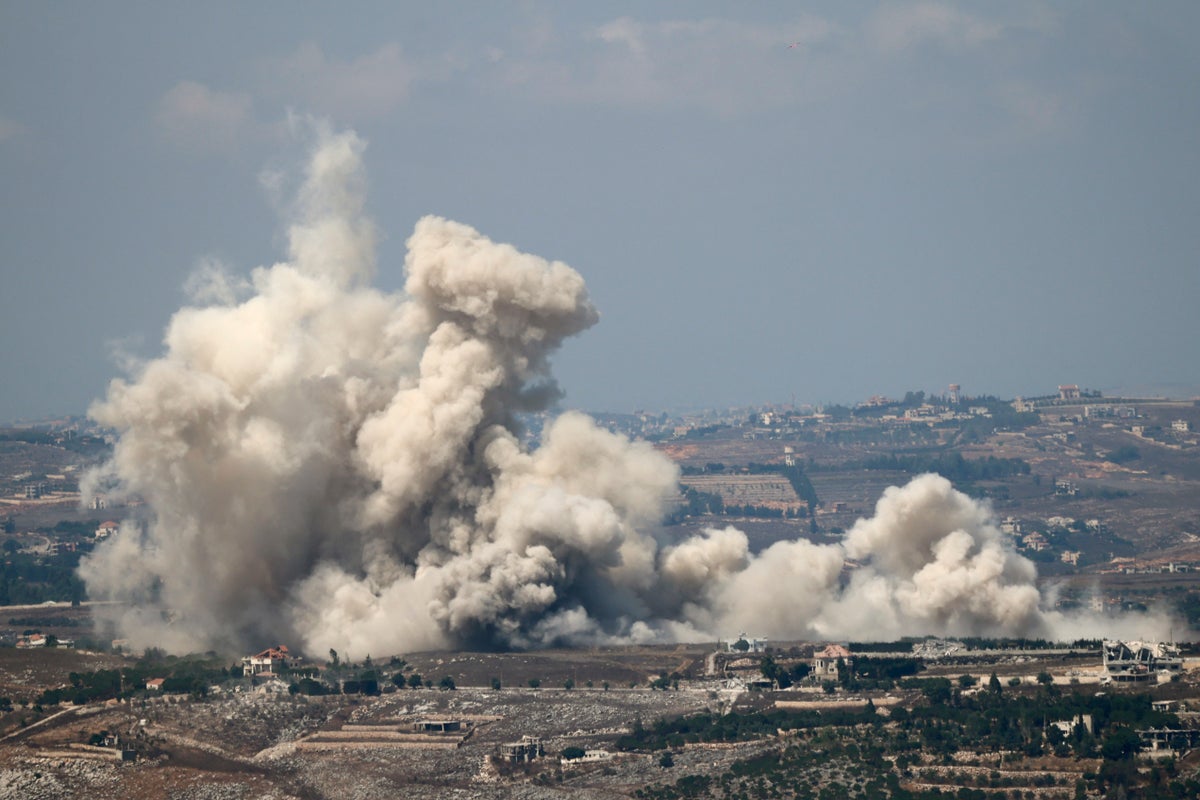
It smells like ozone and charred copper. It sounds like a sudden, sickening vacuum that pops your eardrums before your brain has time to register the noise. And then there is the quiet. Not the peaceful quiet of an empty desert, but the heavy, suffocating quiet that settles over a courtyard when the dust begins to settle and the pigeons refuse to land.
We were told the new generation of American precision ordnance was different. For years, the public narrative around high-tech weaponry has been sanitized. We traded the carpet-bombing thunder of older wars for the whisper-quiet hum of smart munitions. The promise was simple: fewer ruins, fewer collateral lives, a surgical intervention that removed the target like a tumor while leaving the healthy tissue untouched.
Yet reality has a stubborn habit of leaking through the cracks in our high-tech geometry.
Consider a hypothetical neighborhood on the outskirts of an Iranian city, though you could drop this pin into a dozen different conflicts across the modern map. Picture a narrow alleyway where the laundry hangs slack in the heat. A man named Reza sits on a low concrete stoop, drinking tea from a glass that has a chipped rim. He is seventy-two. His hands shake slightly when he holds the saucer. He has lived through revolutions, currency collapses, and the low-grade hum of international sanctions, but today his primary concern is whether the local bakery has received its shipment of flour.
Five miles above him, locked in the stratosphere, a sensor package registers a heat signature.
To the analyst staring at a high-definition monitor in a dimly lit operations center three time zones away, the target is a glowing cluster of pixels. It is categorized, cross-referenced, and authorized. The math is checked twice. The trajectory is calculated to avoid the school two blocks over. Every protocol designed to minimize civilian harm is meticulously executed.
The missile leaves the rail with a crack like a whip.
This is where the marketing brochures end and the human tragedy begins. The modern missile is designed to minimize the explosive payload, relying instead on kinetic energy or tightly focused fragmentation to destroy a specific vehicle or room. But physics does not care about doctrine. When a kinetic penetrator strikes a target at supersonic speeds, the kinetic energy has to go somewhere. It radiates outward through the earth, through the foundations of neighboring homes, through the acoustic resonance of narrow streets lined with unreinforced brick.
Reza never hears the missile coming. He doesn't have time to look up from his tea.
The blast wave doesn't obliterate his block; that is the illusion of the smart weapon. Instead, it fractures the subterranean water mains, shatters every window for a hundred yards, and sends a supersonic shockwave ricocheting down the alleyways. A collapsing wall of sun-baked mud brick, compromised not by a direct hit but by the seismic rebound of the blast miles away from the intended target zone, gives way.
The official after-action report will likely list the operation as a success. The primary target was neutralized. The collateral damage assessment, viewed from twenty thousand feet via grainy drone footage, will show an intact roofline and minimal structural damage to the immediate surroundings. The analysts will pack up their keyboards and log off for the shift.
Back in the alley, the dust takes twenty minutes to settle.
When the neighbors finally claw away the rubble to reach Reza, they do not find a battlefield casualty. They find an old man who was worried about flour, buried under the debris of a street that the algorithm deemed safe.
This is the invisible tax of our technological hubris. We have convinced ourselves that we can wage war with the sterile efficiency of a surgeon operating with a laser scalpel. We have built an entire vocabulary around sanitized violence—deconfliction, surgical strikes, collateral mitigation, pinpoint accuracy. These words are designed to comfort the conscience of the nation launching the weapon, wrapping an act of devastating violence in the language of corporate logistics.
But war refuses to be sanitized.
When an advanced missile misses its acoustic or thermal containment parameters—whether due to an atmospheric anomaly, a slight miscalculation in wind shear, or the unpredictable way shockwaves behave in dense urban canyons—the fallout is measured in human grief, not percentage points. The families living miles from the designated target zone do not care that the missile was ninety-nine percent accurate. That remaining fraction of a percent is the difference between life and death for a man drinking tea on his front stoop.
We have engineered weapons that can thread a needle from the edge of space, yet we remain astonishingly blind to the threadbare reality of the lives those weapons touch on the way down. The accuracy of a missile is not determined by where the crosshairs were pointing when the trigger was pulled. It is measured by the distance between the intended target and the ruined life left behind in the dirt.
The silence that follows the strike is never empty. It is filled with the unasked questions of those who survived, wondering how a machine designed to be so precise could miss the humanity of the world it was dropped into.