The marble corridors of the European Parliament smell faintly of old wool, stale espresso, and the quiet panic of politicians who know they are being watched.
Walk down these hallways long enough, and you stop hearing the official language of diplomacy. You stop hearing the soaring rhetoric about unity, democracy, and an unbreakable cordon sanitaire against the far right. Instead, you hear the muffled click of a pen, the hurried shuffle of papers, and the low murmur of pragmatic arrangements forged in the dark.
Behind heavy oak doors, the arithmetic of power is brutally simple. Ideology is heavy. Votes are currency. And when a major political bloc needs to push a piece of legislation across the finish line, philosophical purity has a funny habit of getting left out in the cold.
Consider a Tuesday afternoon in Strasbourg.
The air in the plenary chamber is thick with the hum of simultaneous translation headsets. Down on the floor, a seasoned conservative negotiator from the European People's Party glances across the aisle. For years, the official party line has been absolute: no cooperation, no coordination, no breathing room for the radical right. The line is supposed to be sacred. It is supposed to protect the democratic center from the fringes.
Yet, numbers do not care about sacred lines.
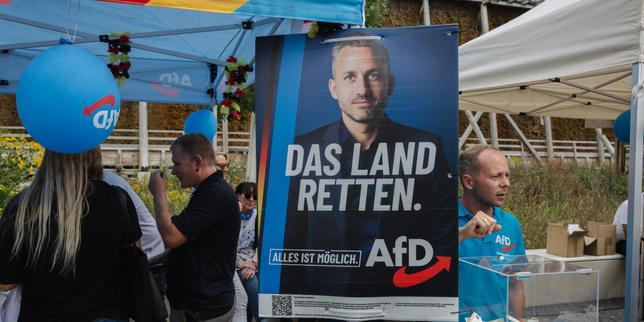
When a contentious agricultural or environmental text hangs by a thread, and the progressive left refuses to budge, the conservative center faces a choice. They can lose the vote, admitting defeat in front of the continent, or they can look the other way. They can quietly rely on the votes of the Alternative for Germany, known to all simply as the AfD.
No formal contracts are signed over these moments. No grand coalition is announced in the press room downstairs. That would be messy. That would trigger headlines in Berlin, Paris, and Brussels.
Instead, it happens through a synchronized shrug. An unspoken understanding.
The text is amended. The amendments align with what the far-right faction wants anyway. The button is pressed. The green lights flare up on the giant electronic board. The motion passes. And in the minutes that follow, everyone pretends nothing unusual has occurred.
This is the quiet normalization of the unthinkable.
To understand why this happens, you have to look past the slogans and stare directly into the mechanical reality of modern governance. The European Parliament is a sprawling, multi-lingual beast where no single party commands an outright majority. To pass a law, coalitions must be built out of shifting sand.
For the Christian Democratic Union and its broader European family, the temptation is perennial. They see themselves as the natural party of government, the stewards of the economy, the adults in the room. To them, a failed vote is not just a political setback; it is an administrative failure. If the radical right is willing to push the exact same button on a deregulation bill or a border enforcement measure, why let ideological stubbornness get in the way of a victory?
Step by step, the barrier wears thin.
At first, it is just coincidence. "We happened to vote the same way," they tell the journalists who linger by the coffee machines. Then, it becomes a pattern. "Our texts simply address common-sense solutions that appeal across the board." Finally, it becomes a habit. A dirty secret that everyone in the building knows, but few dare to name out loud.
The danger here is not a dramatic, cinematic coup. Democracies rarely fall in a single night of gunfire and broken glass. More often, they erode through a thousand tiny compromises made in the name of efficiency.
Every time a mainstream party borrows votes from the extreme right to secure a legislative win, something fundamental shifts in the political architecture. The taboo loses its sting. The rhetoric that was once unspeakable becomes part of the parliamentary lexicon. The fringe moves closer to the center, not because they seized power by force, but because the center invited them in to make the math work.
Down in the subterranean metro station beneath the parliament building, commuters rush past glowing advertisements for a united Europe. They carry briefcases, scroll through news alerts on glowing screens, and talk in hushed tones about the cost of living, energy prices, and the security of their borders. They want stability. They want results.
They do not see the midnight deals. They do not watch the quiet counting of hands across ideological chasms that were once supposed to be unbridgeable.
But the consequences ripple outward all the same. They shape the laws governing the fields we farm, the air we breathe, and the borders we police. They determine who belongs to the legitimate political conversation and who remains outside.
The paper trail is dry. The voting records are public, buried deep within parliamentary archives where only data analysts and stubborn reporters care to look. But the human reality behind those numbers is heavy with consequence.
When the guardians of the status quo decide that expediency matters more than principle, they stop guarding the gates. And in the quiet corners of the European Parliament, the sound you hear is not the collapse of democracy, but the soft, steady clicking of votes adding up to a new reality.


