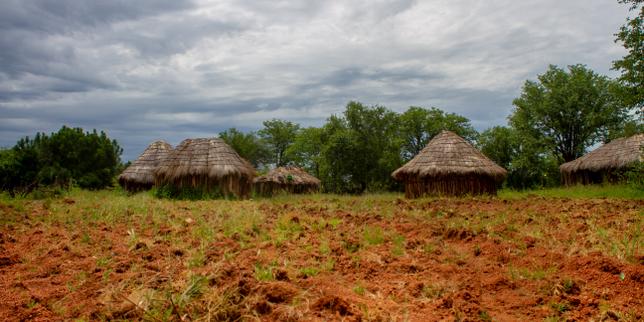
Foreign aid boards love a clean villain. They want a cartoonish patriarch with a whip, sitting in a mud hut in West Africa, decreeing the mutilation of young girls just for the hell of it. It makes for fantastic fundraising copy in Geneva and Washington. It fills the glossy brochures of NGOs that need to justify a multi-million-dollar operating budget every fiscal quarter.
Here is the brutal truth that donor meetings never whisper: treating female genital mutilation purely as an act of sadistic male domination is lazy, intellectually dishonest, and guaranteed to fail. Don't forget to check out our previous coverage on this related article.
I have watched international development funds get torched across the Sahel by consultants who flew in from Brussels with zero local literacy, armed with nothing more than a PowerPoint deck and a profound arrogance. They thought they could lecture entire ethnic groups out of centuries-old social contracts with a few radio spots featuring a sad string arrangement.
They were wrong. And while the elite class of international bureaucrats claps itself on the back for another high-level symposium in Dakar, the practice adapts, goes underground, and survives. To read more about the history here, USA Today provides an in-depth breakdown.
The Lazy Consensus of International Outrage
The standard Western narrative runs on rails. It goes like this: wicked men enforce female genital cutting to control women’s bodies and suppress their sexuality. Therefore, the cure is criminalization, shame, and aggressive policing.
This model collapses the moment it encounters reality. In large swathes of West Africa, from rural Mali to northern Guinea, the primary custodians of this ritual are not men. They are older women. They are grandmothers, mothers, and revered traditional birth attendants who hold immense matriarchal authority within their communities.
When a Western NGO rolls into a village and brands these grandmothers as barbaric monsters, the reaction is predictable. The village circles the wagons. The practice stops being about anatomy and immediately becomes a test of cultural sovereignty against neo-colonial intrusion. You cannot bully a community into abandoning its core identity markers by calling them primitives. You only drive the practitioners deeper into the shadows, where procedures are performed with rusty blades in unhygienic conditions, spiking infection and mortality rates.
Anthropologists who actually do the hard fieldwork know this. Sociologists who spend decades living in rural settlements understand that cutting is not an isolated crime; it is an initiation system. It is a grueling, mandatory tuition fee paid in physical endurance to cross the threshold from childhood into adult social citizenship.
If you ban the ritual without replacing the social currency it buys, you leave young girls in a terrifying vacuum. In many of these societies, an uncut woman cannot inherit property, cannot marry within her lineage, and cannot command social respect. She is treated as a permanent minor, an outsider in her own home. Asking a family to abandon the practice without fixing the underlying economic and social exclusion is like asking a Wall Street trader to give up their network because you find capitalism distasteful. It is hopelessly naive.
Follow the Incentive Structure
To dismantle a deeply rooted social norm, you must look at the machinery keeping it alive. Follow the money and the social incentives.
In many rural West African economies, the traditional exciser—often called the modibo or local practitioner—runs a micro-enterprise. For her, performing these procedures is not a hobby born of malice; it is her primary source of livelihood in a cash-starved regional economy. When foreign NGOs show up with slogans and zero economic alternatives, what happens? The practitioner loses income. Do they retrain as software engineers? No. They organize clandestine midnight ceremonies, charging hazard pay because of the police risk.
Effective interventions do not lecture; they out-compete.
Look at what works when the cameras are turned off. Successful community-led abandonment programs, such as those pioneered by organizations like Tostan in Senegal, throw out the penal code entirely. They spend three years in a village before even mentioning the word excision. They teach literacy, basic human rights framed through local religious and cultural values, and micro-credit financial management.
They empower the very women driving the ritual to audit their own community's health outcomes. When mothers realize that the ceremony causes fistulae, hemorrhage, and maternal mortality during childbirth, and when those same mothers realize they now have other avenues for economic independence and social status, the practice collapses from the inside out. No police vans required. No moralizing white papers from Western think tanks needed.
The structural flaw in the human rights industry is its addiction to immediate, measurable outputs for donor reports. Bureaucrats want a graph showing arrests made and laws passed this quarter. But social norms do not move on quarterly earnings schedules. They move at the speed of generational trust.
The Dangerous Allure of Penal Theater
Criminalization makes politicians feel righteous while protecting nobody. Passing a strict national ban feels great on the floor of a West African parliament, but if the local judiciary is underfunded, corrupt, or non-existent fifty miles outside the capital, the law is worthless ink on paper.
Worse, criminalization drives the practice younger. Fearing police crackdowns, families now subject infants to the procedure weeks after birth rather than waiting for adolescence. An infant has no voice, no defense, and faces even higher immediate risks of surgical shock and hemorrhage. The policy intended to protect girls has successfully accelerated their exposure to harm.
We need to stop treating complex anthropological phenomena with the administrative tools of a parking ticket.
If you want to end female genital mutilation in West Africa, stop funding coastal NGO offices staffed by expatriates who have never slept in a mud brick compound. Fund local women's cooperatives. Build rural maternity clinics that make the medical dangers starkly visible. Create alternative coming-of-age ceremonies that confer adult social status without requiring physical trauma.
Until we respect the internal logic of the societies we claim to rescue, we will keep writing checks to fund our own moral vanity while the problem quietly shifts down the road.