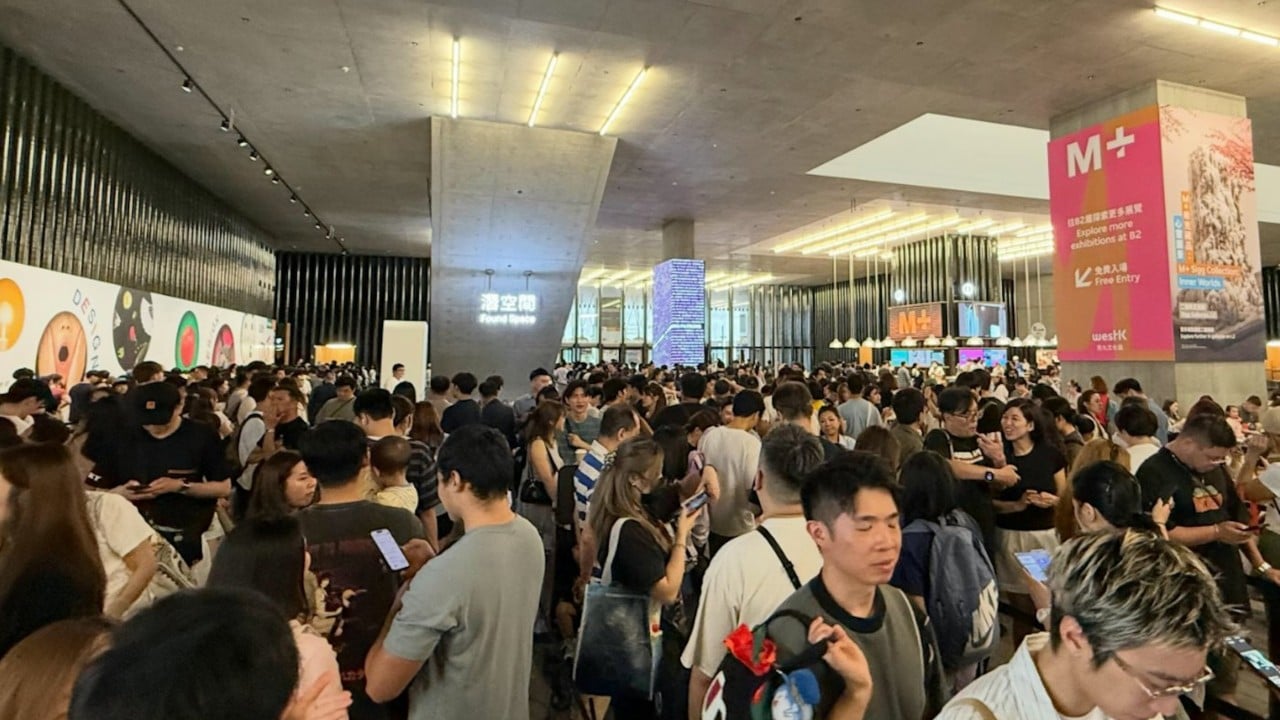
Hong Kong’s premier visual culture museum, M+, recently resorted to offering free admission to clear a massive crowd bottleneck at its latest design exhibition. While management framed the move as a generous gesture of goodwill, the incident exposes a deeper operational vulnerability within the multi-billion-dollar West Kowloon Cultural District. High-profile cultural institutions frequently mistake sheer foot traffic for operational success. When crowd control mechanisms collapse under the weight of poorly managed ticketing flows, giving away the product for free is not a strategy. It is a desperate panic button.
The bottleneck occurred during a peak weekend afternoon, drawing thousands of visitors to a tightly confined gallery space. Security personnel found themselves overwhelmed as the scanning infrastructure failed to pace with the arrival rate of ticket holders. To prevent a hazardous overcrowding situation outside the exhibition gates, executives made the snap decision to suspend ticket checks entirely. You might also find this connected coverage interesting: Why WeWork Still Matters and How Its New CEO Is Fixing the Mess.
The Illusion of Capacity
Museum logistics rely on a delicate balance between fire codes, spatial design, and time-slot ticketing. When an institution launches a blockbuster exhibition, the marketing department often outpaces the venue's physical constraints. M+ boasts expansive architecture, yet its internal galleries feature narrow transition zones that create natural chokepoints.
A standard time-slot ticketing system should regulate the entry rate. However, if visitors linger longer than the projected ninety minutes, or if staff allow latecomers to bundle with the current hour’s cohort, the system breaks. On the day in question, the physical queue backed up into the main atrium, blocking access to other exhibits and creating a safety hazard. As extensively documented in detailed articles by Investopedia, the effects are significant.
Opening the gates for free solved the immediate logistical crisis, but it created an entirely new set of problems. Paying customers who had reserved their spots weeks in advance found themselves jammed into galleries alongside thousands of walk-ins. The experience degraded instantly. True hospitality and museum management require maintaining the integrity of the visitor experience, not just surviving an afternoon without a stampede.
Financial Fallout and Public Perception
Waiving admission fees carries a direct financial penalty, but the long-term damage hits the brand. Cultural institutions funded by public-private partnerships operate under intense scrutiny. When a flagship museum cannot manage its front door, donors and taxpayers notice.
Consider the economics of a major exhibition. The costs of curation, international shipping, insurance, and specialized lighting run into millions of dollars. Ticket revenue acts as a crucial offset. By abandoning ticket collection, M+ lost immediate revenue and set a dangerous precedent. Visitors now know that sufficient congestion can force the museum’s hand, potentially incentivizing intentional crowding during future high-demand events.
Furthermore, the decision alienates the core audience of art enthusiasts. High-end cultural tourism relies on international visitors who plan trips around specific exhibitions. Discovering that a premium, ticketed experience has devolved into a chaotic free-for-all damages the international reputation of the West Kowloon project.
Structural Fixes Over Quick Fixes
Fixing a bottleneck requires re-engineering the entry funnel. Relying on digital ticketing apps often slows down entry lines rather than speeding them up, particularly when network connectivity drops inside concrete and steel structures.
Museums must implement physical barriers and staged holding zones well outside the main building envelope during peak periods. If a gallery reaches maximum occupancy, the stoppage must happen at the perimeter, not at the exhibition doorway. Staff require training to turn away visitors who arrive outside their designated time slot, a strict policy that European institutions like the Louvre enforce aggressively.
M+ must also rethink its digital infrastructure. If scanning a QR code takes more than three seconds per person, the system is obsolete. High-throughput transit systems handle millions of passengers daily using robust, localized validation nodes. Museums need to adopt similar industrial-grade entry technology if they wish to host mass-market crowds without sacrificing operational integrity.
The West Kowloon incident should serve as an urgent warning for cultural hubs worldwide. Flooding a building with people proves popular appeal, but failing to guide them through the doors safely and efficiently reveals a fundamental flaw in execution. True operational excellence means never having to give the house away just to clear the lobby. Future exhibitions depend entirely on whether management decides to build better systems or simply pray for smaller crowds.