Consider the ordinary passport. To most, it is merely a booklet of green or blue pages, a collection of empty stamps waiting to validate a vacation or a business trip. But across the Mediterranean, that same booklet carries the crushing weight of history, geography, and an unyielding national pride. When whispered rumors of diplomatic bargaining begin to circulate in the smoky rooms of European capitals, they do not stay abstract for long. They hit the streets of Algiers like dry wind.
For weeks, the political machinery across the water had been spinning a familiar narrative. According to various statements filtering out from French official circles, talks were allegedly underway to adjust travel access. Figures were thrown around—numbers like two hundred fifty thousand visas—suggesting that Algiers had come to Paris with open hands, asking for a larger quota to appease its restless citizens. To the casual observer thousands of miles away, it sounded like routine bureaucratic negotiation.
Drop the illusion.
In Algiers, the interpretation was vastly different. Picture a retired history teacher sitting at an outdoor café on Didouche Mourad street, watching the morning papers unfold their bold headlines. He remembers the decades of friction, the unhealed fractures of a shared colonial past, and the exhausting rhythm of diplomatic friction that flares up every autumn. To him and millions like him, the idea that their sovereign state would go begging to a former colonial power for travel allowances is nothing short of offensive.
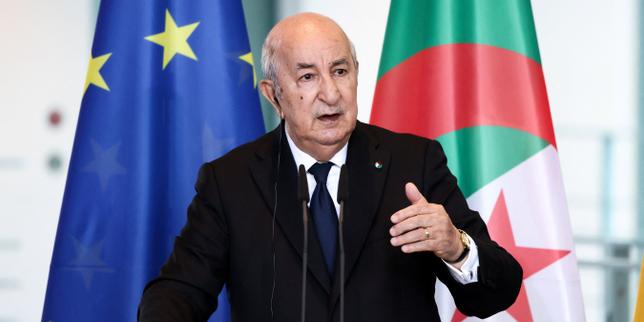
President Abdelmadjid Tebboune understood the stakes of that narrative immediately. Silence, in diplomacy, is often misinterpreted as consent. Left unchecked, a fabricated rumor hardens into perceived truth.
Appearing via a direct video address broadcast from the presidency, Tebboune cut through the political noise with a bluntness that caught foreign ministries flat-footed. He laid out three distinct truths for his domestic audience and foreign counterparts alike. First, he had never requested a visa quota. Second, the entire subject had not even been a topic of bilateral conversation. Third, no demands for financial reparations or apologies had been tabled.
The declaration was not merely a correction of facts. It was a rejection of posture.
By dismantling the narrative of supplication, the Algerian leadership sought to draw a hard line in the sand. For years, domestic political factions in France have weaponized migration and travel documents, turning routine consular mechanics into theatrical displays of toughness. Every adjustment to border metrics becomes fodder for evening news segments, designed to project authority to domestic electorates. But foreign policy conducted through the megaphone of domestic posturing inevitably creates collateral damage.
Consider what happens next when foreign ministries play domestic politics with cross-border dignity. Trust erodes. Channels freeze.
Tebboune’s intervention pointedly reminded observers that Algeria operates from a position of sovereign parity, not dependency. He noted that while travel to France remains a common reality for families, students, and professionals due to deep human ties, access to the broader European space offers alternative avenues. The European landscape is vast, and relationships with other continental partners remain fluid and functional. A single bilateral friction point does not dictate the entirety of a nation's global footprint.
The deeper issue has never really been about the stamps inside a passport. It is about the vocabulary of respect. When historical memory is treated as a disposable political chip, the reactions are sharp, visceral, and immediate.
Diplomacy requires delicate choreography, yet it often collapses into clumsy theater. Paris found itself entangled in a storm of its own making, wrestling with domestic right-wing pressures while projecting policy shifts that had never actually been agreed upon. Algiers chose to step out of the fog entirely, refusing to be cast as a silent participant in an internal French political drama.
The dust will eventually settle around the current cycle of headlines. Ministers will move on to other portfolios, and ambassadors will return to their quiet desks. Yet the underlying tension remains. Nations with deeply intertwined histories cannot simply legislate away their complex pasts with administrative decrees or media leaks.
Dignity cannot be negotiated in a backroom, nor can it be claimed through a press release. It is maintained in moments like this, when a line is drawn, a rumor is flattened, and a government insists on speaking for itself.