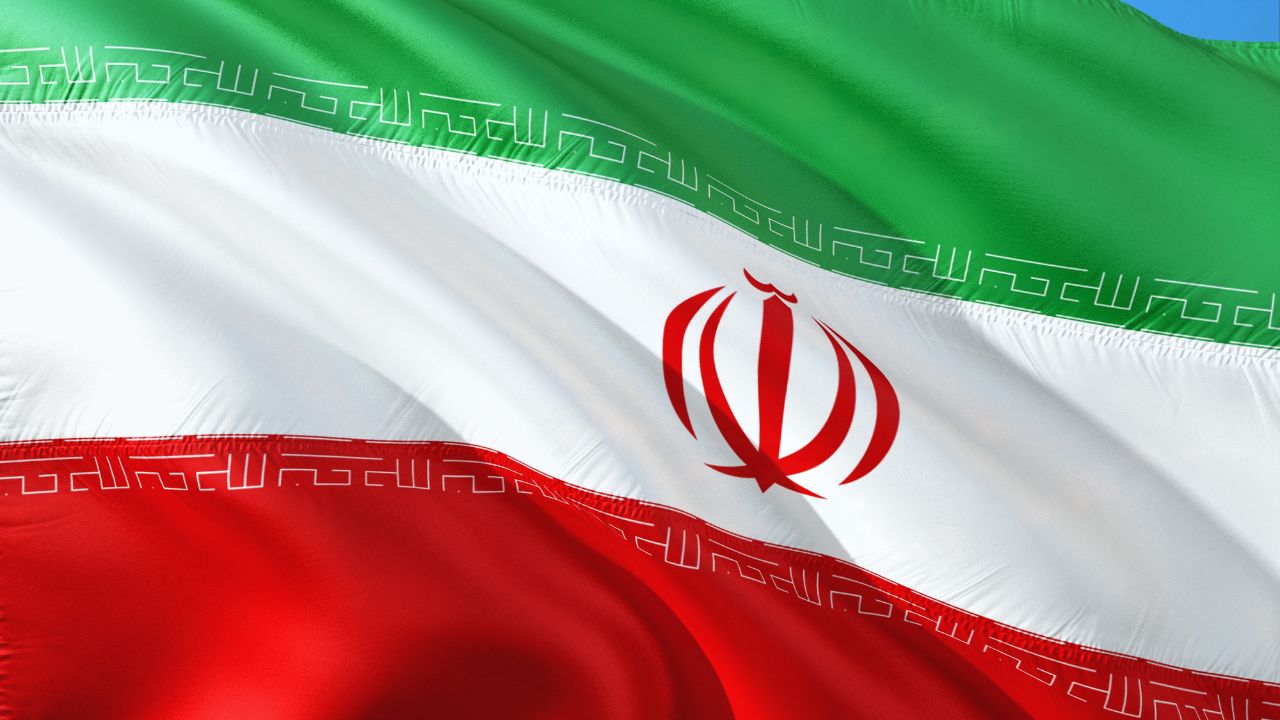
In the heart of Tehran, the air often carries a heavy, metallic stillness. It is the kind of quiet that precedes a storm, a tension felt by millions who walk the bustling avenues of Enqelab Street. Here, the news of a leader’s vow isn't just a headline or a notification on a glowing screen. It is a tectonic shift. When Ayatollah Ali Khamenei stands before the nation to declare that Iran will never surrender its nuclear or missile capabilities, he isn't just talking about physics or engineering. He is talking about the very bones of a nation.
Think of a man standing in a crowded room, surrounded by others who have spent decades telling him what he can and cannot own. To the West, the centrifuges and the long-range projectiles represent a threat to be neutralized, a mathematical problem of breakout times and payload capacities. But for the person living within the borders of the Islamic Republic, these technologies are often framed as the only things keeping the walls from caving in.
The rhetoric is sharp. It is uncompromising. It is the sound of a door slamming shut against the pressure of global sanctions and the looming shadow of regional rivals.
The Architecture of Defiance
The supreme leader's recent proclamations centered on a singular, immovable idea: "deterrence." To understand why this word carries such gravity, consider the historical memory of the Iranian people. Most of the leadership today came of age during the Iran-Iraq War in the 1980s. They remember the "War of the Cities," when missiles rained down on Tehran and chemical weapons were used on the front lines while the world looked the other way.
That trauma created a permanent scar. It birthed a doctrine that views self-reliance not as a choice, but as a survival mechanism.
The missile program, specifically, is the crown jewel of this doctrine. While the nuclear program remains the primary focus of international diplomats—shrouded in the complexities of the 2015 deal and the subsequent fallout—the missiles are the visible fist. They are the "Persian Shield." By vowing to protect these capabilities, the leadership is signaling to its own population that the days of being a defenseless target are over.
But there is a human cost to this iron-clad stance.
The Invisible Stakes in the Marketplace
Walk into any pharmacy in north Tehran or a grocery stall in the south, and the "missile vow" takes on a different shape. The pursuit of these capabilities has tethered the Iranian economy to a grueling cycle of sanctions.
Imagine a young entrepreneur, let's call him Omid. Omid has a degree in software engineering and dreams of building a platform that connects local artisans to the global market. But because of the geopolitical standoff over the very tech the leader vows to protect, Omid cannot access international banking. He cannot buy the servers he needs. He watches as the value of the rial fluctuates wildly with every speech given in Tehran or Washington.
For Omid, the "missile capability" is both a point of national pride and a lead weight around his ankles. This is the central paradox of the modern Iranian identity. There is a deep-seated desire for sovereignty, a refusal to be bullied by foreign powers, yet there is a desperate longing for the world to open its doors.
The supreme leader’s stance is a bet. It is a wager that the leverage gained from having a credible, untouchable military deterrent is worth more than the economic relief that would come from dismantling it.
The Science of Sovereignty
The technical side of this defiance is equally staggering. Building a ballistic missile or a high-capacity centrifuge isn't something a nation does overnight, especially under the most stringent sanctions regime in history. It requires a generational commitment to STEM education and clandestine supply chains.
The "invisible stakes" here are the thousands of scientists and engineers who have spent their entire careers working in underground facilities like Natanz or Fordow. To the outside world, these men and women are cogs in a proliferation machine. Within Iran, they are often portrayed as martyrs of progress. The assassination of nuclear scientists over the last decade has only deepened this narrative, turning a technical program into a sacred cause.
When the leadership speaks of protecting these capabilities, they are also protecting this intellectual capital. They are telling their scientific elite that their work—and the risks they have taken—will not be traded away for a temporary lift in oil exports.
The Chessboard of the Middle East
The regional reality adds another layer of complexity. To the west lies Israel; to the south, the Gulf states, all bolstered by American weaponry and alliances. In this context, the Iranian missile program is viewed by Tehran as the great equalizer.
If Iran were to give up its missiles, the leadership argues, they would be left with a conventional military that is largely outdated. Their air force is a collection of aging American Tomcats and Russian MiGs. Without the "asymmetric" advantage of missiles and the potential of the nuclear threshold, they fear they would be inviting an invasion or a forced regime change.
This is the logic of the cornered. It is a perspective that is often lost in the dry reporting of "enrichment percentages" and "range capabilities."
Every time a new missile is unveiled—painted in vibrant colors with slogans of "Death to America" or "Death to Israel"—the world sees a provocation. But the internal audience sees a message of "Never Again." They see a guarantee that the horrors of the 1980s will not be repeated.
The Breaking Point and the Horizon
The real question, the one that keeps diplomats awake at night, is whether this vow is a permanent state of being or a high-stakes bargaining chip.
History suggests it's a bit of both. The supreme leader is a master of "heroic flexibility"—a term used in the past to justify negotiations when the pressure became too great to bear. However, the current tone suggests that the threshold for that flexibility has shifted. The withdrawal of the United States from the nuclear deal in 2018 taught the Iranian leadership a bitter lesson: even when you compromise, the deal can vanish with a change of administration in a foreign capital.
Consequently, the "shield" must be made of stronger stuff. It must be indigenous, untouchable, and permanent.
The human element remains the most volatile variable. The Iranian people are resilient, but they are tired. They live in a country of immense beauty and intellectual wealth, yet they are isolated by the very walls built to protect them. The vow to protect the nuclear and missile programs is, in essence, a vow to continue this isolation until the rest of the world accepts Iran on its own terms.
It is a lonely path.
As the sun sets over the Alborz Mountains, casting long shadows over the sprawling concrete of Tehran, the centrifuges continue to spin in their concrete cradles deep underground. The missiles sit in their silos, silent and ready. The leader has spoken, and for now, the defiance remains the only currency that matters.
The people continue to walk the streets, caught between the pride of a defiant nation and the grinding reality of a world that remains out of reach. They are the living witnesses to a grand, dangerous experiment in national will. Whether that will leads to a new era of security or a final, devastating collision is a story still being written in the dust and the silence.
The weight of the shield is heavy, and it is the ordinary citizen who carries it every single day.