The coffee maker was still warm when Elena locked the front door.
It is a strange, hollow sensation, turning a key in a deadbolt when you have no earthly idea if you will ever turn it back. In the kitchen, a half-empty mug sat on the counter, catching the weak, gray pre-dawn light that filtered through the blinds. A calendar hung on the refrigerator wall, its square for August 2, 2020, marked with a dentist appointment that would never happen. Recently making news in this space: The Mechanics of Literary Censorship and Adolescent Radicalization.
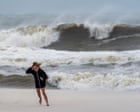
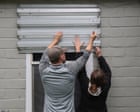
Outside, the air on the Florida coast had that heavy, oppressive stillness before a storm—that thick, bruised atmosphere where the atmosphere feels less like air and more like a damp wool blanket pressed against your face. Down the street, aluminum shutters rattled like teeth chattering in the cold.
Hurricane Isaias was out there, churning through the warm Atlantic waters, drawing breath and gathering muscle. And Elena, like thousands of others stretched across the vulnerable spine of the peninsula, was faced with the oldest human dilemma: Do you stay and fight a ghost, or do you pack your life into a trunk and drive away from everything you love? Additional information on this are explored by Al Jazeera.
"Hopefully we have a home to go back to," she whispered to the empty hallway.
There is an arithmetic to evacuation that nobody teaches you in school. It is not just about fuel gauges and highway lanes. It is about what fits in the trunk of a 2012 sedan when you have forty-eight hours to decide which twenty years of your existence matter most.
Do you take the photo albums? Yes. Do you take the spare set of winter coats you haven't worn since a trip to Chicago in 2014? No. Do you look at your grandmother's rocking chair and accept the quiet, terrifying possibility that the next time you see it, it might be floating down what used to be your driveway?
We talk about natural disasters in the language of meteorology. We speak of barometric pressure, sustained winds, storm surges measured in feet, and cone-of-uncertainty projections drawn in jagged pink marker by television meteorologists pointing at green-screen maps. We treat hurricanes like giant, mechanical math problems.
We forget the kitchen.
We forget the smell of damp earth just before the rain hits the pavement. We forget the heavy, metallic tang of ozone in the wind. We forget what it feels like to sit in a bumper-to-bumper line of taillights on Interstate 95, watching the sky turn the color of a bruised plum, wondering if the gas station three miles up the road has power yet or if you are going to run dry on the shoulder with a terrified dog panting in the backseat.
Evacuation is not an event. It is a transition into limbo.
Consider the anatomy of a coastal flight. When the National Hurricane Center issues warnings, the collective pulse of a city changes. The grocery store shelves are stripped bare of bread and bottled water within three hours—not because people are irrational, but because stocking the pantry is the only physical action available to quell a rising sense of helplessness. It is a ritual of control. If you have three cases of Dasani in your garage, the storm feels slightly less omnipotent.
Yet, when the mandatory evacuation orders drop, the illusion of control shatters completely.
The highways turn into long, slow-moving rivers of brake lights. Families in minivans, college students with their entire dorm lives stuffed into hatchback trunks, elderly couples trailing oxygen tanks like lifelines—all crawling northward at five miles an hour. In those moments, socio-economic divides blur into a single, collective vulnerability. The millionaire in the coastal mansion and the hourly worker in the mobile home park share the exact same stretch of asphalt, breathing the same stale air, staring at the same flashing tail-lights, listening to the same scratchy emergency broadcast warning of flying debris and catastrophic flooding.
The physics of a hurricane are relentless. Isaias was packing winds hovering near eighty miles per hour as it brushed past the Bahamas, aiming its sights squarely at the eastern seaboard of Florida. To a meteorologist, eighty miles per hour is a Category 1 storm—a low-tier threat on the Saffir-Simpson scale, the kind of storm locals sometimes dismiss with a wave of the hand and a six-pack of beer.
Experience, however, teaches a harsher lesson.
Water does not care about categories. Storm surge—the monstrous wall of ocean water pushed ashore by relentless gales—remains the silent killer. A Category 1 storm can still push four feet of saltwater into a living room, lifting sofas off the floor, soaking drywall in toxic mold, and turning electrical outlets into ticking time bombs. It is not the wind that breaks your heart; it is the water that stays behind long after the winds have died down, soaking into the subfloor, ruining family heirlooms, and whispering tales of ruin.
This is why Elena drove away. Not because she was a coward, but because she understood the math of survival. A house can be rebuilt. Drywall can be replaced. Flooring can be ripped out and laid anew. But a life—once extinguished by a falling pine tree or trapped by rising floodwaters in a low-lying neighborhood—cannot be recovered.
Driving north, the sky shifted from gray to slate, then to an angry, metallic violet.
On the radio, an emergency announcer spoke in clipped, professional tones about evacuation routes, shelter capacities, and utility outages. The voice was calm, steady, almost clinical. But beneath the static, you could hear the fatigue of a region that has lived this script too many times before. Florida is a state built on sandbars and reclaimed wetlands, a tropical paradise perpetually negotiating a lease with the sea. Every summer and autumn, the bill comes due.
We are living through an era where extreme weather events are no longer anomalies; they are the recurring chapters of our modern baseline. The atmosphere, warmed by shifting global temperatures, holds more moisture. The oceans act like giant thermal batteries, feeding fuel into systems like Isaias, making them wetter, wilder, and more unpredictable.
When you watch a hurricane approach on a radar screen, swirling in a hypnotic, counter-clockwise spiral, it looks majestic from space. It looks like a pristine spiral galaxy. But down on the ground, beneath the cloud tops, it is an engine of chaos. It tears away roof shingles with the casual indifference of a child pulling petals off a daisy. It snaps power lines like dry twigs, plunging millions into darkness, cutting off communication, turning neighborhood streets into navigable rivers where kayakers paddle past submerged mailboxes.
And then comes the waiting.
That is the true crucible. Once you are safe in a motel room three counties inland—watching the rain beat against a window that rattles in its frame, listening to the high-pitched whine of the wind outside—the mind begins to race.
You play a mental reel of your home. Did you remember to bring the lockbox with the birth certificates? Did you move the patio furniture inside, or is that glass-topped table currently acting as a high-velocity projectile aimed at your neighbor's living room window? Did you check the seals on the back door?
The television screen shows live helicopter footage of storm bands thrashing palm trees along the coast. Waves crash over seawalls, sending plumes of white foam fifty feet into the air. Street names flash at the bottom of the screen.
A1A closed due to flooding.
Power outages surpass 200,000.
Mandatory curfews in effect.
You search the footage for a landmark. A gas station sign. A distinctive roofline. Anything to tell you whether your block is still standing or if it has been swallowed by the grey, churning tide.
This is the invisible cost of climate volatility. It is not just the billions of dollars in insured losses or the lumber costs for roof repairs. It is the steady, corrosive erosion of peace of mind. It is the quiet dread that settles into the back of your throat every time June rolls around, knowing that the calendar has turned toward the season of the great wind.
Yet, amid the wreckage and the anxiety, something else happens.
Human beings are remarkably stubborn creatures. We rebuild. We drag soaked drywall out to the curb in heavy, sagging chunks. We hose down mud-caked tile floors. Neighbors who hadn't spoken in five years share generators, pass around paper plates of grilled chicken, and trade stories of where they rode out the blow. The vulnerability of the storm strips away the superficial insulation of modern life, leaving behind a raw, functional community spirit that is as resilient as the storm is destructive.
Elena did not know, as she sat in that rented motel room watching the storm make landfall eighty miles to the south, what she would find when she turned her key back in the lock.
She did not know if the oak tree in the front yard had punched through the roof or if the living room carpet was squelching under four inches of brackish bay water. She only knew that she was alive, that her dog was sleeping soundly at the foot of the bed, and that tomorrow, regardless of what the wind had left behind, the sun would rise over a battered, steaming, beautiful peninsula.
The storm would pass. The water would recede. And the long, quiet work of coming home would begin.