Darkness.
It does not arrive like a curtain dropping over a theater stage, clean and theatrical, where you know the play is over and you can reach for your coat in the aisle. When a blast tears through a trench line in eastern Ukraine, darkness comes with the smell of cordite and wet clay, the high-pitched ring in your inner ear that refuses to fade, and the sudden, terrifying realization that the hands gripping your forearm belong to someone whose face you can no longer verify.
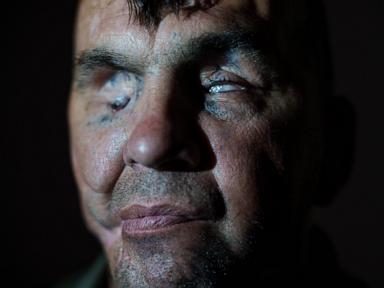
Consider a hypothetical soldier—let us call him Taras, a thirty-four-year-old infantryman from Vinnytsia whose world narrowed in a single second to sound, heat, and the memory of color. (Note: Taras is a composite, hypothetical figure introduced to illustrate the clinical and human realities faced by Ukrainian service members who sustain severe ocular trauma in modern artillery and drone warfare.) Before the war, Taras fixed diesel engines in a dusty garage behind his mother’s house. He knew how to read the pitch of a failing alternator by ear and the shade of a gasket seal by sight. Now, sitting on a hospital cot with gauze taped over one socket and a dull ache behind the other, his most urgent question is deceptively simple: Will I ever see my children’s faces again?
For thousands of Ukrainian soldiers who have suffered combat-related eye injuries since the full-scale invasion began in February 2022, that question is not abstract. It is the quiet architecture of every morning. Modern warfare—saturated with shrapnel, thermobaric munitions, cluster submunitions, and low-altitude explosive drones—has produced a brutal surge in polytrauma and penetrating ocular injuries. Unlike a fractured femur, which heals in plaster and physical therapy while leaving your identity intact, losing sight alters how you occupy space, how you parent, and how you grieve.
I have sat across from people navigating sudden vision loss, and I will admit something candidly: when someone loses their sight, the hardest part for the rest of us is our own confusion. We stumble over words like "blind" and "see." We worry about saying the wrong thing, so we say too little. Worse, we often treat restored vision as a binary switch—either you are in the dark, or a miracle cures you and you watch your child ride a bicycle down a sunlit street.
Reality is far messier. And far more honest.
What Shrapnel Actually Does to the Eye
To understand why a blinded soldier clings to hope—and why doctors must temper that hope with hard anatomical truth—we have to look inside a sphere barely an inch across.
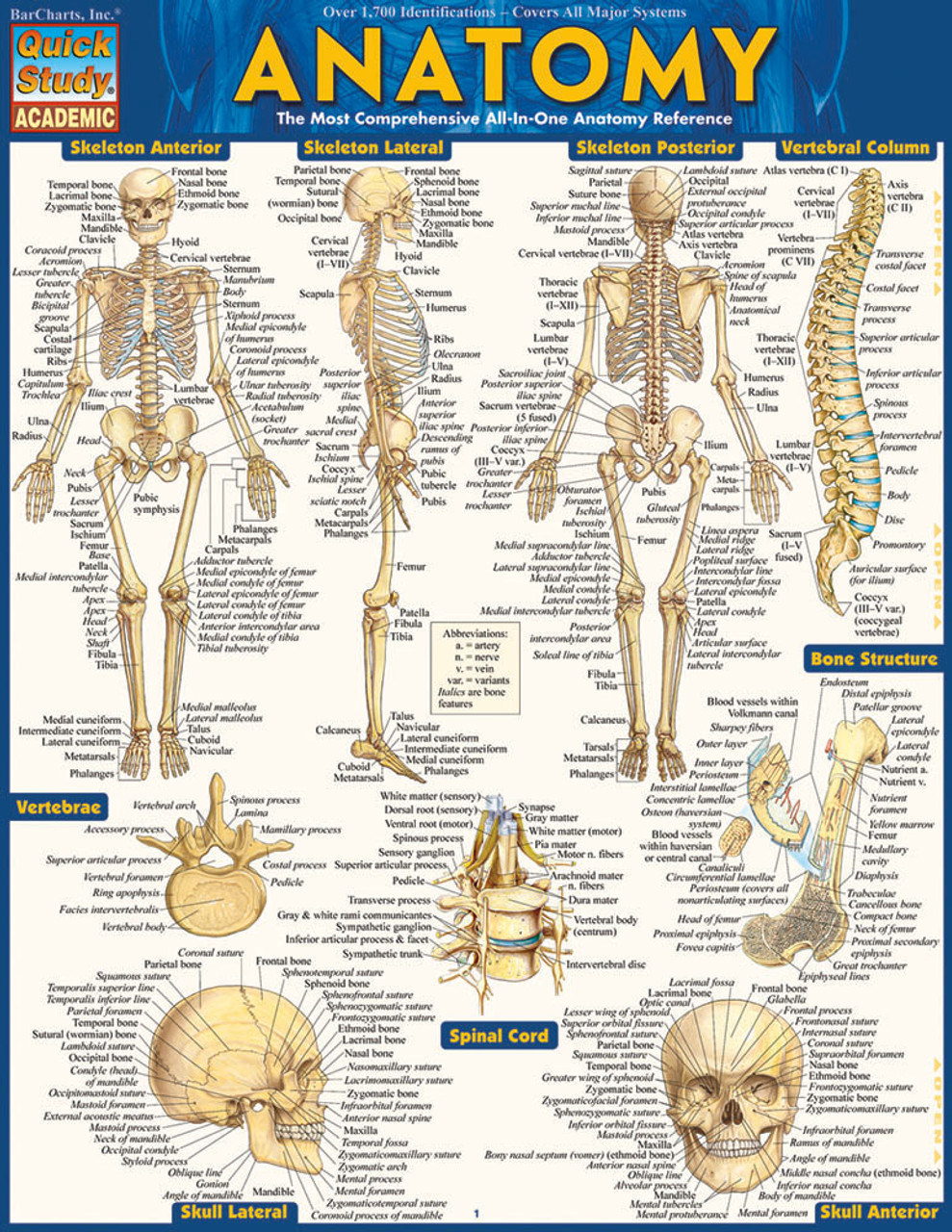
The human eye is an extraordinary optical instrument, yet it is astonishingly fragile. Light enters through the clear cornea, passes through the pupil and lens, travels through the clear gel of the vitreous humor, and strikes the retina at the back of the globe. That paper-thin sheet of neural tissue converts photons into electrical impulses and sends them down the optic nerve to the visual cortex.
Shrapnel does not respect delicate boundaries. A fragment no bigger than a grain of rice, moving at high velocity, can slice through the cornea, rupture the globe, shred the iris, cloud the lens into a traumatic cataract, detach the retina, or sever the optic nerve. Even when a fragment stops short of piercing the eyeball itself, the shockwave of a nearby detonation can cause retinal hemorrhage, macular edema, or traumatic optic neuropathy.
In battlefield medicine, every minute counts—yet evacuation from a contested front line rarely happens on a neat timetable. Under artillery fire and drone surveillance, medics stabilize bleeding, shield the injured eye with a rigid Fox shield rather than a compressing patch (pressure on a ruptured globe can push vital intraocular contents outward), and move the wounded soldier through stabilization points toward surgical centers in cities like Dnipro, Lviv, or Kyiv, or onward to specialized clinics abroad.
When a patient arrives at an ophthalmic surgery center days after injury, surgeons often face a layered puzzle. First comes damage control: closing open globe wounds, removing accessible foreign bodies, and saving whatever structural integrity remains. Later come reconstructive procedures—vitrectomies to clear blood and scar tissue from the vitreous cavity, retinal reattachment surgeries, corneal transplants, or secondary lens implants.
Here is the sobering medical reality that every ophthalmologist carries into the operating room: structural repair does not always equal functional sight. You can sew a torn wall back together and rehang the wiring, yet if the delicate photoreceptors or the optic nerve fibers are dead, the lights stay off.
When Hope Becomes a Lifeline
Imagine Taras in a rehabilitation ward four months after his injury. His left eye has no light perception; his right eye can detect only a vague shift when a halogen lamp is waved inches from his face. His two children—a nine-year-old daughter named Oksana and a five-year-old son named Maksym—visit on Sundays.
Oksana brings drawings taped to folded notebooks. She holds them up and describes them aloud because she has learned that her father cannot see the crayon lines. "This one is our cat, Murzik, sitting on the radiator," she says, her voice bright and practiced, hiding how tightly she grips the paper. Maksym climbs onto the edge of the mattress and presses his chin against Taras’s collarbone, waiting to be recognized by the smell of peppermint soap and the rhythm of his father’s breathing.
Taras smiles. He kisses the top of Maksym’s head. Then, when the door clicks shut behind them, his jaw tightens. He wants to see the crooked way Oksana draws whiskers. He wants to see the gap where Maksym’s front baby tooth wobbled loose last month.
To call that longing naive is to miss what human resilience actually is. Hope, in the wake of catastrophic injury, is not denial of medical charts. It is refusal to surrender your future before all avenues have been tested. When a parent says, "I hope I can see my kids again," they are naming the exact reason they endure painful injections, dizzying balance therapy, and long nights of phantom flashes and aching sockets.
We should also pause and ask what seeing means when eyesight is damaged or gone. A person who cannot make out facial features at ten paces may still regain enough contrast sensitivity to navigate a room safely, read enlarged text with low-vision aids, or distinguish a familiar silhouette against a doorway. Even when biological sight in one or both eyes cannot be restored to pre-injury levels, rehabilitation teaches the brain to read the world through spatial audio, tactile cues, and orientation skills—allowing a father to hear the exact cadence of his daughter’s footsteps and know whether she is rushing home from school or dragging her feet after a hard day.
The Quiet Frontier of Vision Restoration
Because war accelerates medical necessity, clinicians and researchers worldwide—working alongside Ukrainian surgeons and international medical missions—are pushing hard on therapies for severe ocular trauma and blindness. Yet separating genuine breakthroughs from science-fiction hype requires clear eyes of its own.
Let us look at the main paths researchers are pursuing for profound vision loss, and where each stands:
| Approach | How It Works (In Plain Terms) | Where the Science Stands | Key Hurdles |
|---|---|---|---|
| Microsurgical Reconstruction | Repairs torn corneas, detaches/reattaches retinas, clears vitreous blood, and addresses cataracts. | Standard, essential care; can preserve or partially recover sight when neural tissue survives. | Severe retinal or optic nerve destruction limits visual ceiling. |
| Stem Cell & Regenerative Therapies | Aims to replace or support damaged retinal cells and optic nerve pathways. | Active clinical trials for certain degenerative eye diseases; largely experimental for acute blast trauma. | Integrating new cells into scarred, inflamed tissue and wiring long axons. |
| Visual Prosthetics (Retinal / Cortical Implants) | Uses a camera or electrode array to stimulate remaining retinal cells or the visual cortex directly. | Prior commercial retinal devices had limited resolution and mixed long-term adoption; newer cortical/retinal research continues. | Typically yields coarse light/shape patterns rather than crisp faces or fine print. |
| Low-Vision & Sensory Rehabilitation | Maximizes residual vision with optics/lighting and trains spatial navigation and daily independence. | Proven, immediate impact on autonomy, mobility, and quality of life. | Requires sustained access to specialists, devices, and family support. |
Notice that pattern. There is no single magic pill waiting on a pharmacy shelf that rewinds a blast wave. A prosthetic implant might help a user detect a bright window frame or a doorway threshold, which is extraordinary for safety and independence—yet it is not the same as watching your son blow out birthday candles in HD. Being honest about that gap protects patients from predatory promises while honoring real progress.
Even more importantly, vision care does not end when the stitches come out. Psychological trauma, post-traumatic stress, chronic pain, and the grief of losing a primary sense travel together. A soldier who loses his sight in combat is not just a patient with an injured organ; he is a husband, a father, a son, and a citizen trying to rebuild a life in a country still under fire.
What We Owe the People Living in the Dark
There is a temptation, when reading stories about wounded soldiers, to turn them into symbols. We speak of "unbreakable spirit" and "iron resolve" so briskly that we forget the person behind the phrase gets tired, gets scared, and sometimes just wants to sit in quiet frustration without being a monument.
If Taras—or any real Ukrainian soldier in his shoes—ever gets back even a sliver of sight, whether through a delicate surgical repair, a clinical trial, or years of stubborn neuro-adaptation, that moment will belong to him and his family. And if his eyes never recover crisp detail, his worth as a father does not diminish by a single ounce. Love does not travel only through the optic nerve; it travels through patience, voice, presence, and the stubborn choice to show up on Sunday afternoon even when the room feels dim.
Picture a kitchen table on a late autumn evening. A kettle clicks off on the stove. Steam curls upward into the cool air, carrying the scent of roasted garlic and black tea. Across the table, a child leans forward, elbows resting on the oilcloth, waiting for the sound of a hand reaching out—not with pity, not with fear, just steady, warm, and close enough to touch.