The air in a police evidence room doesn't smell like justice. It smells like industrial cleaner, old paper, and, if you linger long enough, the sterile scent of latex gloves. But when the Lethbridge Police Service laid out the results of their recent investigation, the atmosphere held something far heavier. It was the weight of silence.
On a nondescript Tuesday, the quiet streets of Lethbridge became the backdrop for a seizure that shattered local records. Officers recovered over five kilograms of fentanyl. To a casual observer, five kilograms might sound like a manageable weight—the size of a large bag of flour or a heavy domestic cat. In the world of synthetic opioids, that number is a death sentence for a mid-sized city.
The math of fentanyl is cruel. It is a substance measured not in grams, but in micrograms. A dusting the size of two grains of salt can stop a human heart. When you scale that up to five kilograms, you aren't looking at a "drug bust" anymore. You are looking at enough chemical potential to end the lives of every man, woman, and child in a stadium, with enough left over to devastate the surrounding neighborhoods.
The Invisible House
Picture a standard residential home on the north side of the city. Maybe it has a chipped porch swing or a lawn that needs mowing. From the outside, it is part of the mundane fabric of Alberta life. Inside, however, the "Alley-Oop" investigation—a name that sounds almost too playful for its grim reality—revealed a hub of distribution that functioned with the cold efficiency of a logistics corporation.
The Lethbridge Police Service, alongside specialized teams, didn't just stumble upon this. They watched. They waited. They tracked the movement of people who treat human addiction as a supply chain variable. When they finally moved in, the sheer volume of the find changed the internal temperature of the department. This wasn't just the largest seizure in Lethbridge history; it was a preemptive strike against a mass casualty event.
Beyond the powder, the haul included significant quantities of methamphetamine, cocaine, and various pills. There was also cash—large, rubber-banded stacks of it. That money represents more than just profit. Every twenty-dollar bill in those stacks is a ghost. It represents a sold wedding ring, a stolen power tool, a cleaned-out savings account, or the final paycheck of someone who didn't live to see the next one.
The Geography of a Crisis
Lethbridge sits at a crossroads. It is a beautiful, wind-swept city, but its geography makes it a prime artery for the movement of illicit goods. The "Alley-Oop" operation targeted a network that didn't just exist in a vacuum. It was connected to larger hubs, feeding the hunger of a crisis that has gripped Western Canada for a decade.
When we talk about "record-breaking seizures," there is a tendency to celebrate. We want to believe that the dragon has been slain. But the officers involved in these raids often carry a different expression. They know that while five kilograms are off the street, the demand that brought those kilograms here remains. The seizure is a tourniquet. It stops the immediate bleeding, but the wound is deep and systemic.
Consider a hypothetical young man named Elias. He isn't a statistic yet. He works a job in construction, has a slight back injury from a fall three years ago, and started buying "beans" or "down" when his prescription ran out. He doesn't know about the five kilograms. He only knows that his dealer is dry today. For Elias, this police success creates a desperate, frantic window of withdrawal. Without the intervention of health services and community support, Elias will simply look for a new source, one that might be even more volatile than the last.
The Chemistry of Fear
The danger of fentanyl isn't just its potency; it’s its unpredictability. In a legitimate laboratory, $2mg$ of a substance is measured with laser precision. In a "clandestine" lab—often a grimy kitchen or a garage—there is no such oversight. "Hot spots" occur when the drug isn't mixed evenly. One pill might do nothing; the next pill from the same batch might be a lethal overdose.
The Lethbridge seizure included "bricks" of the substance. These are dense, compacted blocks that must be broken down and "cut" with other agents before they reach the street. Every time that powder is handled, the risk of accidental exposure rises. This is why you see officers in full respiratory gear, looking more like astronauts than beat cops. They are breathing through filters because the very air around the evidence can be toxic.
Beyond the Blue Line
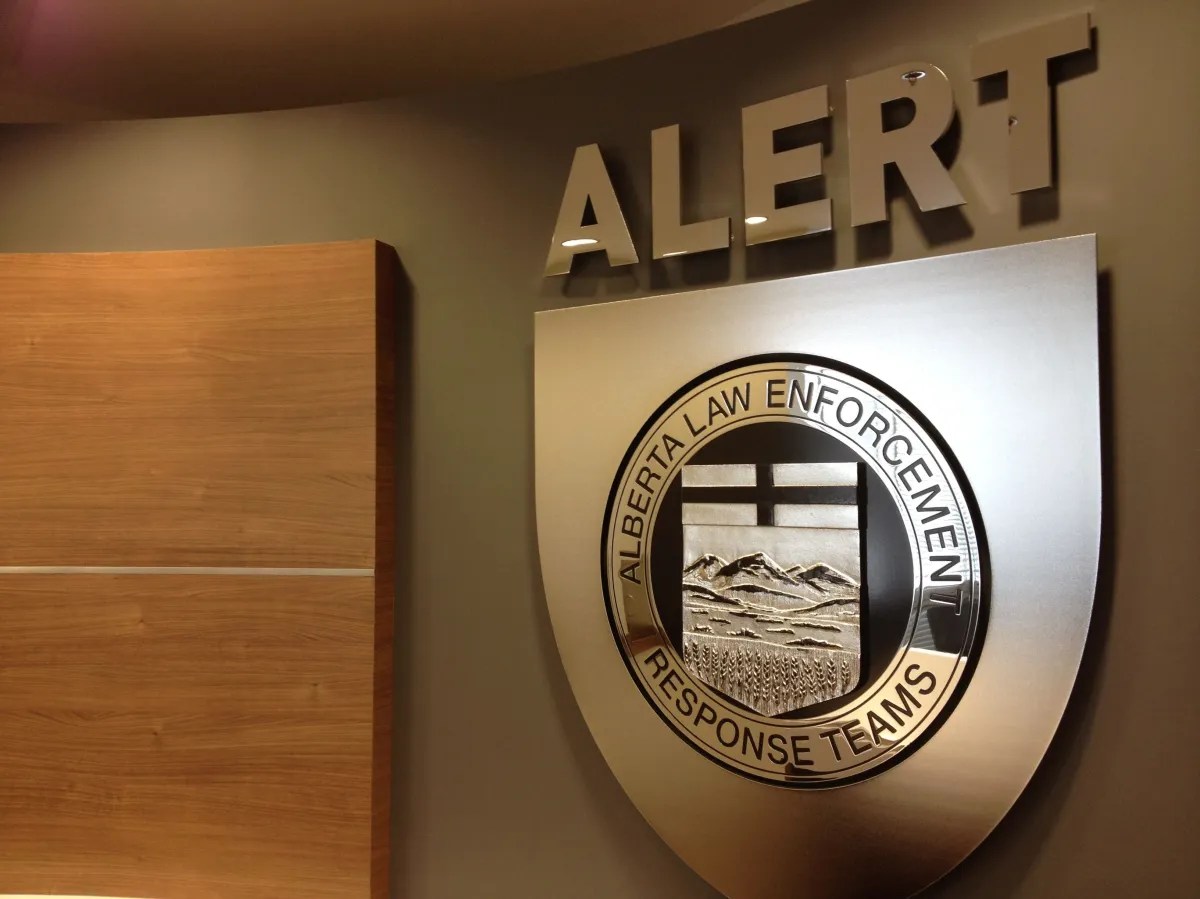
The "Alley-Oop" investigation required a level of inter-agency cooperation that rarely makes the headlines. It involved the Alberta Law Enforcement Response Teams (ALERT) and several specialized units. This isn't just about men and women in uniforms bursting through doors. It's about analysts sitting in dark rooms for fourteen hours a day, tracing phone pings and financial records. It’s about undercover operatives living in a state of perpetual high-wire tension.
The cost of this operation is significant, but the cost of inaction is unquantifiable. If these drugs had reached their intended destinations, the strain on the Lethbridge Chinook Regional Hospital would have been catastrophic. The emergency room would have been flooded. Paramedics would have spent their entire shifts cycling through Narcan kits, over and over, until the sun came up.
What makes this specific seizure so chilling is the realization of how "normal" it has become. We have reached a point where "largest in history" is a title that gets passed from one year to the next like a grim relay baton. It suggests that the scale of production is increasing, that the cartels and organized crime groups behind these shipments are becoming more emboldened, viewing Lethbridge not as a quiet prairie city, but as a lucrative market.
The Human Toll of Five Kilograms
If you were to spread that five kilograms of fentanyl out, it would barely cover a coffee table. Yet, the shadow it casts covers the entire province.
We often distance ourselves from the "drug problem" by imagining it happens in dark alleys or to people who have "made bad choices." The reality found in the "Alley-Oop" files tells a different story. The users are our neighbors. They are the people we pass in the grocery store. They are parents, students, and professionals. Fentanyl does not discriminate based on your tax bracket or your postal code. It is a molecular predator.
The police have done their part. They have removed the immediate threat. They have disrupted the "synergy" of a criminal network that was profiting off the slow-motion collapse of vulnerable people. But as the yellow tape is taken down and the evidence is locked away, the city is left with a haunting question.
What do we do about the void left behind?
The removal of these drugs creates a vacuum. In the world of economics, when supply vanishes but demand remains, the price goes up, and the desperation intensifies. The victory in Lethbridge is real, and it is massive, but it is also a call to action for every other part of our society. It is a reminder that the front line isn't just a police line. It’s the kitchen table where we talk to our kids. It’s the community center where we support those in recovery. It’s the legislative halls where we decide how to fund mental health.
The five kilograms are gone. They will be incinerated, turned into harmless smoke and ash. But the reasons they were brought to Lethbridge in the first place are still here, walking the streets, waiting for the next shipment to arrive.
The silence in the evidence room is broken only by the scratching of a pen on a report. The file is closed. The city breathes a little easier tonight, unaware of how close it came to a chemical tidal wave. Somewhere, a mother sleeps through the night because the drug that would have killed her son was sitting in a plastic bag in a police locker instead of a needle. That is the true victory. It isn't found in the headlines or the statistics. It is found in the lives that continue, quietly and unknowingly, because a group of people decided that five kilograms was a weight the city should never have to carry.