Silence.
That is the first thing people forget when they read a news brief about a heroic intervention. They picture a clean line of cause and effect: a threat appears, a person steps in, shots ring out, the danger ends, and the headline prints a tidy resolution. Real life does not move like a screenplay. Real life smells like cold autumn air, dry grass pressed against your ribs as you drag yourself forward on your elbows, and the sudden, sickening clarity of realizing that the clock was already running before you even turned into the parking lot. Don't miss our earlier article on this related article.
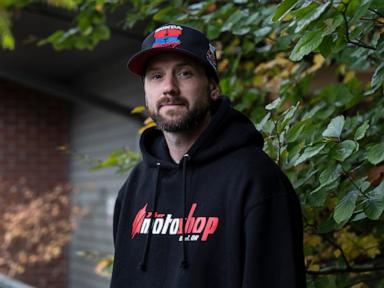
In Bend, Oregon, on October 15, 2026, a carpenter and father named Kaylub Giamanco drove toward Silver Rail Elementary School while watching a teenage gunman move across the grounds. Two of Giamanco’s own daughters attended the school. An Iraq War veteran turned stay-at-home dad, he told Siri to dial 911, grabbed his .40-caliber handgun from his truck’s center console, retrieved a magazine from a separate compartment, and hurried toward a building where three children—ages five, eight, and eleven—and a teacher would lose their lives inside a special education classroom.
When Giamanco spoke afterward to Oregon Public Broadcasting, his words cut right through the usual triumph-and-tragedy script. Gratitude for the lives saved was there, yes. Relief was there, too. Yet the heaviest sentence he carried was an apology for the ones he did not reach in time. If you want more about the context here, BBC News offers an in-depth breakdown.
"I want to apologize for not saving their babies, that's probably the biggest thing for me right now," he said, his voice breaking. "The gratitude for saving people's children is awesome. But there were ones that I didn't save."
The Myth of the Clean Rescue
When a bystander stops an active shooter, the public reflex is to hand out a single label and lock the door on the complexity. Hero. Savior. Last line of defense. Those words are meant to honor courage, and Giamanco’s decision to crawl across the ground under gunfire toward the sound of pleading children required a terrifying kind of resolve. Even as he told himself that this might be the last thing he ever did, he kept moving forward.
Still, labeling someone a hero often creates an invisible trap. It implies completeness. It makes it sound as though stepping into the breach erases the math of time, distance, and tragedy.
It does not.
Consider a hypothetical scenario to see why that gap hurts so deeply. Imagine two runners sprinting toward a house on fire. One arrives thirty seconds earlier and pulls two people from the porch; the second arrives thirty seconds later and pulls out three more, yet both hear sirens for a neighbor who did not make it out of the back room. Neither runner caused the fire. Both pushed their lungs past burning. Yet human conscience rarely grades on a curve when small children are involved. Conscience asks a brutal, unanswerable question: What if I had left the driveway one minute sooner?
That is the psychological fault line running straight through Bend. Even when a person does everything humanly possible in the seconds available to them, survivor’s guilt does not care about physics or geography. It settles into the quiet hours after the cameras leave, asking why the scale tipped the way it did.
Inside the Classroom Where Time Fractured
To understand why Giamanco’s regret resonates so sharply, you have to look at everything happening simultaneously inside Silver Rail Elementary that morning. This was never a solo act played out in a vacuum.
Authorities noted the critical role of a teacher who grappled with the shooter, slowing the attack before Giamanco came through a shot-out window, swung the classroom door open, fired, and then fired two more times as the attacker scrambled for a shotgun. Another teacher in the room, Becky Drury, explained afterward that she never even had a chance to shelter the children because she tried to pull the door shut behind her and the shooter was already there.
Think about how fragile those margins are. A door handle turned a fraction too late. A scuffle that buys precious seconds while someone else is still crossing the yard outside. A parent who hung up on a 911 dispatcher after saying, "I'm sorry. I have to go in. People are going to die."
I have spent enough time listening to people who have lived through sudden violence—first responders, parents, neighbors who ran toward trouble without a badge—to know that almost none of them feel triumphant afterward. What stays with them is sensory detail. The scrape of gravel against palms. The ringing in one ear. The way a simple word like hero can sound almost hollow when you are sitting on the floor telling your own mother, "I didn't save everybody. I didn't get them all."
There is a deep honesty in that breakdown. Anyone who has ever stood at the edge of an emergency knows the dizzying split between what you can control and what is already unfolding before your boots touch the threshold. Admitting that you feel both grateful for the lives spared and devastated by the lives lost isn't a contradiction. It is the exact shape of grief when survival and loss share the same room.
Why We Struggle With Unfinished Stories
Part of what makes this moment uncomfortable for the rest of us is that we want stories to stay in their lanes. We want tragedies to be purely tragic and rescues to be purely triumphant. When both sit inside the same afternoon, our usual categories start to buckle.
This is a metaphor for how modern news often digests human pain: we slice a complicated human wound into bite-sized moral takeaways so we can scroll past without sitting in the discomfort. A headline says a man killed a school shooter and regrets not saving more children. In ten seconds, a reader can nod, feel a flash of sorrow, and move on to the next notification.
Yet if you slow down and stay with Giamanco’s words, you see something much more revealing about human nature and community trauma:
- Courage and sorrow coexist. Running toward gunfire to protect children takes immense nerve, yet saving some lives never cancels the ache for the ones already gone.
- A community carries shared weight. Parents, teachers, neighbors, and first responders all measure the same day from different vantage points, each haunted by what happened just beyond reach.
- Words of praise can feel heavy. Being called a hero can comfort people from the outside while feeling strangely misaligned to the person living inside the memory of what went wrong.
I will admit freely: there is no neat formula for making sense of an elementary school shooting, and pretending otherwise would insult the families mourning three young children and a teacher. Even experts who study trauma and crisis response recognize that moral injury—the pain of feeling you fell short of preventing harm, even when the odds were stacked against you—can linger long after the physical threat is gone.
The Quiet Aftermath in Bend
Days after the attack, flowers gathered outside Silver Rail Elementary. A carpenter from Bend sat for an interview and tried to put words to something almost impossible to hold: the relief that some children walked away, the weight of taking a life to stop a greater slaughter, and the wish that he could somehow hand an apology to grieving parents who never asked him to carry their sorrow in the first place.
"I can't tell you what it feels like to take a life," Giamanco said, "but I can tell you that I genuinely feel like I was supposed to be there. If I wasn't there, I just don't know what would have happened."
That tension—feeling meant to be there, yet wishing you had been there sooner—is the real story beneath the headline. It reminds us that behind every breaking-news alert are ordinary people navigating impossible seconds, carrying memories that do not fit neatly onto a news ticker, and trying to live with both the lives they helped spare and the empty space left by the ones they could not reach.
A father sits with a broken voice, counting not just the children who made it home, but the names that will never answer roll call again.