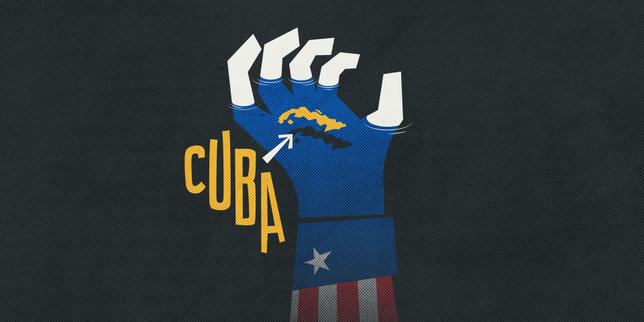
The relationship between the United States and Cuba is defined by a century of strategic miscalculation, stubborn ideological rigidity, and economic strangulation. For decades, mainstream summaries have reduced this bilateral friction to a simple narrative of the Cold War hangover. That interpretation is lazy. The truth is that Washington and Havana are locked in a symbiotic dependency where domestic political survival in both capitals relies entirely on maintaining the status quo of hostility.
To understand how relations evolved from post-revolutionary shockwaves to modern administrative stalemates, one must look past the diplomatic theater. Real power dynamics are driven by Florida voting blocs, clandestine intelligence operations, property expropriation claims, and the relentless pressure of extraterritorial sanctions. Meanwhile, you can read other stories here: The Empty Chair at the Table How Enforced Disappearances Fracture Karachi and Balochistan.
The Genesis of the Rupture
The structural architecture of modern US-Cuba hostility was not forged overnight. When Fidel Castro overthrew the US-backed dictatorship of Fulgencio Batista in 1959, the immediate American reaction was not ideological outrage. It was commercial panic.
American corporations owned vast swaths of Cuban sugar plantations, public utilities, mines, and oil refineries. When the revolutionary government began nationalizing these assets without compensation, Washington responded with economic retaliation. The Eisenhower administration slashed sugar import quotas, effectively pushing Cuba into the economic orbit of the Soviet Union. To understand the full picture, check out the excellent report by BBC News.
By January 1961, diplomatic ties were formally severed. The Bay of Pigs invasion followed in April of that year, cementing a trajectory of confrontation. The Cuban Missile Crisis of October 1962 brought the world to the brink of thermonuclear war, leaving an indelible scar on American security consciousness. From that moment forward, Cuba was framed not merely as a rebellious neighbor, but as a direct national security threat sitting ninety miles off the coast of Key West.
The Machinery of the Embargo
The legal weaponization of this conflict culminated in the Trade Embargo. Codified over decades through legislation like the Foreign Assistance Act, the Cuban Democracy Act, and the Helms-Burton Act, the embargo created a legislative labyrinth designed to prevent any foreign entity from doing business with Cuba if that entity utilized the US financial system.
Critics often frame the embargo as a failed attempt to overthrow the regime. That misses the point. Over time, the embargo evolved into a domestic political tool. It became an instrument used by successive American administrations to court Cuban-American voters in South Florida. Florida is a crucial presidential swing state. Consequently, politicians from both major parties discovered that maintaining a hardline stance against Havana yielded guaranteed electoral dividends, whereas advocating for normalization carried severe political risk.
The Illusion of the Obama Thaw
In December 2014, Presidents Barack Obama and Raúl Castro stunned the international community by announcing a historic shift. The mutual declaration of restoring diplomatic relations felt like the dawn of a new era. Embassies reopened. Commercial flights resumed. Cruise ships docked in Havana harbor. Cultural and educational exchanges flourished.
Hope surged that commercial engagement would naturally lead to political opening. It did not.
The Obama administration pursued normalization through executive actions rather than congressional legislation. This was a fatal structural flaw. Because Congress retained the authority to lift the core statutory embargo, every single concession granted by the White House was vulnerable to executive reversal.
Furthermore, the Cuban government responded to the influx of American tourism and capital with internal caution. Fearing that economic liberalization would dilute the ruling party's monopoly on power, the Cuban state tightened security protocols and cracked down on domestic dissent. Havana wanted US dollars, but it rejected political pluralism.
The Trump Regression
When Donald Trump assumed the presidency in 2017, dismantling the Obama-era thaw was straightforward. Because the normalization process rested entirely on executive orders, Trump could undo it with the stroke of a pen.
The Trump administration systematically re-tightened the economic screws. Cuba was placed back on the State Sponsors of Terrorism list in January 2021, just days before Trump left office. This single bureaucratic designation had devastating global repercussions. International banks, fearful of severe compliance penalties from the US Department of the Treasury, abruptly cut off standard financial transactions with Cuba. Procuring basic foodstuffs, medical supplies, and fuel became an operational nightmare for the island's government and private citizens alike.
The Humanitarian and Economic Reality on the Ground
Today, Cuba is experiencing its worst economic crisis since the collapse of the Soviet Union in the early 1990s, a period known euphemistically as the Special Period.
The current crisis is a toxic compound of systemic economic mismanagement, the tightening of US sanctions, the lingering economic damage from the COVID-19 pandemic, and the collapse of the tourism sector. Hyperinflation has destroyed the purchasing power of the Cuban peso. Rolling blackouts plague the island daily because the national electrical grid is crippled by aging infrastructure and chronic fuel shortages.
Thousands of private citizens stand in endless lines for basic rations of bread, rice, and medicine. The desperate conditions triggered unprecedented street protests across the island in July 2021, and again in March 2024. The Cuban government responded with heavy-handed police crackdowns and long prison sentences for demonstrators.
In Washington, the response to these humanitarian realities has been paralyzed by partisan inertia. The Biden administration eased some restrictions on remittances and authorized certain flights to provinces outside Havana, but it largely maintained the heavy sanctions architecture inherited from its predecessor. The political cost of appearing soft on a communist government in the Caribbean remains too high for domestic American politicians to bear.
The Misconception of Regime Fragility
Outsiders frequently predict the imminent collapse of the Cuban state. This expectation ignores the resilience of the regime's security apparatus.
Cuba is a deeply entrenched security state. The ruling hierarchy possesses powerful internal intelligence agencies capable of neutralizing organized political opposition long before it reaches a critical mass. Furthermore, the systematic exodus of over half a million citizens since 2022 acts as a pressure valve for the government. By allowing disgruntled young professionals, intellectuals, and workers to emigrate primarily through Nicaragua or across the southern US border, the state effectively exports its most volatile domestic opposition.
The Diplomatic Stalemate
There is no appetite in Washington for grand diplomatic gestures toward Havana. Geopolitical priorities have shifted toward great power competition with China and Russia, and managing conflicts in Europe and the Middle East. For US foreign policy planners, Cuba is viewed through the lens of a contained nuisance rather than a dynamic security threat, except when regional migration spikes toward the Florida Straits.
Concurrently, Havana utilizes the United States as a convenient scapegoat for its own internal economic failures. State media attributes every infrastructural collapse, supply chain failure, and monetary crisis to the cruel machinations of the imperialist blockade. As long as both governments find utility in the conflict, the structural incentives for genuine peace remain absent.
Diplomatic engagement requires political courage and a willingness to accept incremental, messy progress over absolute ideological victory. Neither capital has demonstrated that capacity. The border between Washington and Havana remains frozen in time, a relic of the twentieth century casting a long, unyielding shadow over the twenty-first.


