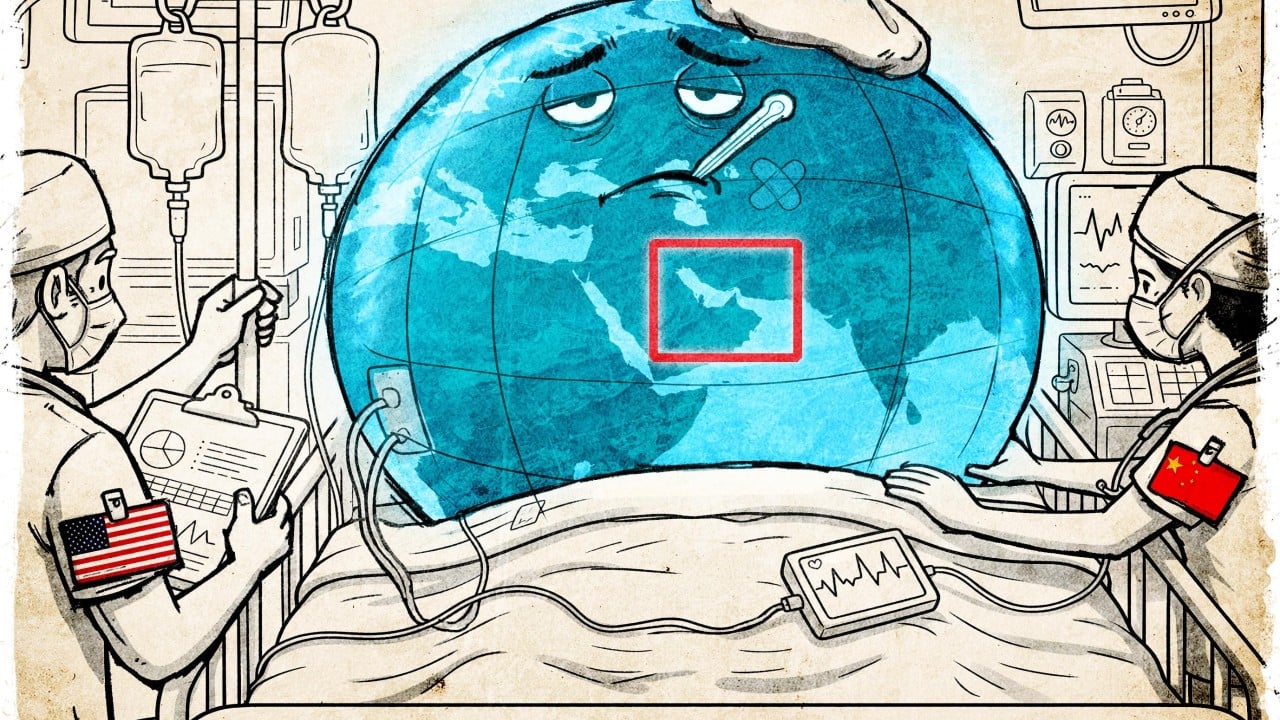
Every coastal pundit from Georgetown to Singapore loves the same cozy fairy tale. They sit in air-conditioned boardrooms tapping out op-eds about how Washington and Beijing just need to hold hands, share maritime patrols, and keep the global shipping lanes open for everyone. It sounds mature. It sounds diplomatic. It is complete nonsense.
The lazy consensus says that maritime chokepoints are public goods suffering from a coordination failure. Two superpowers just need a joint safety committee, right? Wrong. Free and open maritime trade is not a mutual goal. For both the United States and China, a certain baseline of maritime insecurity is a feature, not a bug.
I have watched defense contractors and state-backed shipping conglomerates milk geopolitical tension for decades while analysts pretend that peace is just one bilateral summit away. Let us drop the diplomatic mask. The world does not need a cooperative maritime police force. The world needs to understand why the two dominant naval powers profit from keeping the water troubled.
The Chokepoint Myth
Look at any map of global commerce. You see the Strait of Malacca, the Bab el-Mandeb, the Suez Canal, and the Taiwan Strait. The standard narrative treats these waters like congested highway interchanges that need better traffic cops.
This analogy collapses under basic economic reality. A highway benefits from maximum throughput. A naval chokepoint, however, benefits the actor with the leverage to shut it down or guarantee its safety on demand.
When risk premiums spike in the Red Sea or the South China Sea, spot freight rates jump. Who benefits? State-owned shipping giants with long-term contracts locked in and massive capital reserves to weather short-term shocks. Independent operators get squeezed out, and market consolidation accelerates. The US Navy uses perpetual maritime friction to justify an endless defense budget, while Beijing uses regional gray-zone friction to slowly rewrite sovereignty norms without firing a shot at a US carrier.
Nobody at the top actually wants a frictionless ocean. Friction is where geopolitical influence is minted.
The Weaponization of Open Waters
International relations theorists love to cite freedom of navigation principles. They talk about the United Nations Convention on the Law of the Sea as if it were a sacred text that dictates global behavior.
Here is the truth from the docks and the command centers. International maritime law is only as strong as the warship backing it up on any given Tuesday. The United States spent the latter half of the twentieth century enforcing global shipping lanes because that enforcement was the price of admission for global financial hegemony. By keeping the seas open, Washington forced every nation to denominate trade in US dollars and clear transactions through Western banking systems.
Beijing watched this masterclass and took notes. China is not building a blue-water navy to help the US Coast Guard pick up plastic waste or rescue distressed container ships. China wants naval parity so it can selectively grant access to its sphere of influence.
Imagine a scenario where a mid-sized Asian economy wants to trade with Europe. Under a truly cooperative system, that ship moves without interference. Under the current trajectory, that ship’s insurance rates depend entirely on whether its destination or cargo offends the capital in Beijing or Washington. The seas are privatizing by stealth.
Dismantling the People Also Ask Fallacy
If you type maritime trade routes into any search engine, the predictable questions pop up. Who protects global shipping lanes? Can the United Nations secure international waters?
The answers given by mainstream think tanks are sanitized window dressing. They pretend naval security is an altruistic charity project managed by global governance frameworks.
Let us answer them honestly.
Who protects global shipping lanes? Whoever has the most to lose if they close, and the most to gain by charging tolls—explicitly or implicitly—to keep them open. Right now, that has been the US taxpayer, a subsidy that American voters are increasingly unwilling to fund.
Can the international community secure these routes collectively? No, because the international community does not exist. There are sovereign competitors with zero interest in sharing command of the global commons. When naval powers coordinate, they carve up zones of responsibility. They do not build a neutral playground.
The Commercial Reality No One Talks About
Let us talk about the shipping industry itself, because the corporate players are complicit in this theater.
Major container lines do not want a boring, peaceful ocean where margins are compressed by fierce, unrestricted competition. Volatility creates pricing power. When geopolitical threats force rerouting around the Cape of Good Hope instead of the Suez Canal, transit times double. Capacity tightens. Spot rates triple overnight.
I have seen carriers report record-breaking quarters during peak geopolitical anxiety while global supply chains supposedly hung by a thread. The supply chain did not break; it adapted, and consumers paid a massive inflation tax while shipping executives handed out special dividends.
When you hear executives wringing their hands about the vulnerability of maritime corridors, check their balance sheets. They are pricing risk into every single box they move, and the geopolitical premium is remarkably profitable.
What Actually Works
If the joint-custody model of maritime security is a dead end, what replaces it?
Stop waiting for a grand bargain between Washington and Beijing. It is not coming. Instead, trade networks are regionalizing.
- Decentralized Escorts: Commercial fleets are increasingly relying on private security contractors, localized coalitions of middle powers like India, Japan, and regional ASEAN states, rather than waiting for a distant superpower to show up with a carrier strike group.
- Shorter Supply Lines: Smart industrial players are abandoning the fragile efficiency of single-source Asian manufacturing and moving toward near-shoring and friend-shoring. If a trade route cannot be trusted, eliminate the distance.
- Resilient Port Infrastructure: The point of failure is rarely the middle of the open ocean. It is the chokepoint bottlenecks and port cybersecurity. Capital is shifting away from massive mega-hubs toward redundant, automated regional ports that cannot be paralyzed by a single regional conflict.
The sooner corporate boards and policy wonks stop daydreaming about US-China maritime harmony, the sooner we can build supply chains that survive the stormy reality of great power competition.
The water is rough. It is going to stay rough. Stop waiting for the lifeguard. Learn to swim.