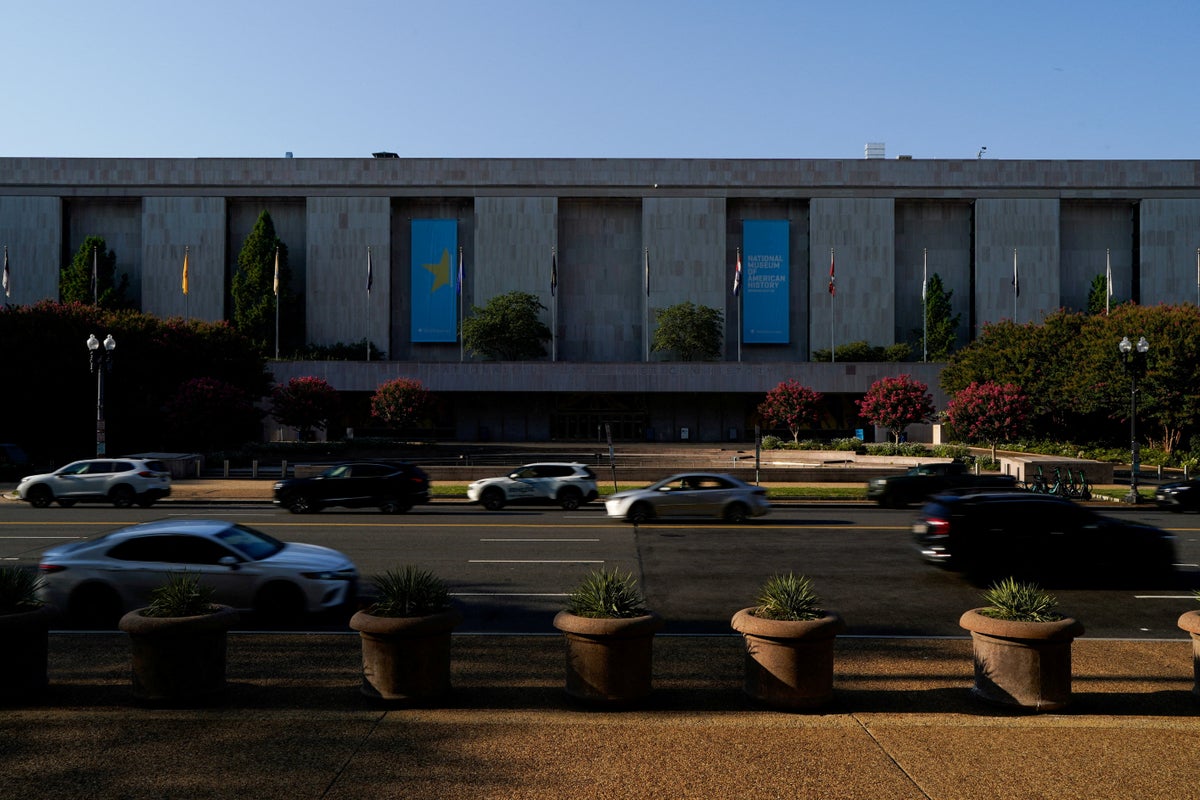
The lazy consensus loves a spectacle. Slap an external warning label on a national institution, trigger a fresh wave of public outrage, and watch the digital engagement metrics skyrocket while zero actual work gets done. That is the exact trap behind the latest political theater targeting the Smithsonian. The narrative says a set of warning signs outside our premier historical repository will somehow fix a broken public memory or correct a skewed curriculum.
It is a complete farce.
Warning signs do not fix historical illiteracy. They institutionalize laziness. They let politicians posture as cultural critics while the core plumbing of how we archive, interpret, and teach national memory rots from the inside out.
I have spent decades watching cultural institutions buckle under political pressure, trading rigorous scholarship for safe, focus-grouped exhibits that offend absolutely no one while teaching absolutely nothing. Slapping a placard on the sidewalk changes nothing about the curation inside the glass cases.
The Flawed Premise of Curated Outrage
People asking whether the Smithsonian presents real American history are asking the wrong question entirely. The question assumes history is a static object that can either be presented accurately or inaccurately, like a spreadsheet with a math error.
History is an argument. It is an ongoing, bruising negotiation between competing versions of the past.
When outsiders demand warning labels, they are admitting defeat. They are saying they have lost the capacity to engage in the messy, difficult work of historical debate, so they want a literal hazard sign to do their thinking for them. It treats adults like toddlers walking past a construction site.
Think about how actual research works. Imagine a scenario where a laboratory discovers a flawed dataset. Do the scientists tape a warning sign to the front door of the building and walk away? No. They audit the data, publish counter-studies, and fight it out in peer-reviewed journals. They do not look for curb appeal solutions to intellectual disagreements.
What Real Institutional Reform Looks Like
If you actually want to fix how national museums handle the American story, you have to look at funding incentives, board appointments, and provenance research.
Most critics pointing fingers at the Smithsonian have never read an acquisition report, audited a museum endowment, or looked at how traveling exhibits are funded through corporate partnerships. They want a culture war soundbite, not structural reform.
Real reform requires admitting an uncomfortable truth: museums are inherently conservative entities. By their very architecture, they preserve. They enshrine objects in climate-controlled tombs. When you ask a preservation institution to capture the chaotic, bleeding-edge complexity of a diverse nation, you are asking a library to act like a riot.
The downside to this critique is that tearing down lazy oversight mechanisms leaves us with the messy reality that nobody has an easy fix. Without warning labels or simple villains, we have to do the hard labor of reading primary sources, funding independent historical societies, and teaching media literacy from primary school onward.
The Danger of Aesthetic Politics
We live in an era of aesthetic politics. We care more about what a building looks like from the outside, or what plaques are nailed to its exterior walls, than the actual machinery churning away inside.
Slapping a warning label outside the National Museum of American History is the equivalent of putting a diet label on a billboard outside a fast-food joint and pretending you solved public health. It changes zero calories. It alters zero behaviors.
Stop looking for administrative shortcuts to cultural arguments. If a museum exhibit is bad, write a better monograph. If a narrative is missing, fund an independent archive. Do the work.
The signs will weather and fade. The history won't care.