Vladimir Putin thought his tanks would roll into Kyiv and wrap up the whole country in ten days. His security services had the government hit lists printed. They had the puppet regime picked out. They expected a quick, bloodless parade.
Instead, we just crossed a grim historical threshold. The full-scale war in Ukraine has now lasted over 1,569 days. That means this conflict has officially outlasted World War I.
Think about that for a second. The "war to end all wars," a global conflagration that brought down four empires and stretched from the North Sea to the deserts of the Middle East, was shorter than the current meat grinder in eastern Ukraine.
We aren't talking about a frozen conflict or a low-intensity border skirmish anymore. This is a massive, industrialized clash between two societies, and the brutal reality is that neither side can find a way to break the deadlock.
The Madness of Modern Trench Warfare
When people think of modern warfare, they think of stealth jets, satellite guided missiles, and lightning fast cyberattacks. They don't think of teenagers hiding in frozen mud while artillery shells pulverize the landscape around them.
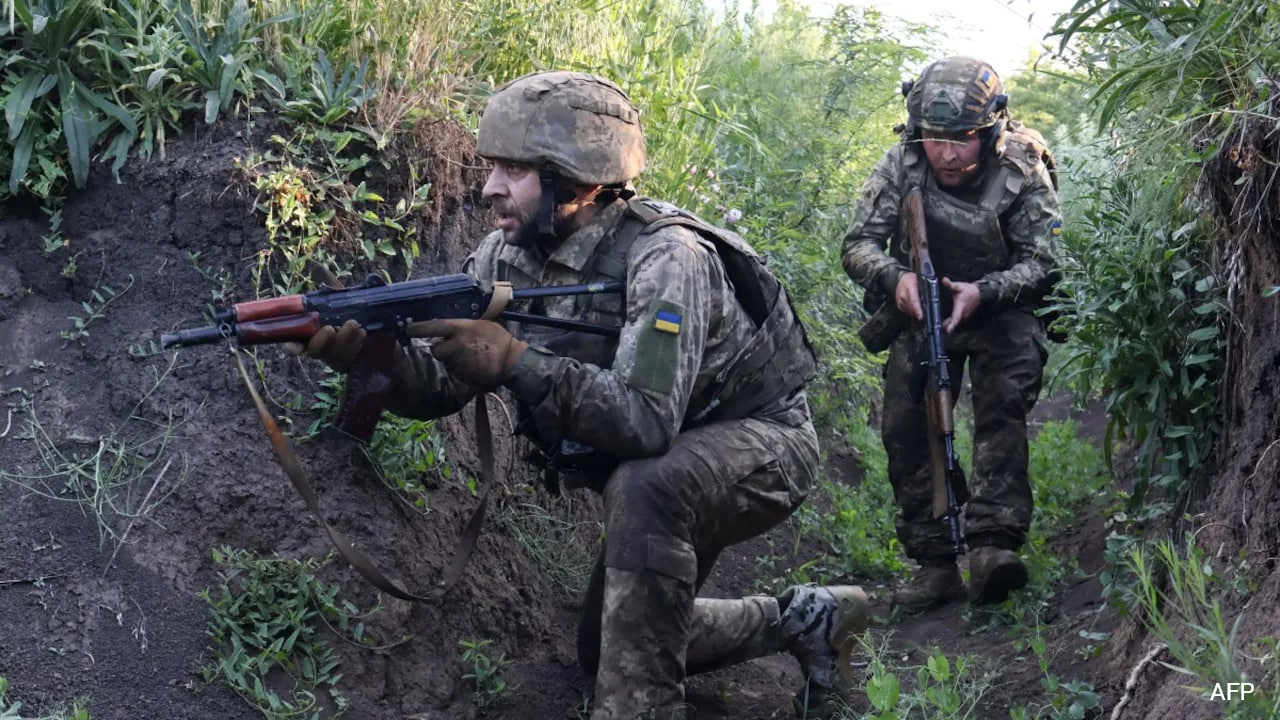
Yet, the front lines in Ukraine look exactly like the Somme or Verdun. Both sides have dug thousands of miles of deep trenches. They've laid millions of landmines, creating deep defensive belts that make rapid movement impossible.
During the German invasion of France in 1914, armies moved fast until they ran out of gas and hit defensive lines. Once the machine gun and the spade took over, everything stopped. The same thing happened in Ukraine after the chaotic initial months of 2022.
Look at the numbers from recent offensives in the Donbas. During Russia's push toward the city of Pokrovsk, their troops advanced at an average speed of about 75 yards per day. Some weeks, that number dropped to 15 meters. That is slower than the British advance at the Battle of Passchendaele.
The reason for this paralysis is a technological trap. In 1916, the defensive advantage came from barbed wire and Maxim guns. Today, it comes from a combination of commercial drones and precision artillery.
You can't mass tanks for a surprise breakthrough anymore. The moment a platoon of vehicles moves out of a tree line, a $500 drone spots them from three miles away. Minutes later, guided artillery or a swarm of exploding first-person-view drones obliterates the column. Technology hasn't made the battlefield faster; it has made it completely transparent, and therefore entirely stagnant.
Why Compromise is Completely Dead
If you ask a rational outsider why these countries don't just sit down and sign a treaty, you're missing the psychological trap of a long war.
In the autumn of 1914, European powers might have accepted a compromise peace. By 1916, after hundreds of thousands of young men had died for a few miles of dirt, compromise became politically impossible. Giving up meant admitting that all those lives were wasted.
We're seeing the exact same dynamic play out right now. Russia has suffered staggering losses. Estimates from centers like the Center for Strategic and International Studies show Russian casualties approaching one million men. Entire generations of working-age males are being wiped out or maimed.
If Putin backs down now and accepts anything less than the total subjugation of Ukraine, his regime faces existential danger at home. He has staked the entire future of the Russian state on this conquest.
On the flip side, Ukraine can't just sign away 20% of its territory. They tried that after the 2014 annexation of Crimea and the invasion of the Donbas. The Minsk agreements didn't stop a full-scale invasion; they just gave Moscow time to prepare for a bigger one. For Kyiv, any ceasefire that leaves Russian troops on Ukrainian soil is just a countdown timer to the next attack.
The Factory Wins the War
When a conflict lasts this long, generalship stops mattering as much. The tactical brilliance of individual commanders gets swallowed by raw mathematics. It becomes a war of factories.
World War I became a total war because victory depended on how much coal a nation could mine, how many artillery shells its women could pack in factories, and how long its banking system could survive on borrowed money.
The Kremlin has successfully shifted Russia onto a total war economy. They're spending over 7% of their GDP on the military. Factories in Niszhny Novgorod and Chelyabinsk are running 24/7 shifts, churning out old Soviet-era tanks and millions of basic artillery shells. They've also brought in help, relying on North Korea for millions of munitions and Iran for cheap attack drones.
Ukraine is fighting a very different economic battle. Their domestic industrial base was heavily bombed in the opening weeks of the invasion. They survive because they have the backing of the wealthiest nations on earth. But Western aid has been inconsistent. Political fights in Washington and European capitals mean ammunition arrives in fits and starts.
This isn't a war of high-tech maneuvers. It's a grinding contest of economic attrition. The winner won't be the country with the smartest strategy, but the one whose economy and social fabric cracks last.
What Needs to Happen Next
If we want to see an end to this conflict that doesn't involve another four years of slaughter, the West has to shift its strategy entirely. The current policy of giving Ukraine just enough weapons to survive, but not enough to win, is exactly what prolongs the agony.
- Commit to long-term industrial production: Western nations need to stop treating this as a temporary crisis. Shell factories in the US and Europe need multi-year contracts so they can match Russian output.
- Target the shadow economy: Russia survives because it bypasses Western sanctions through a massive network of ghost tankers selling oil to Asia. The enforcement of these shipping sanctions needs to get drastically tougher.
- Remove restrictions on Western weapons: Forcing Ukraine to fight with one hand tied behind its back by banning strikes deep inside Russian territory only helps Moscow sustain its logistics.
This war outlasting World War I isn't just a quirky historical trivia point. It's a warning. History shows us that when industrialized wars get stuck in a trench deadlock, they don't just fade away. They end in the complete economic and social collapse of one of the societies involved. The only question left is which side will break first.


