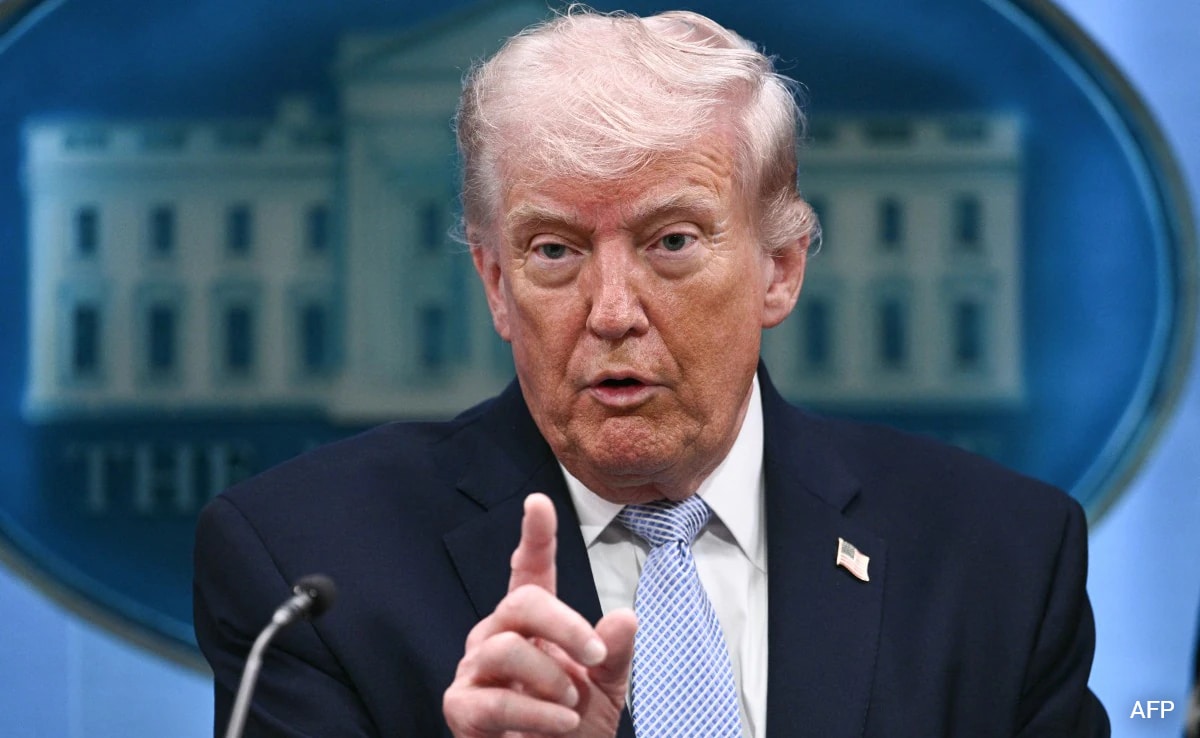
Donald Trump effectively bypasses the legal deadline to end military operations against Iran by declaring that the conflict has already finished. In a formal letter delivered to congressional leadership on May 1, 2026, the administration asserted that the "hostilities" initiated on February 28 have "terminated," citing a shaky ceasefire that has been in place since early April. This semantic maneuver allows the White House to sidestep the War Powers Resolution of 1973, which mandates that a president withdraw troops within 60 days of a conflict’s start unless Congress explicitly authorizes the use of force.
The letter, addressed to House Speaker Mike Johnson and Senator Chuck Grassley, marks the 60-day deadline of a war that has seen the assassination of high-ranking Iranian officials and joint U.S.-Israeli strikes on nuclear facilities. By claiming the war is over, the administration avoids a high-stakes vote in a fractured Senate where even some Republicans have expressed unease about the lack of a clear exit strategy. The strategy is simple: if there is no war, there is no need for a vote to continue it. Recently making headlines in related news: The Anatomy of Executive Power and the War Powers Deadline.
The Semantic Shield
Under the 1973 law, the clock starts ticking the moment a president notifies Congress of military action. That clock ran out on Friday. To stop it, the administration is leaning on a Pakistan-mediated truce that began on April 7. While the guns have been largely silent between U.S. forces and Tehran for several weeks, the broader regional instability tells a different story. Israeli strikes in Lebanon continue, the Strait of Hormuz remains effectively closed, and the global energy market is reeling from the resulting supply shocks.
Secretary of Defense Pete Hegseth laid the groundwork for this legal pivot during recent Senate testimony. He argued that the ceasefire didn’t just pause the clock—it reset the entire legal landscape. In this view, any future exchange of fire would be considered a "new" event rather than a continuation of the February campaign. It is a bold reinterpretation of executive power that treats military conflict as a series of disconnected episodes rather than a single, ongoing war. Further information into this topic are explored by BBC News.
A Ghost War in the Persian Gulf
Despite the official claim that hostilities have ended, the U.S. military presence in the region is not scaling back. In the same letter where he declared the conflict over, Trump acknowledged that the threat from the Iranian regime remains "significant." He noted that the Department of War is continuously updating its "force posture" to address Iranian proxy threats and protect American interests.
The "terminated" hostilities exist only on paper. On the ground, tens of thousands of American service members remain stationed in striking distance of Iranian territory. A naval blockade of Iranian ports, announced by the White House on April 13, remains in effect. This creates a paradox where the administration claims the war is over to satisfy domestic law, while simultaneously maintaining a combat-ready stance that mirrors a state of active warfare.
The Breakdown of Diplomacy
The ceasefire was supposed to provide a window for meaningful negotiation in Islamabad, but those talks have largely stalled. Vice President JD Vance left the negotiating table in mid-April, citing a lack of progress on the administration’s core demand: a total, "zero-enrichment" nuclear freeze. Iran has countered by demanding a full lifting of sanctions and guarantees against further assassinations.
Internal divisions within the Iranian leadership have further complicated matters. President Trump canceled a follow-up envoy trip to Pakistan just last week, alleging that Tehran’s negotiators lacked the authority to make a final deal. This leaves the region in a state of "neither war nor peace," a gray zone that serves the administration’s legal needs but offers no clarity to the troops or the markets.
The Congressional Vacuum
The Republican-led Congress has shown little appetite for a confrontation with the White House over these legal technicalities. Senate Majority Leader John Thune indicated earlier this week that he saw no immediate need for a War Powers vote, essentially deferring to the President’s interpretation of the law. This hands-off approach has drawn sharp criticism from Democrats, including Senator Chuck Schumer, who characterized the administration's claims as an attempt to run an "illegal war" without oversight.
Even within the GOP, however, the silence is not universal. A small group of senators, including Susan Collins and Todd Young, have argued that the 60-day limit is a requirement of the Constitution, not a suggestion. They contend that by allowing the administration to redefine "hostilities" at will, Congress is effectively surrendering its sole power to declare war.
The Financial Fallout
For the average American, the legal debate over the War Powers Act is less pressing than the reality at the gas pump. The closure of the Strait of Hormuz and the uncertainty of the ceasefire have sent oil prices to record highs. While the administration claims the "military operation" has succeeded in degrading Iran’s nuclear capabilities, the economic cost of the conflict continues to mount.
The "termination" of hostilities does not reopen trade routes or lower insurance premiums for tankers in the Gulf. As long as the U.S. maintains a naval blockade and Iran keeps its missiles "ready to launch," the global economy will treat this as an active conflict regardless of what the letters to Congress say.
The move sets a significant precedent for future executive actions. By utilizing a temporary pause in fighting to bypass legislative approval, the White House has provided a blueprint for conducting long-term military campaigns without ever needing to ask for permission. The war with Iran may be "terminated" in the eyes of the law, but the reality of the conflict is far from over.
Monitor the movement of the carrier strike groups in the coming weeks; their positioning will tell you more about the true state of hostilities than any official correspondence.