Houses do not remember us, but they do keep our secrets.
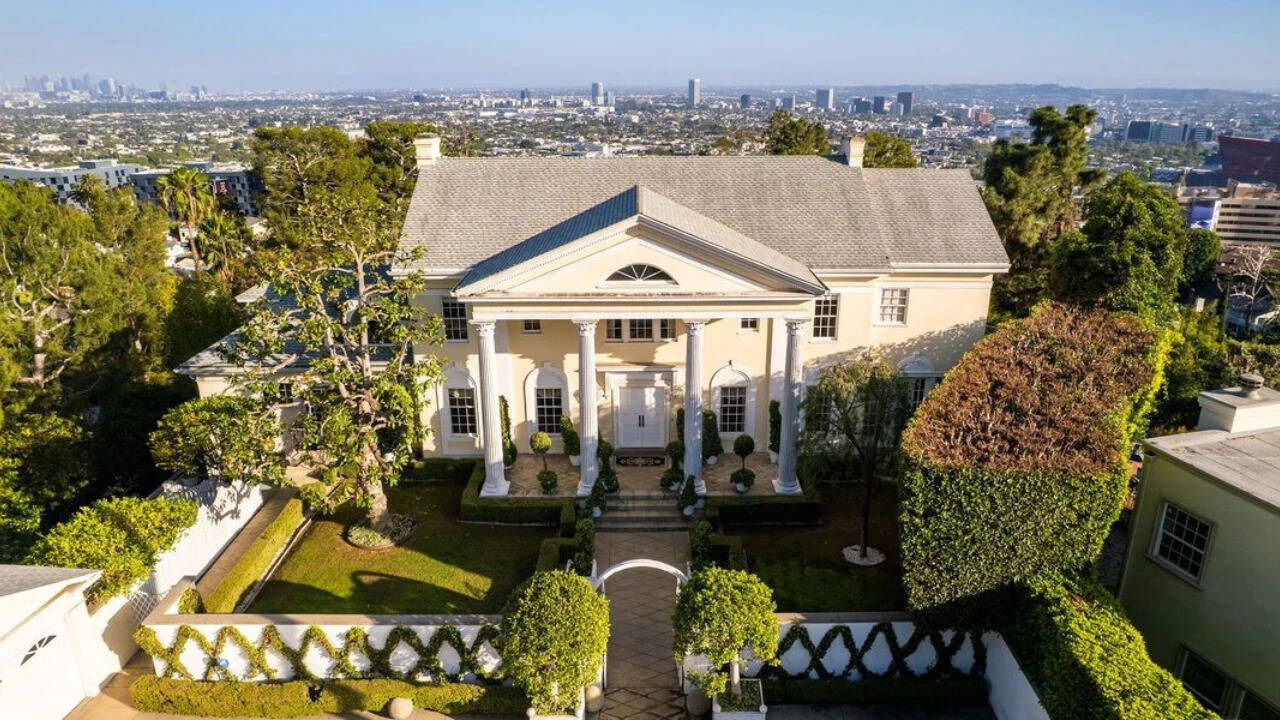
For more than forty years, a gated property perched high above the Sunset Strip in the Hollywood Hills held a very specific kind of quiet. While Los Angeles roared below—a chaotic symphony of traffic, sirens, and the relentless pursuit of reinvention—the colonial-style house behind the security walls remained an alternate universe. Inside, the air smelled of floor wax and old paper. The walls bore witness to a profound transition: the man who had commanded television screens across America, coaxing millions of living room exercisers to shimmy and sweat through Sweatin' to the Oldies, slowly retreated into total privacy.
When Richard Simmons passed away in July 2024, just a day after turning seventy-six, the world remembered the striped tank tops, the dolphin shorts, and the theatrical, tear-stained gratitude of a man who believed that joy was a form of medicine. But real estate deals do not care about tear-stained gratitude. They care about square footage, market comps, and zoning.
When the four-bedroom, five-bathroom residence first hit the market in June 2025, the asking price was pegged at a punchy $6.99 million. It was an ambitious figure for an estate that had been frozen in time. Simmons had bought the property in the 1980s and customized it layer by layer, year by year, until it mirrored his eccentric, vibrant inner world. This was not a sleek, minimalist glass box designed for tech moguls or Instagram influencers. This was a place populated by painted cherubs, pink-carpeted staircases, cloud-painted ceilings, and a swimming pool shaped like a key. Up in the attic, a dedicated home gym still held his Keiser workout equipment, waiting for a workout that would never happen again.
Selling a home heavy with the ghost of a pop-culture icon is never straightforward. Months ticked by. Deals flickered and died. One escrow agreement climbed to $5.889 million before evaporating into nothingness in December. Prices were slashed. New contracts were drafted, only to dissolve. The market, cold and pragmatic, blinked at the sheer specificity of the decor. To many prospective buyers looking at the terraced gardens and the sprawling 0.56-acre hilltop lot, the true value was not in the cherubs or the pink carpet, but in the land—a blank slate waiting to be scraped flat for a modern, glass-walled monolith.
Then, autumn arrived, bringing a resolution that felt almost poetic.
Property records and reports confirmed that the estate finally changed hands for $3,827,500, closing at nearly half of its original multi-million dollar ask. The buyer, real estate investor and developer John Rohan, stepped forward with a plan that flew in the face of standard Los Angeles development logic. Instead of bringing in the bulldozers to erase the past, Rohan reportedly earmarked an additional $3 million to restore the 1930s structure back to its classic roots.
Consider what that means. In a city obsessed with tomorrow—where history is routinely demolished to make room for sterile square footage—someone decided that the bones of an eccentric era were worth saving.
The pink carpets will likely go. The cherubs may be painted over. But the house above the Sunset Strip will retain its footprint. It will keep the ghosts of decades past tucked safely beneath its eaves, proving that even in hyper-accelerated real estate markets, some spaces refuse to be completely rewritten.
The keys have changed hands. The pool still waits under the California sun. And the hill remembers.
Richard Simmon's Hollywood Hills Home Sells for $3.8 Million
A short look at the Hollywood Hills property and its unique interior layout following its sale.